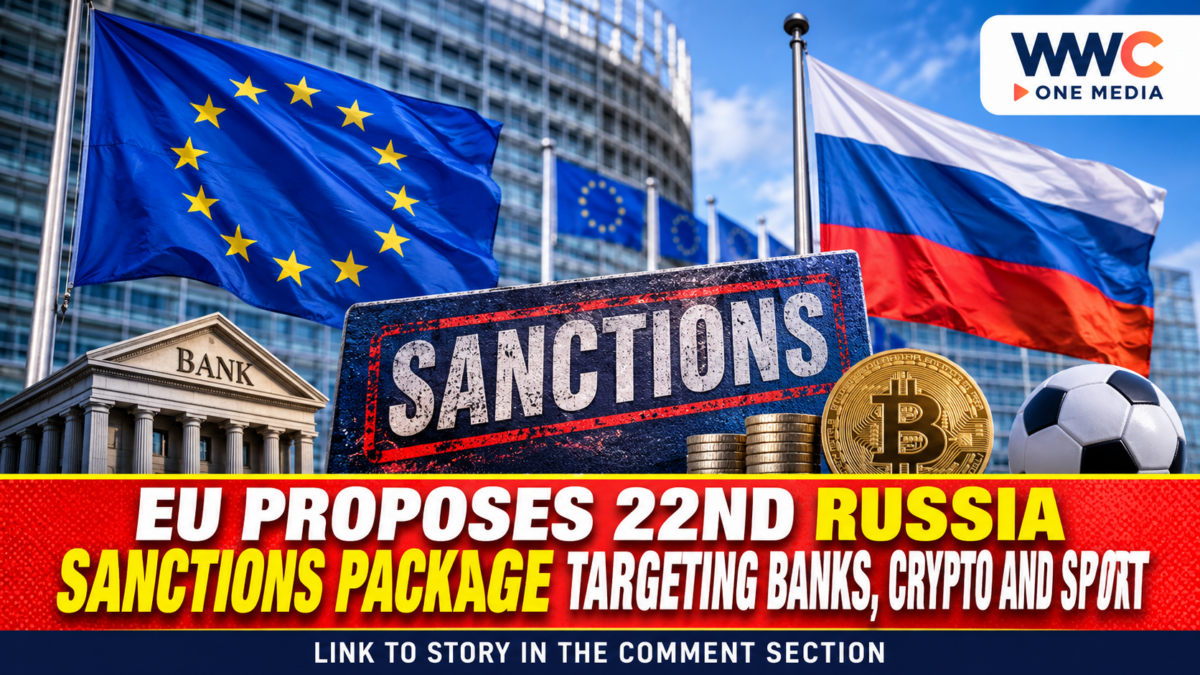
The European Commission presented its proposed 22nd package of sanctions against Russia on November 23, 2026, outlining restrictions aimed at financial institutions, cryptocurrency networks, energy services and Russian participation in European sporting and cultural activities. The proposal also includes tighter visa measures and additional restrictions on European citizens holding management positions in Russian companies.
The package marks another attempt by the European Union to narrow the financial and commercial channels available to Russia as its war against Ukraine continues. But the distinction between a proposal and an adopted sanction is important: the Commission has presented the measures, while the EU Council still has to decide on the legal steps needed to put the proposed restrictions into force.
Russia sanctions move deeper into banking and cryptocurrency
Financial services are among the central targets of the new proposal. European Commission President Ursula von der Leyen said the package would extend transaction restrictions to approximately 60 Russian banks and remove those banks from the SWIFT financial messaging system.
SWIFT is a secure messaging network used by financial institutions to exchange payment instructions and other financial information. Exclusion can make international banking operations more difficult, although it does not automatically prevent every possible cross-border transaction.
The Commission is also proposing stronger action against cryptocurrency and payment networks. Its stated approach extends beyond Russia to third-country networks and entities that help Russian parties evade existing restrictions.
A Crypto Sanctions Task Force has been launched to support this work and coordinate efforts with international partners.
The proposal follows earlier EU action against digital-asset channels. In July 2026, the Council adopted its 21st sanctions package, which included measures targeting Russian energy, financial services and cryptocurrency. The EU’s legal framework has also introduced restrictions involving crypto-asset service providers and platforms established in Russia.
This growing regulatory focus has implications for exchanges, payment processors and financial institutions that handle cross-border transactions. WWC previously examined how sanctions enforcement can reach cryptocurrency businesses operating outside the country being targeted. The wider issue is how authorities identify intermediaries and transactions that may help restricted parties maintain access to financial services.
Energy restrictions extend beyond oil exports
The proposed package would also expand restrictions on services connected with Russia’s energy infrastructure.
Von der Leyen said the Commission wants to prevent European companies from helping Russia build, operate or repair energy infrastructure, with particular attention to refineries. For the first time under the proposed expansion, electricity-related services would also be covered.
The proposal includes more action against Russia’s so-called shadow fleet, a term used for vessels involved in transporting Russian oil through complex ownership, registration or insurance arrangements.
The Commission said it was listing more than 70 additional ships and proposing a ban on tanker vessels insured in Russia.
These measures are intended to make it harder for Russia to maintain energy export operations and the infrastructure supporting them. However, the practical impact will depend on the final legal text, the cooperation of shipping and insurance providers, and enforcement by participating jurisdictions.
The EU has already adopted restrictions involving Russian oil, petroleum products, shipping services and vessels identified under its sanctions framework. The new proposal would add another layer to those controls rather than replace the existing rules.
Visa restrictions and corporate positions are also in the plan
The Commission’s proposal reaches beyond finance and energy.
One measure concerns Russian nationals who are serving or have served in the Russian Armed Forces since the beginning of the war against Ukraine. The Commission and the EU’s High Representative have proposed activating a visa ban for these individuals.
On November 23, the Commission also adopted revised guidelines to help member states identify applicants covered by the proposed restrictions. The guidance includes additional supporting documents, such as military-service questionnaires, self-declarations and the possible request for military booklets.
The distinction remains important: the Council must decide when the visa ban enters into force across the EU. The guidelines help national authorities prepare for implementation, but they do not by themselves complete the Council’s decision.
The Commission also wants European citizens prohibited from continuing to occupy positions on the governing bodies of companies in Russia. If adopted, the measure could affect corporate oversight arrangements involving European nationals and Russian businesses.
For companies with operations in Russia, sanctions compliance is already a difficult part of managing local subsidiaries, ownership structures and cross-border business relationships. WWC has previously examined how Japanese companies are dealing with operational and ownership uncertainty in Russia. The proposed EU restrictions could add another consideration for European executives and businesses with Russian corporate connections.
Russian teams and athletes face proposed European restrictions
Sport and culture form another part of the package.
The Commission has proposed prohibiting Russian teams and athletes from competing on behalf of Russia at sporting events held in the EU. It has also proposed restrictions on displaying official Russian symbols at those events.
Additional measures would limit financial flows from Russian sponsors to sports and cultural associations based in Europe. Russians holding positions on the governing bodies of European-based sports federations would also face proposed restrictions.
The Commission’s November 23 visa guidelines address the sporting proposal as well. They say that, once the athlete measure is adopted, member states should consider refusing Schengen visas to Russian athletes competing in events where Russian national symbols, including flags, anthems or uniforms, are used.
The guidelines also call for attention to individual artists participating in cultural events when they are sponsored by Russian authorities.
These proposals raise questions for event organisers, federations, sponsors and cultural institutions. They would need to understand how any final restrictions apply to participation, funding, governance and travel. The measures should not be described as an already completed blanket ban until the relevant legal decisions are adopted.
The EU is building on restrictions already in force
The 22nd package is not the first major expansion of the EU’s sanctions framework.
On July 23, 2026, the Council adopted the 21st package of sanctions against Russia. Earlier, on November 16, the Council imposed additional restrictive measures on 12 individuals and 101 entities. The November listings included nearly 50 Russian banks and financial institutions, as well as companies and businesspeople connected with oil, energy and the shadow fleet.
Those November measures were adopted under the EU framework addressing actions undermining or threatening Ukraine’s territorial integrity, sovereignty and independence. Listed individuals and entities face measures including asset freezes, restrictions on making funds available to them and travel bans for listed individuals.
The EU’s sanctions policy therefore operates through several legal instruments and successive decisions. A newly announced package does not automatically replace or cancel earlier restrictions.
For international businesses, this creates a compliance environment in which the identity of a counterparty, the ownership of a company, the route of a payment and the services being provided can all matter. A company may face restrictions even when a transaction involves an intermediary or a third-country service provider.
What happens next
The immediate next step is the Council’s consideration of the Commission’s proposed 22nd package and the associated legal measures. Until the necessary decisions are adopted and published, the proposed new restrictions should not be treated as fully operative sanctions.
Businesses, financial institutions, sports organisations and travel authorities will need to monitor the final legal texts rather than rely only on political announcements. The wording of the adopted regulations will determine which transactions, services, individuals and activities are covered, as well as any exceptions or implementation arrangements.
For Ukraine, the proposal represents another effort by the EU to maintain pressure on Russia. For companies operating across borders, the more immediate question is whether the new measures become binding and how consistently they are enforced.
Frequently asked questions
Has the EU adopted its 22nd sanctions package against Russia?
The European Commission presented the proposed package on November 23, 2026. The Council still needs to take the necessary decisions for the proposed restrictions to become legally effective.
Which Russian banks could face new restrictions?
The Commission’s proposal targets approximately 60 Russian banks for transaction restrictions and removal from the SWIFT system.
Will the proposed measures affect cryptocurrency companies outside Russia?
Potentially. The Commission says the proposal targets crypto and payment networks, including third-country channels that help Russia evade sanctions. The final legal text will determine the scope.
Are Russian athletes already banned from all EU sporting events?
The Commission has proposed a ban on Russian teams and athletes competing on behalf of Russia at EU sporting events. The proposal should not be confused with a fully adopted legal restriction.
What happens to European citizens serving on Russian company boards?
The Commission has proposed prohibiting European citizens from continuing to hold positions on the governing bodies of companies in Russia. The final effect will depend on the measure adopted by the EU institutions.