INTERNATIONAL TRAVEL • DESTINATION FEATURE • NOVEMBER 24, 2026
Chile offers travelers an unusual combination of natural environments within one national territory. From the high-altitude deserts of the north to the forests, lakes and glaciers of the south, its geography creates travel experiences that differ dramatically depending on where visitors go.
The country’s geographical diversity is also an important part of its tourism identity. Its attractions extend beyond individual landmarks, connecting landscapes, biodiversity, indigenous heritage, outdoor recreation and conservation across different regions.
For international travelers considering South America, understanding these geographical differences provides a more practical way to explore Chile than simply choosing destinations from a list of famous attractions.
Chile’s geography creates an unusually diverse travel experience
Chile’s continental territory stretches along the southwestern edge of South America, with the Andes forming a major geographical feature along its eastern side. Its Pacific coastline, mountain systems, varied elevations and island territories contribute to distinct natural environments.
The country’s environmental authorities also recognize the relationship between geographical conditions and biodiversity. A 2025 publication from Chile’s Ministry of the Environment identifies four broad geographical and climatic macrozones, grouping the country’s 16 administrative regions.
For travelers, this diversity can be understood through five practical geographical experiences: the northern desert, the central valleys and coast, the southern lake district, the Patagonian wilderness and the Pacific islands.
These are editorial groupings rather than an official government classification. Together, however, they help explain why a journey through Chile can involve such different climates, scenery and cultural experiences.
1. The Atacama Desert brings travelers into the high Andes
Northern Chile
Panoramic view of the Valley of the Moon Atacama Desert, Chile (Valle de la Luna)
Sunrise at Geyser El Tatio, San Pedro de Atacama, Chile.
Lagunas Miñiques and Miscanti – Turquoise lake in volcanic Atacama Desert – Chile
Northern Chile offers one of the country’s most distinctive natural environments: the Atacama Desert and the adjoining Andean highlands.
The area around San Pedro de Atacama provides access to geological formations, salt flats, high-altitude lagoons and volcanic landscapes. The El Tatio geysers and Valle de la Luna are among the destinations featured in Chile’s official tourism itinerary.
The surrounding Altiplano adds another dimension to the experience. Its high elevations, lagoons and mountain scenery create a setting that differs considerably from the country’s central and southern regions.
Stargazing is another attraction associated with the northern desert. The region’s dry conditions and high-altitude locations have helped establish its reputation for astronomical observation.
However, altitude is an important consideration when planning visits. Travelers should account for the physical demands of high-elevation excursions and follow local guidance.
2. Central Chile connects coastal scenery, cities and vineyards
The BEST Things to Do in Valparaíso – Top Activities in 2026 | GetYourGuide
Vines 101: Chilean Wine | Butterfield & Robinson
Pichilemu, a Capital Mundial do Surf – Chile Travel
Central Chile offers a different combination of landscapes, where urban destinations, Pacific beaches, mountain scenery and agricultural valleys come together.
Santiago provides access to the Andes, while Valparaíso presents a coastal cityscape shaped by hills, historic neighborhoods and maritime connections.
The wine-producing valleys add an agricultural and cultural dimension. The established Wine Route connects destinations including Casablanca, Colchagua, Cachapoal, Maipo and Curicó, providing opportunities to explore vineyards and regional food traditions.
The coastline also broadens the region’s appeal. Pichilemu, Viña del Mar and other coastal destinations offer different experiences for visitors interested in seaside recreation and outdoor activities.
This combination makes central Chile particularly relevant to travelers who want to combine city visits, food experiences and nature without focusing exclusively on remote wilderness destinations.
3. The southern lake district combines forests, volcanoes and living traditions
Cómo llegar a Pucón y Qué visitar: Tips y Preguntas Frecuentes
Further south, forests, lakes and volcanoes become defining features of the landscape.
The regions of La Araucanía, Los Ríos and Los Lagos form part of the tourism corridor associated with Chile’s Lakes and Volcanoes Route.
The official route description identifies six circuits extending more than 2,000 kilometers. It includes 26 major rivers, 22 lakes, 17 active volcanoes and 12 national parks.
Destinations such as Villarrica, Pucón, Puerto Varas and the Seven Lakes Circuit provide opportunities for hiking, water activities, winter sports and visits to natural attractions.
The region also has an important cultural dimension. Mapuche communities and their traditions form part of the area’s identity, making responsible cultural tourism an important consideration alongside outdoor recreation.
For visitors, the southern lake district demonstrates that nature-based travel does not need to exclude local heritage, food and community experiences.
4. Patagonia puts conservation at the center of the journey
Carretera Austral and Puyuhuapi fjord in the Chilean Patagonia
Carretera Austral: los tramos que conforman la Ruta escénica de la Patagonia chilena
Patagonia river valley aerial landscape Carretera Austral Chile
Carretera Austral. Un viaje en coche por la patagónica chilena
Patagonia represents another major dimension of Chile’s geographical diversity.
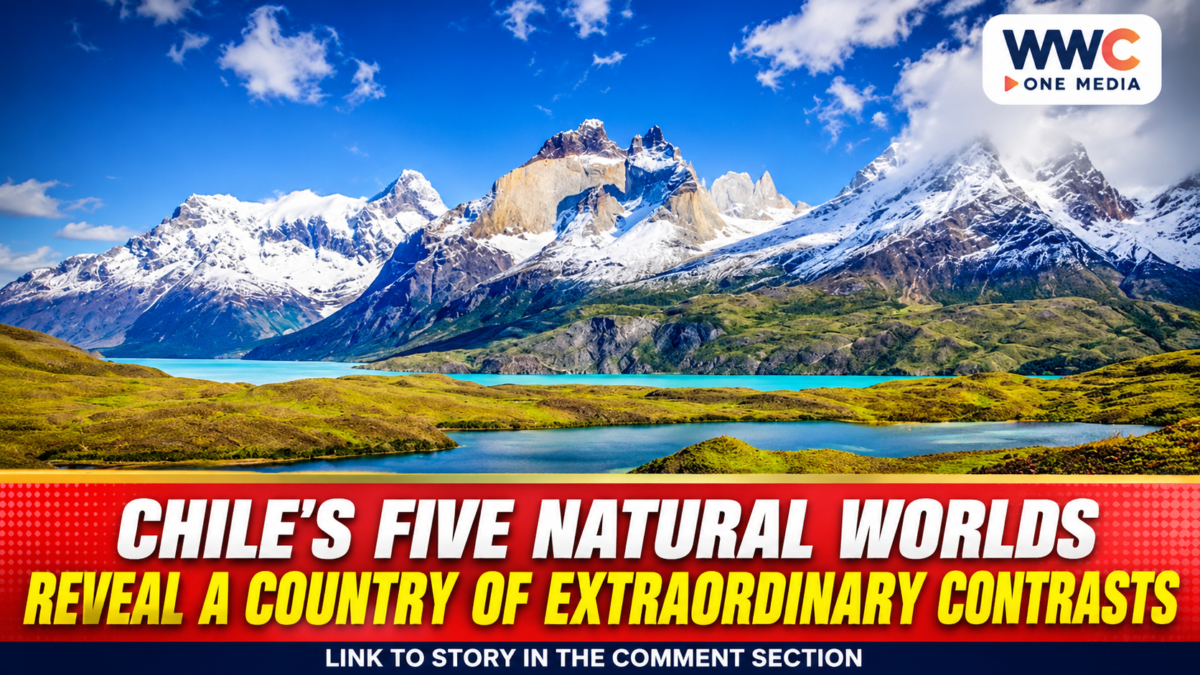
The southern territory includes fjords, mountain ranges, forests, glaciers and extensive protected landscapes. Torres del Paine National Park is among its best-known destinations, while the Carretera Austral provides access to different communities and natural environments along the southern mainland.
Glaciers are particularly significant to the region’s environmental character. Their presence highlights the importance of understanding these destinations not only as tourism attractions but also as parts of larger ecological systems.
Chile’s National Forestry Corporation, known as CONAF, administers 110 state-protected wild areas: 46 national parks, 45 national reserves and 19 natural monuments. Its published figures place their combined area at approximately 18.8 million hectares, equivalent to 21% of the country’s national territory.
These protected areas serve conservation purposes, including the protection of natural environments and wildlife.
The distinction matters because increased tourism activity must be balanced against the capacity of protected places to accommodate visitors without undermining the ecosystems that make them valuable.
The same issue is relevant to the wider tourism industry. WWC ONE MEDIA previously examined why tourism destinations need infrastructure, connectivity and sustainability before attracting investment.
5. Pacific islands add a cultural dimension to Chile’s natural heritage
Ranu Raraku, Easter Island – July 10, 2017: Moai statues of Ranu Raraku, Easter Island
Anakena beach at Easter island
Il luogo del mese: l’Isola di Robinson Crusoe | Articoli | DLive Geografia
The Most Beautiful Places in Chile – A Specialist’s Guide – Journey Latin America
Rapa Nui: un destino único para tus próximas vacaciones entre misterio y naturaleza
Juan Fernandez Islands, Chile Cruise Port & Excursions – 2026-27 | The Cruise Web
Chile’s geographical story extends beyond its continental territory.
Rapa Nui, also known as Easter Island, is one of the country’s most distinctive Pacific destinations. Its volcanic landscape, coastal scenery and monumental moai statues connect natural heritage with the history and cultural identity of the Rapa Nui people.
Rano Raraku, Rano Kau, Orongo and Anakena are among the attractions highlighted in the official destination guide.
The Juan Fernández Archipelago provides another island experience. Its Robinson Crusoe Island is associated with distinctive biodiversity and an environment different from the continental mainland.
Chile’s official tourism portal describes more than 40,000 islands within its territory, including islands in the Pacific and those closer to the mainland.
Island destinations also require a different approach to travel planning. Their distance from major population centers, transportation requirements and environmental considerations make advance preparation particularly important.
For travelers, these destinations demonstrate that Chile’s appeal is not limited to mountains, deserts and glaciers. Its island heritage is also an important part of the country’s identity.
What happens next
Chile’s geographical diversity gives it a broad foundation for international tourism, but the long-term value of its destinations will depend on how effectively visitor activity is managed.
Transport access, accommodation, local services, environmental protection and community participation all influence whether tourism can generate lasting benefits.
These considerations are relevant to destinations worldwide. WWC ONE MEDIA has also explored how better transport and digital services can help remote destinations participate in tourism growth.
Chile’s experience provides a useful example of why destination development should extend beyond marketing attractive scenery. Tourism must also respect local communities and the ecosystems that sustain the places visitors come to experience.
For travelers, the most useful starting point is to identify the kind of experience they want, then consider the geography, season, travel connections and local requirements of each destination.
As international interest in nature-based travel continues, Chile’s challenge and opportunity lie in making its extraordinary landscapes accessible without compromising their long-term protection.
The country’s natural diversity may attract visitors, but responsible management will determine how well these destinations are preserved for future generations.
Frequently asked questions
1. What is Chile famous for geographically?
Chile is known for its contrasting landscapes, including the Atacama Desert, the Andes Mountains, Pacific coastlines, southern forests, lakes, volcanoes, Patagonia and Pacific islands.
2. What are the main natural destinations in Chile?
Major destinations include San Pedro de Atacama, Torres del Paine, the Lakes and Volcanoes Route, Rapa Nui, the Juan Fernández Archipelago and the central wine valleys.
3. Where can travelers see glaciers in Chile?
Chilean Patagonia is a major destination for glacier-related experiences, with attractions associated with its southern ice fields and protected landscapes.
4. Is Chile suitable for nature-based tourism?
Yes. Its official tourism offerings include hiking, national parks, wildlife observation, stargazing, water activities, mountain experiences and visits to island destinations.
5. Why is conservation important to Chile’s tourism industry?
Protected ecosystems support biodiversity and preserve the natural attractions that draw visitors. Responsible tourism helps balance visitor access with environmental protection and local community interests.