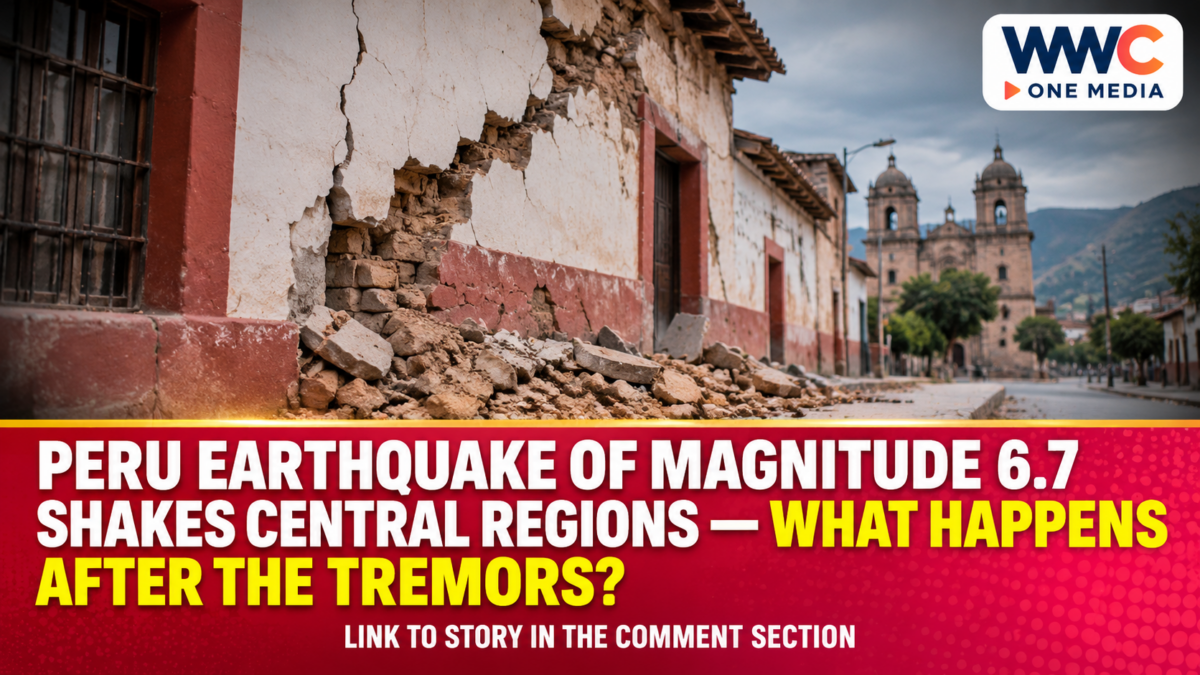
A magnitude 6.7 earthquake struck central Peru on Nov. 20, 2026, prompting emergency authorities to assess damage across multiple communities. The Peru earthquake occurred at 7:09 p.m. local time, with its epicentre located approximately 30 kilometres northwest of Junín.
Peru’s National Civil Defence Institute subsequently documented emergency assessments, infrastructure concerns and government response activities in its Nov. 23 report.
The disaster highlights a challenge that extends beyond South America: how governments, businesses, broadcasters and households can protect lives while maintaining access to essential services and reliable information.
For the Philippines, the incident offers another opportunity to examine the importance of earthquake preparedness before an emergency occurs.
Peru earthquake: What the official records reveal
Seismic measurements recorded the earthquake at a depth of 129 kilometres beneath the Earth’s surface.
The initial official assessment established an intensity of V in Junín using the Modified Mercalli Intensity Scale.
Magnitude and intensity represent different aspects of an earthquake. Magnitude measures the size of the seismic event, while intensity describes the effects of shaking experienced in particular locations.
This distinction matters because communities experiencing the same earthquake may encounter substantially different conditions.
A single magnitude figure should not be treated as a complete assessment of potential damage. Building conditions, geographical characteristics and local emergency preparedness must also be considered when assessing the consequences.
For emergency planners, the challenge is translating scientific measurements into practical information that communities can understand and use.
Seismic activity continues after the initial earthquake
Peru’s official emergency documentation recorded another magnitude 5.0 earthquake shortly after midnight on Nov. 21.
The subsequent event occurred near the same geographical reference point and originated at a depth of 127 kilometres.
Further seismic activity can complicate recovery operations, particularly when authorities are still inspecting buildings and determining whether damaged infrastructure remains safe.
From a disaster management perspective, the end of the initial shaking should not automatically signal the end of emergency precautions.
Households and organisations should remain attentive to official announcements rather than assuming that normal operations can immediately resume.
Businesses operating from potentially affected buildings should also prioritise safety assessments before requiring employees to return.
Emergency response moves towards recovery
The Nov. 23 government report documented damage assessments involving several administrative areas, alongside response activities undertaken by local authorities.
The affected locations included communities in Junín, Huánuco and other parts of Peru.
Recovery requires more than establishing the magnitude of an earthquake. Authorities must identify affected residents, evaluate buildings, determine infrastructure requirements and allocate appropriate assistance.
For local governments, maintaining accurate records is an important part of this process.
An incomplete assessment can leave essential needs unidentified, while premature conclusions may create an inaccurate picture of conditions on the ground.
The economic implications also deserve attention. Disruption to transport, workplaces and public facilities can create additional expenses for households and businesses, even when the initial physical damage appears limited.
However, the available records do not establish a comprehensive economic loss estimate for this earthquake.
Why emergency communication matters
During an earthquake, reliable information can become as important as the availability of emergency supplies.
Broadcasters and digital news organisations have a public responsibility to communicate confirmed developments without encouraging panic or distributing misleading information.
That responsibility does not require journalists to remain in unsafe working conditions.
News organisations should consider emergency procedures that allow employees to protect themselves while maintaining the ability to distribute public advisories when conditions permit.
Preparedness could include backup communications equipment, alternative broadcasting arrangements and clearly assigned responsibilities during emergencies.
The same principle applies to schools, hospitals, commercial establishments and government offices.
From an operational perspective, continuity plans should support human safety rather than place uninterrupted service above the welfare of employees.
What Filipino households and businesses can learn
The Philippine Institute of Volcanology and Seismology has advised the public to practise duck, cover and hold during earthquakes and proceed to a safe location after the shaking stops.
This guidance provides a practical starting point for households and employers reviewing their emergency procedures.
Families can prepare by identifying suitable protective locations inside their homes, discussing communication arrangements and keeping essential supplies accessible.
Employers should consider whether workers understand emergency procedures, whether evacuation routes remain unobstructed and whether staff know how to respond when normal communications become unavailable.
Small businesses may also benefit from maintaining backups of essential records and identifying alternative arrangements for continuing operations following an emergency.
These measures cannot eliminate earthquake risks. However, incorporating disaster preparedness into everyday planning can help organisations respond more effectively when disruptions occur.
Preparedness should be treated as an ongoing responsibility rather than a temporary reaction to disaster headlines.
What happens next
Peruvian authorities’ continuing assessment of affected communities will help establish the broader consequences of the Nov. 20 earthquake.
The next developments worth monitoring include updated damage assessments, infrastructure inspections, assistance for affected residents and further seismic activity.
Any final assessment of the earthquake’s economic consequences will require additional verified information.
For Philippine institutions, the immediate lesson is not to wait for a comparable emergency before reviewing existing disaster preparedness arrangements.
The earthquake in Peru reinforces the importance of combining scientific monitoring, responsible public communication and practical emergency planning.
Although earthquakes cannot be prevented through preparedness programmes, the decisions made before and after a seismic event can influence how effectively communities respond.
Frequently asked questions
How strong was the Peru earthquake in November 2026?
Official emergency records identified the Nov. 20 earthquake as a magnitude 6.7 seismic event.
Where was the epicentre of the Peru earthquake?
The earthquake was centred approximately 30 kilometres northwest of Junín in central Peru, at a depth of 129 kilometres.
Was another earthquake recorded after the initial tremor?
Yes. Official records documented a magnitude 5.0 earthquake near the same geographical reference point on Nov. 21.
What should people do during an earthquake in the Philippines?
PHIVOLCS recommends duck, cover and hold during shaking, followed by moving to a safe area once the shaking has stopped.
Why is earthquake preparedness important for businesses?
Emergency procedures and business continuity planning can help organisations protect employees, preserve essential records and manage operational disruptions.