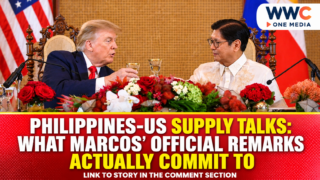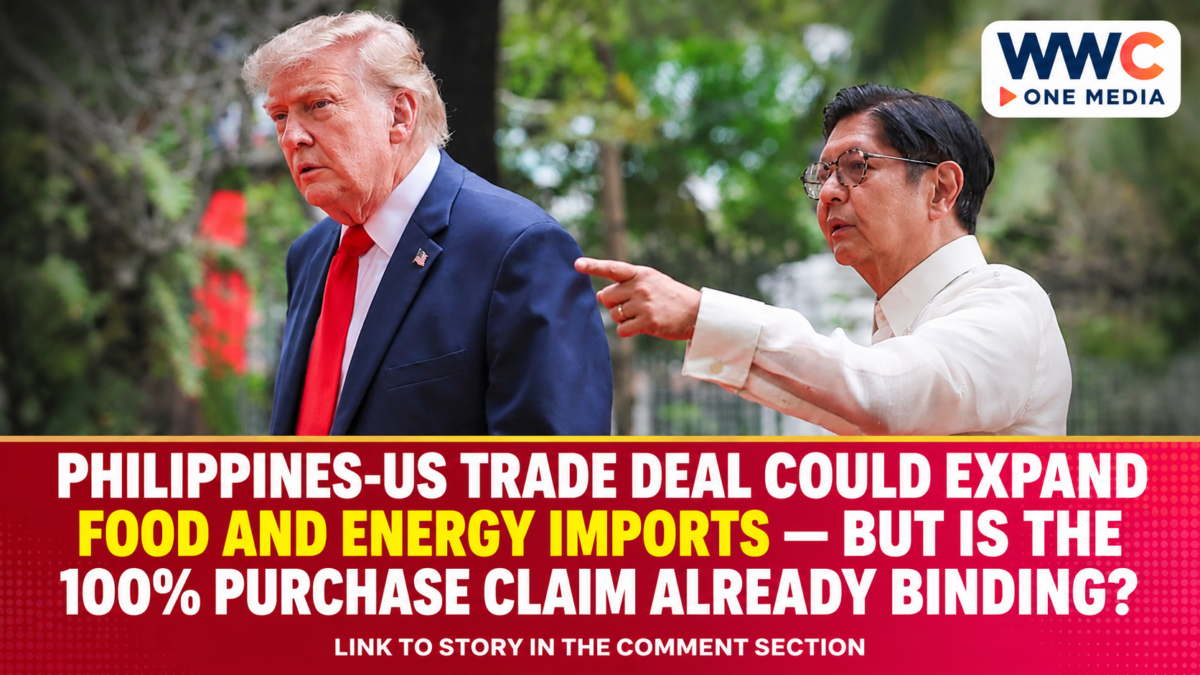
MANILA, Philippines — November 24, 2026 — The Philippines-US trade deal has placed agricultural imports and energy security at the centre of economic discussions between Manila and Washington following the meeting of President Ferdinand Marcos Jr. and US President Donald Trump on Nov. 18.
While the White House has announced plans to increase Philippine purchases of American agricultural and energy products, its published fact sheet does not establish an exclusive purchasing arrangement covering 100% of the country’s requirements.
The distinction carries significant implications for Filipino households, agricultural producers, food manufacturers, petroleum importers and businesses seeking relief from elevated operating expenses.
The economic question facing the Philippines is not simply whether it should buy more American products, but whether expanded trade can deliver competitive prices without weakening the country’s ability to secure supplies elsewhere.
Philippines-US Trade Deal: What the official records establish
The White House’s Nov. 18 fact sheet identified increased Philippine purchases of American agricultural and energy commodities as part of efforts to eliminate the US trade deficit with the Philippines.
The announcement establishes a broad economic objective rather than a detailed procurement framework.
It does not specify mandatory purchasing volumes for individual agricultural commodities, petroleum products or other energy requirements. Neither does it establish an exclusive sourcing requirement in the published text.
For Philippine businesses, these distinctions are critical.
An announcement of greater economic cooperation is different from a commercial contract establishing prices, delivery schedules, purchasing obligations and payment arrangements.
The government’s ability to achieve meaningful savings would ultimately depend on the terms available to Philippine buyers.
Could American agricultural products lower food prices?
Greater access to American agricultural commodities could provide Philippine food manufacturers and importers with additional procurement opportunities.
However, the commercial benefits would depend on the total cost of bringing those products into the country.
A competitive price at the point of origin does not necessarily guarantee cheaper products upon arrival in Philippine markets. Importers would still need to consider transportation, insurance, currency movements, storage, applicable duties and domestic distribution expenses.
This is particularly relevant amid concerns over persistent Philippine inflation and rising food and fuel costs.
Analysis: Expanding access to internationally competitive agricultural supplies could help reduce production expenses for businesses that depend on imported ingredients.
However, policies affecting commodities produced locally should also consider the competitiveness and livelihoods of Filipino farmers.
The objective should be to improve affordability while maintaining incentives for domestic agricultural investment and production.
Energy security goes beyond buying American oil
The Philippines is simultaneously pursuing other measures to strengthen its petroleum supply resilience.
On Nov. 16, Energy Secretary Sharon S. Garin and Japanese Minister of Economy, Trade and Industry Ryosei Akazawa signed a memorandum of cooperation in Manila concerning Philippine strategic petroleum reserves.
The Department of Energy (DOE) said the framework includes potential investment in petroleum storage infrastructure, technical cooperation and arrangements for managing emergency reserves.
Its scope demonstrates that energy security requires more than identifying a country willing to sell petroleum.
Storage capacity, emergency access and reliable distribution are also important considerations, as explored in WWC ONE MEDIA’s coverage of Philippine efforts to secure overseas oil reserves.
Additional American supplies could form part of a broader energy-security strategy. However, concentrating purchases in a single market could introduce exposure to new shipping, pricing and supply risks.
Regional initiatives, including ASEAN’s proposed emergency fuel-sharing arrangements, provide another avenue for examining how the Philippines could respond to future disruptions.
Latest Philippine fuel rollback highlights global market exposure
In its Nov. 23 announcement, the DOE reported fuel price reductions for the period beginning Nov. 24:
- Gasoline: ₱3.00 per litre.
- Diesel: ₱2.60 per litre.
- Kerosene: ₱1.60 per litre.
The department attributed the reductions to improving international petroleum availability, reduced geopolitical pressures and expectations of softer demand.
It also reported that domestic petroleum inventories were sufficient for an estimated 51 days as of Nov. 20.
The latest adjustments illustrate why Philippine energy affordability remains closely connected to developments in international markets.
They should not, however, be interpreted as evidence that the proposed US purchasing arrangement has already reduced Philippine fuel prices.
Analysis: Greater competition among suppliers could help Philippine importers negotiate better terms. Restricting procurement choices could have the opposite effect if alternative suppliers offer more favourable delivered prices.
What the agreement could mean for Filipino businesses
Food manufacturers, retailers, transport operators and industrial companies would benefit from greater clarity regarding the proposed arrangements.
Businesses would need to establish which products are covered, whether tariff concessions apply and whether purchasing commitments would affect their freedom to select suppliers.
For households, the most meaningful outcome would be an improvement in purchasing power.
As examined in WWC ONE MEDIA’s report on Filipino consumers facing continued pressure from rising living costs, household affordability remains an important consideration when evaluating economic policy.
A larger volume of imports is not necessarily an economic achievement in itself. The benefits should ultimately be assessed through delivered costs, consumer prices, supply reliability and the competitiveness of Philippine businesses.
What happens next
The next important development would be the publication of detailed bilateral terms identifying the products involved, applicable purchasing obligations and implementation schedules.
Any exclusive sourcing provision would require particularly careful examination because of its potential consequences for existing commercial relationships and domestic industries.
Until those details are established, businesses should distinguish between the political commitment to expand trade and enforceable commercial or regulatory requirements.
The United States could become an increasingly important supplier of essential commodities. Whether that translates into more affordable food and energy for Filipinos remains a question of commercial terms, implementation and market conditions.