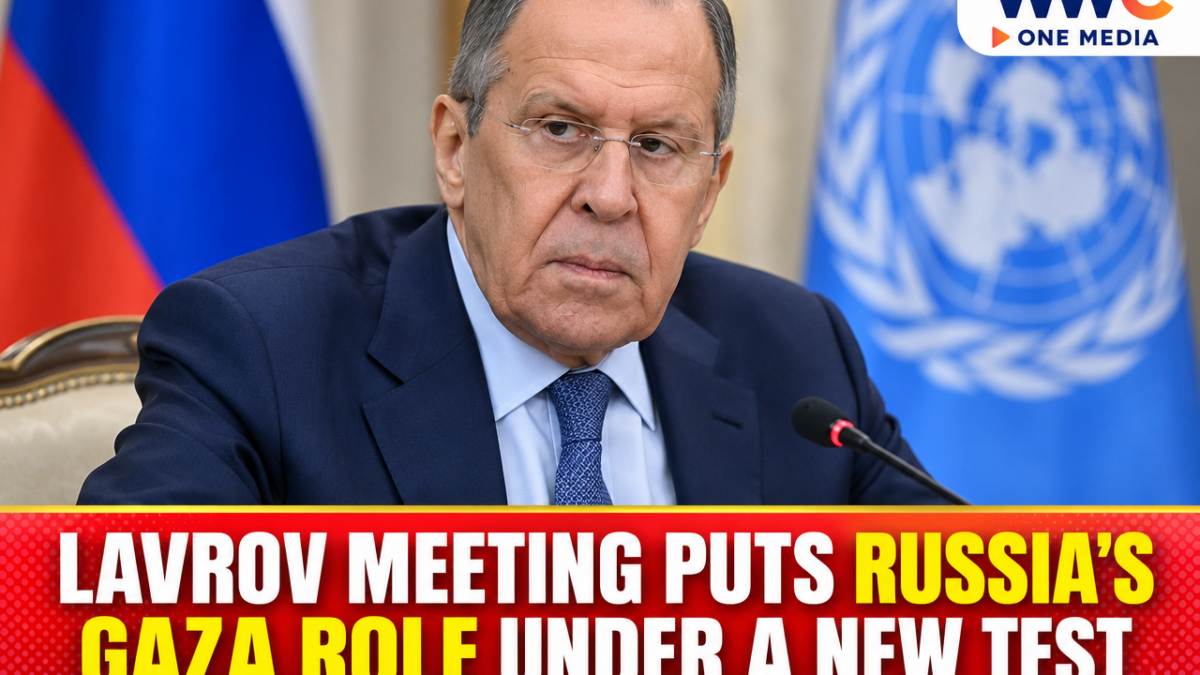
Russian Foreign Minister Sergey Lavrov met Nickolay Mladenov, the Board of Peace’s High Representative for Gaza, in Moscow on November 23, 2026, as diplomatic efforts over the territory’s postwar arrangements continued. Mladenov said their discussion focused on the Board of Peace’s work and identified ceasefire compliance, Palestinian governance and the link between security and recovery as three priorities.
The meeting matters because Gaza’s next phase depends on more than maintaining a halt in fighting. It requires political arrangements, security mechanisms and reconstruction plans to move forward together. Russia’s involvement adds another diplomatic channel, but the public record does not establish that Moscow secured a new agreement or made a commitment to finance or implement the Board’s programme.
The distinction is important: a meeting can signal political engagement without changing conditions on the ground. The test for the parties involved will be whether discussions produce practical support for the arrangements already under consideration.
Gaza diplomacy turns on three implementation tests
In a public statement after meeting Lavrov, Mladenov identified three priorities. First, the ceasefire must hold and all parties must honour their commitments. Second, Palestinian governance in Gaza must be credible, accountable and connected to a wider political horizon. Third, security and recovery must advance together because neither can be sustained independently.
Those priorities describe the practical challenges facing the postwar process. A ceasefire can reduce immediate fighting, but it does not by itself establish who will administer public services, maintain security, oversee reconstruction or represent Palestinians politically.
Mladenov’s position carries institutional weight because he serves as the Board of Peace’s High Representative for Gaza. The Board’s official profile records his previous role as the UN Secretary-General’s Special Coordinator for the Middle East Peace Process from 2015 to 2020, as well as his earlier diplomatic and government experience in Bulgaria. Board of Peace+1
The Russian Foreign Ministry also publicly acknowledged the Moscow meeting through its official account, describing Lavrov as receiving Mladenov in the latter’s capacity as High Representative for Gaza and saying the discussion focused primarily on the Middle East settlement. The accessible post confirms the meeting, but does not itself provide a detailed account of any agreement or new Russian undertaking. nova.bg
Russia’s role is diplomatic, not proof of a new Gaza commitment
Russia is a permanent member of the UN Security Council, giving it a formal role in the body responsible for decisions on international peace and security. Mladenov explicitly referred to that position when explaining why Russia could contribute to the Gaza process.
That role should not be confused with operational authority over Gaza. The Board of Peace’s framework assigns responsibilities to several bodies, including the Office of the High Representative, the National Committee for the Administration of Gaza and the proposed International Stabilization Force. Russia’s participation in diplomatic discussions does not automatically make it a member of those operational structures or establish that it has agreed to provide personnel, money or reconstruction materials.
The Board’s first written report to the Security Council, dated May 15, 2026, describes the institutional structure created to support implementation of Security Council Resolution 2803 (2025). It identifies Mladenov as High Representative for Gaza and explains that his office is intended to coordinate between the Board’s bodies and relevant Palestinian and Israeli institutions. Question of Palestine+1
For Moscow, engagement offers a channel to express its views on the regional settlement and to participate in discussions involving a permanent Security Council member. For the Board, contact with Russia may be diplomatically useful. But neither point proves that the meeting changed the implementation timetable or resolved any outstanding dispute.
WWC has previously examined the Gaza ceasefire’s unresolved implementation challenges, including the gap between agreed frameworks and the institutions needed to carry them out.
The Board of Peace framework still depends on institutions working
The Board’s reporting to the Security Council provides a useful measure of what implementation requires. Resolution 2803, adopted on November 17, 2025, endorsed the Comprehensive Plan to End the Gaza Conflict and welcomed the establishment of the Board of Peace as a transitional administration. The framework also provided for an International Stabilization Force and a Palestinian technocratic committee.
The Board’s May report described the creation of its organisational structure and the intended coordinating role of the High Representative’s office. Its official reporting page also lists subsequent briefings by Mladenov to the Security Council, including one on August 26, 2026. These documents show that the Board’s work is subject to an established reporting process, rather than being limited to bilateral diplomatic announcements. Question of Palestine+2
The structure, however, is not the same as completed implementation. A committee can be appointed without having full authority to administer territory. A stabilisation force can be authorised without being deployed. A recovery plan can be costed without the money being disbursed or projects completed.
That difference is central to assessing the Moscow meeting. Diplomatic support can help build political space, but the arrangements will ultimately be judged by whether they operate and deliver services.
The Board’s proposed reconstruction programme has also been the subject of WWC coverage. Its six-month Gaza recovery plan illustrates the scale of the proposed work, while also showing why funding, security and governance cannot be treated as separate questions.
Palestinian governance remains central to a lasting settlement
Mladenov’s emphasis on credible and accountable Palestinian governance points to an issue that extends beyond the immediate ceasefire: the political future of Gaza and its relationship with the wider Palestinian territories.
The Board’s May report describes a transitional framework and the intended role of Palestinian institutions in administering Gaza. The broader political question is whether arrangements for the territory can be connected to a legitimate and sustainable Palestinian governing structure.
This is not merely an administrative issue. Decisions about who provides public services, manages public resources and exercises authority affect whether residents regard the postwar system as workable and representative.
A separate question concerns how Gaza’s future administration relates to the West Bank and the prospect of a wider political settlement. The two-state framework remains part of the international diplomatic debate. The Philippines, for example, has reiterated its support for that approach in its official diplomatic position, a subject covered in WWC’s report on Manila’s reaffirmation of the two-state solution.
The Moscow meeting did not publicly settle these questions. Mladenov’s statement instead underlined that governance must be credible and accountable and must connect to a wider political horizon.
What happens next
The next meaningful indicators will be practical rather than ceremonial: whether the ceasefire continues to hold, whether the parties meet their stated commitments, whether Palestinian transitional governance becomes operational, and whether security and recovery arrangements progress together.
The Board of Peace’s reporting to the Security Council provides a formal channel through which its progress can be assessed. Further reports and briefings should help establish which commitments have moved from planning to implementation.
For now, the public statements surrounding the November 23 meeting confirm diplomatic engagement between Lavrov and Mladenov. They do not establish a new Russian funding pledge, a deployment decision or a revised Gaza settlement agreement.
Russia’s role may matter because of its position on the Security Council. But its practical contribution will have to be demonstrated through documented decisions and actions, not inferred from the fact that a meeting took place.
Frequently asked questions
1. Why did Sergey Lavrov meet Nickolay Mladenov?
The official Russian Foreign Ministry post described the meeting as focused primarily on the Middle East settlement. Mladenov said they discussed the work of the Board of Peace.
2. What were the three priorities Mladenov identified?
He identified maintaining the ceasefire and ensuring commitments are honoured, establishing credible and accountable Palestinian governance in Gaza, and advancing security and recovery together.
3. Is Russia now responsible for implementing the Gaza peace framework?
No such responsibility is established by the public statements about the meeting. Russia’s role as a permanent member of the UN Security Council gives it diplomatic and institutional influence, but the Board’s framework assigns operational functions to designated bodies.
4. Did the meeting produce a new Russian funding commitment?
The public statements reviewed for this report do not announce a new Russian funding pledge or a specific reconstruction contribution.
5. What should observers watch after the meeting?
The main indicators are continued ceasefire compliance, progress on Palestinian transitional governance, the development of security arrangements and the delivery of reconstruction and recovery work.