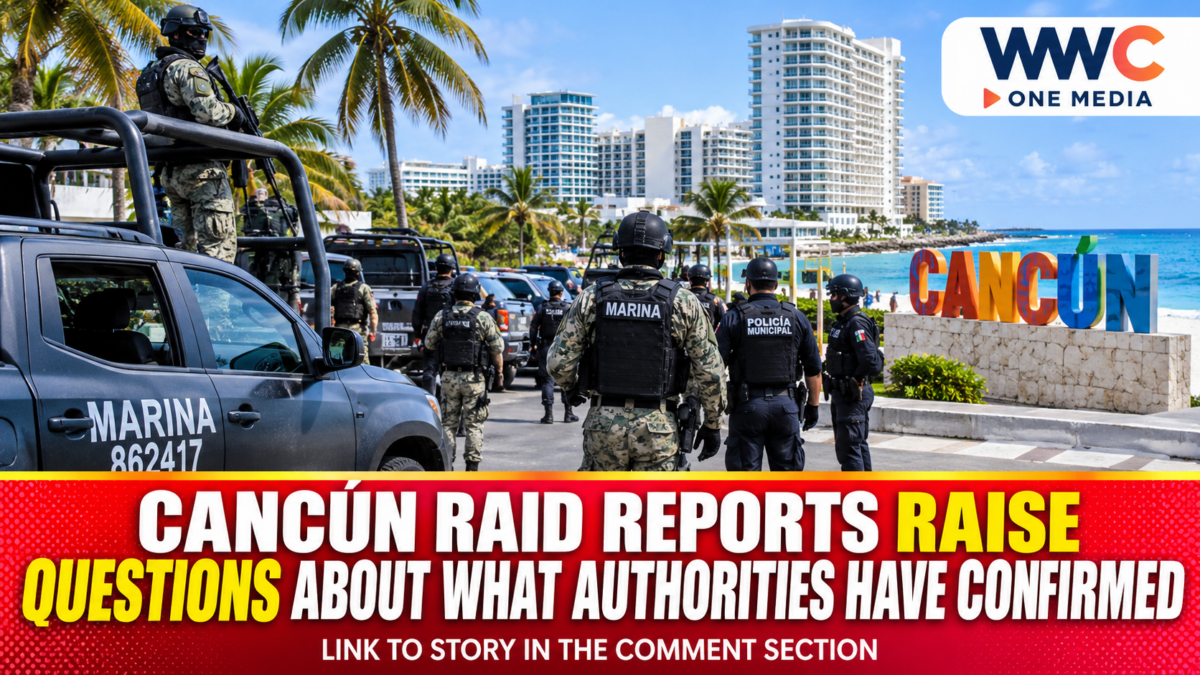
Reports of a federal law-enforcement operation in Cancún’s Supermanzana 68 circulated on November 22, 2026, describing a search of a property and the detention of several people. However, an incident-specific statement confirming the operation, the identities or number of those detained, and the evidence collected was not located in the publicly accessible Federal Attorney General’s Office press material reviewed for this report.
The missing confirmation matters because an arrest, a property search and a criminal conviction are three different legal events. Without an official account or court document, readers cannot reliably determine what authorities investigated, what evidence they collected or what legal action followed.
FGR Cancún raid: what the official record confirms
The Federal Attorney General’s Office, known by its Spanish initials FGR, maintains a public press-release section called FGR Informa. Its accessible listing includes federal announcements covering investigations, court proceedings, seizures and other enforcement actions.
The listing includes several releases dated November 22, 2026. Those announcements concern other cases, including proceedings involving people detained in Zacatecas and a separate case involving a person detained with money. The entries reviewed do not identify the reported Supermanzana 68 operation. fgr.org.mx
That distinction should not be overstated. The absence of a matching entry in the accessible listing does not prove that no operation occurred. It means that the specific incident has not been independently established through the material available for this report.
For a story involving an alleged federal search, the most useful confirmation would be an FGR communiqué, a court-authorised search record, a prosecutor’s statement or another official document identifying the operation.
Why an arrest report is not a finding of guilt
A person detained during an investigation is not automatically guilty of a crime. Mexican criminal proceedings require authorities to establish the legal basis for detention and pursue the applicable judicial process.
The distinction is particularly important when reports do not identify the alleged offence or explain the evidence collected. Without those details, publishing assumptions about the people involved or the property would risk presenting unproven allegations as established facts.
The FGR’s public releases distinguish between different procedural stages, including detention, presentation before a federal judge, a decision to initiate formal proceedings and a final conviction. Those stages should not be treated as interchangeable.
For readers, the practical question is not simply whether authorities conducted a search. It is whether the resulting investigation produced evidence that prosecutors can present through the legal process.
What an official account should clarify
A useful public statement would establish several basic details: which federal authority conducted the operation, whether a judicial search warrant was executed, what offence is being investigated and whether anyone was formally detained.
Authorities would also need to clarify whether any property or material was seized and whether the people involved were presented before the Federal Public Prosecutor. These details would help distinguish an investigative operation from a completed legal action.
The FGR’s press archive provides a public channel for announcements about federal cases. Its releases can help readers track whether an investigation advances beyond the initial enforcement stage. alertaamber.fgr.org.mx+1
Until a relevant record becomes available, the responsible approach is to avoid publishing the alleged case number, suspected offence, identities of detainees or descriptions of seized evidence as confirmed facts.
Why verification matters in local crime reporting
Public safety reporting can influence how residents understand an area and its security conditions. An inaccurate account of a police operation can unfairly associate a property, neighbourhood or individual with criminal activity.
This is why responsible reporting should separate what authorities have officially confirmed from what remains unverified. It should also avoid language that implies guilt before a court has made a determination.
For a federal investigation, the distinction is especially important because several agencies may participate in enforcement, while the prosecutor and courts have separate responsibilities. The presence of uniformed personnel or a security perimeter does not, by itself, establish the legal outcome of an investigation.
A clear official record would allow the public to understand the operation without relying on speculation.
What happens next
The key development to watch for is an incident-specific FGR announcement or a publicly accessible judicial record. Such a document could clarify the legal basis of the reported search, whether anyone was detained and what procedural steps followed.
If authorities confirm the operation, the report can be updated with the exact details contained in the official record. If no confirmation becomes available, the incident should remain identified as an unverified report rather than being presented as an established federal enforcement action.
For now, the available public material does not provide enough evidence to publish a definitive account of the reported Cancún operation.
Frequently asked questions
1. Did the FGR officially confirm the reported Cancún raid?
An incident-specific FGR confirmation was not located in the publicly accessible press material reviewed for this report.
2. Were people detained during the reported operation?
Local reports described detentions, but the number and legal status of the people involved were not independently confirmed through an official record.
3. What is the FGR?
The Fiscalía General de la República is Mexico’s federal attorney general’s office, responsible for federal criminal investigations and prosecutions.
4. Does being detained mean someone is guilty?
No. Detention is not a criminal conviction. Guilt must be established through the applicable judicial process.
5. Where can readers check for official updates?
Readers can monitor the FGR’s official press-release page for announcements and updates.