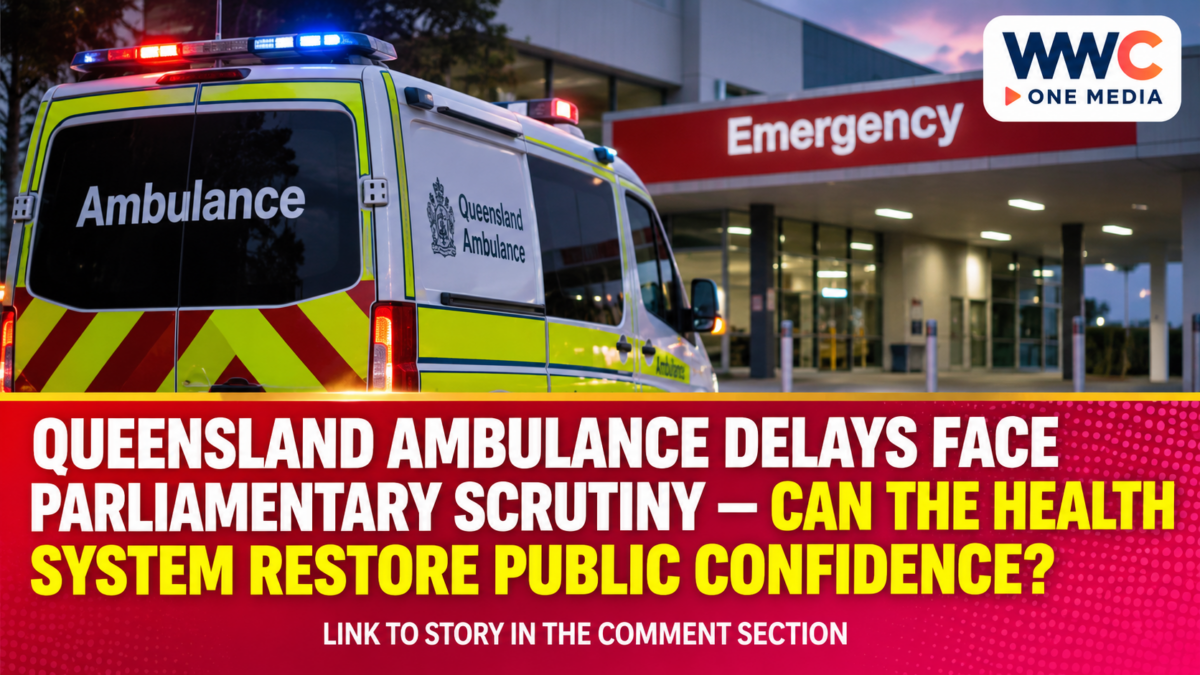
QUEENSLAND, Australia — Queensland ambulance delays have come under renewed parliamentary scrutiny following questions about emergency response times, patient deaths and the availability of frontline medical resources during the state legislature’s Nov. 19, 2026, sitting.
Health and Ambulance Services Minister Tim Nicholls faced questions concerning individual emergency incidents as official performance figures showed mounting pressure on parts of the state’s ambulance system.
The debate highlights a broader public healthcare challenge: whether investments in emergency vehicles, medical personnel and hospital infrastructure can translate into timely treatment for patients requiring urgent assistance.
Queensland ambulance delays put emergency response under scrutiny
Queensland’s parliamentary proceedings brought attention to concerns about the availability of ambulances and the handling of emergency calls.
Opposition Leader Steven Miles raised an incident involving a Coomera resident who reportedly died before an ambulance arrived following an emergency call on Nov. 9.
His questions focused on whether hospital handover delays affected the availability of emergency vehicles in nearby communities.
Nicholls explained that clinical incident investigations can examine ambulance crew availability, operational coordination and decisions made by clinical personnel.
The parliamentary exchange established that concerns had been raised at the legislative level. However, it did not establish a definitive medical finding that a particular delay caused a patient’s death.
That distinction remains important as Queensland examines the circumstances surrounding individual emergency incidents.
Families deserve clear explanations of what occurred, while healthcare workers and institutions must be assessed through evidence rather than assumptions.
Emergency response figures reveal growing pressure
Queensland Ambulance Service performance data for September 2026 recorded 118,626 calls through Australia’s Triple Zero emergency system.
In July, 93.1% of emergency calls were answered within 10 seconds. By September, that proportion had declined to 89%, below the service’s established 90% benchmark.
The figures also showed changes in response times for Code 1A emergencies, a classification used for incidents requiring critically urgent attention.
The median response time increased from 8.4 minutes in July to 9.4 minutes in September.
Meanwhile, the time within which 90% of these emergencies received a response increased from 17.4 minutes to 18.8 minutes over the same period.
These indicators measure different stages of emergency assistance.
Answering a telephone call promptly does not necessarily mean that an ambulance can immediately reach a patient. Dispatch decisions, vehicle availability and operational conditions may affect the time between requesting assistance and receiving treatment.
The figures illustrate why emergency healthcare performance cannot be assessed through a single measurement.
They also underline the importance of examining unusually long waiting periods alongside broader statewide results.
Hospital capacity remains part of the challenge
Ambulance availability is closely connected to the ability of hospitals to receive incoming patients.
When emergency personnel must wait before transferring a patient into hospital care, their availability for subsequent assignments can be affected.
This situation is commonly described in Australia as ambulance ramping.
In an Aug. 14 announcement, the Queensland government reported that statewide ramping had declined to 35.5% during the June quarter of 2026, its lowest quarterly level since December 2020.
The government presented that improvement as evidence of progress under its healthcare infrastructure programme.
Nevertheless, improvements in one performance indicator do not automatically establish that all emergency response problems have been resolved.
Hospital capacity and ambulance operations need to function together. Expanding the number of emergency vehicles may deliver limited benefits if hospitals cannot accommodate additional patients efficiently.
Similarly, adding hospital beds without sufficient clinical personnel may not produce the intended improvement in healthcare delivery.
Government investment faces a test of results
Queensland has introduced several initiatives intended to strengthen emergency healthcare capacity.
In February 2026, the state government announced the opening of an expanded A$8.31 million Queensland Ambulance Service Clinical Hub in Kedron.
The facility provides additional clinical assessment following emergency calls and helps determine the appropriate care pathway for patients.
Its multidisciplinary workforce operates around the clock.
The approach is designed to preserve ambulance availability for emergencies while connecting other patients with appropriate healthcare assistance.
During the Nov. 19 parliamentary session, Nicholls also outlined government commitments involving ambulance funding, additional personnel and fleet expansion.
The minister argued that the existing hospital bed shortage was among the pressures affecting healthcare delivery.
These investments represent an important component of Queensland’s response. Their effectiveness, however, must ultimately be judged through operational results and patient outcomes.
Announcements of additional resources should be accompanied by evidence that those resources are reaching the communities where emergency demand is greatest.
Why the issue matters beyond Australia
WWC Analysis: Queensland’s emergency healthcare challenges offer an important policy consideration for governments across the Asia-Pacific, including the Philippines.
An effective emergency response system requires more than purchasing ambulances or constructing hospitals.
It also requires coordination between dispatch centres, medical personnel, healthcare facilities and the organisations responsible for supporting patients after hospital treatment.
Governments should assess the entire patient journey, from the initial request for emergency assistance to the delivery of appropriate medical care.
Performance monitoring should identify both routine service outcomes and cases involving exceptionally long delays.
Transparent investigations can help policymakers distinguish isolated operational failures from broader structural weaknesses.
For the Philippines, the Queensland debate provides an opportunity to consider how emergency transport investment can be coordinated with hospital readiness, workforce development and regional healthcare planning.
The objective should be measurable improvements in access to emergency care rather than infrastructure expansion alone.
What happens next
The key developments to watch are the findings of individual clinical investigations and subsequent ambulance performance reports.
Further scrutiny should establish whether recently announced investments improve emergency response times and reduce operational bottlenecks.
Policymakers should also consider whether existing performance disclosures provide sufficient information about exceptionally long delays without compromising patient privacy.
For Queensland’s residents, the central issue is whether emergency medical assistance will be available when required.
Restoring confidence will depend on transparent accountability, reliable performance information and demonstrable improvements in healthcare delivery.
Frequently asked questions
What are Queensland ambulance delays?
They refer to situations in which patients experience extended waiting periods between requesting emergency assistance and receiving an ambulance response.
What is ambulance ramping?
Ambulance ramping occurs when emergency crews experience delays transferring patients into hospital care, potentially reducing their availability for other assignments.
What was Queensland’s emergency call-answering performance in September 2026?
The Queensland Ambulance Service reported that 89% of Triple Zero calls directed to the service were answered within 10 seconds.
Has Queensland established that the reported deaths were preventable?
The parliamentary proceedings reviewed raised concerns about individual incidents. They do not, by themselves, establish definitive findings of preventability.
What is Queensland doing to improve ambulance services?
Government initiatives include expanding clinical assessment capacity, increasing ambulance resources and pursuing hospital infrastructure improvements.