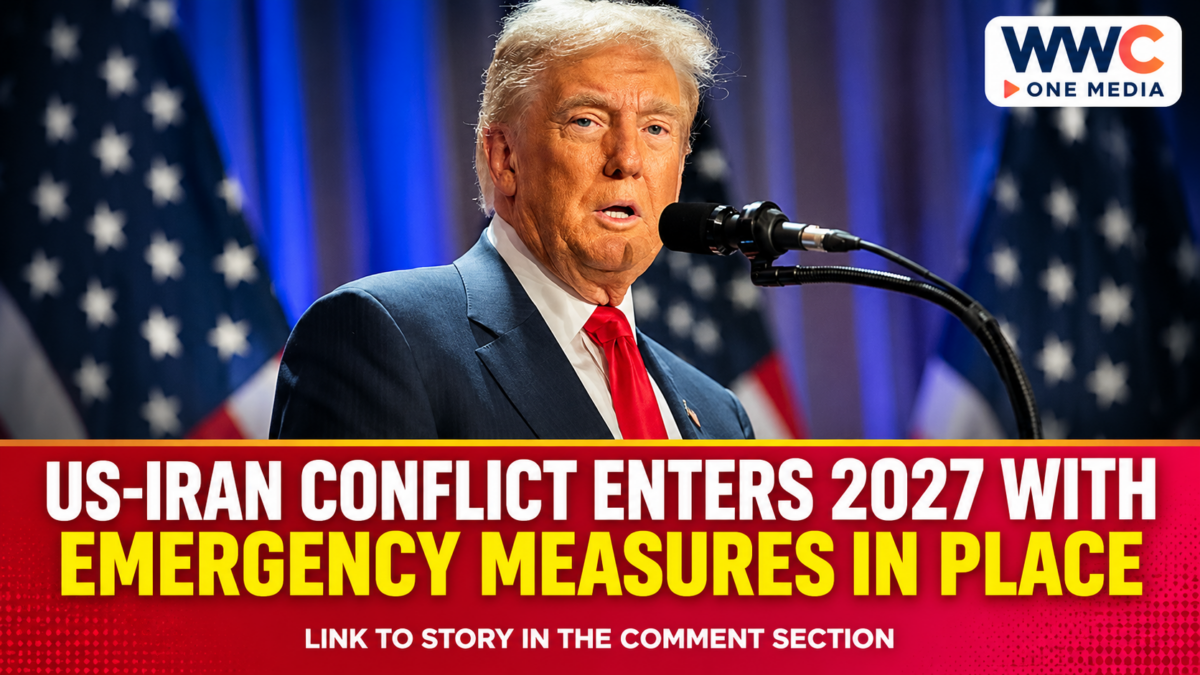
WASHINGTON — The United States is maintaining longstanding emergency measures concerning Iran as global energy markets confront continuing uncertainty over Middle Eastern oil supplies. US President Donald Trump issued a presidential notice on Nov. 3, 2026, extending a national emergency concerning Iran for another year.
The US-Iran conflict presents an economic challenge extending well beyond Washington and Tehran. Although petroleum shipments have shown signs of recovery, the possibility of renewed supply disruptions remains a concern for businesses preparing their 2027 budgets.
For Asian economies, including the Philippines, the central question is whether improving oil availability can translate into more predictable energy costs.
US-Iran conflict: Washington retains longstanding emergency measures
The presidential notice, published in the Federal Register on Nov. 5, concerns the national emergency originally established under Executive Order 12170 on Nov. 14, 1979.
The document states that relations between Washington and Tehran have not normalised and that the implementation of agreements dating to Jan. 19, 1981, remains ongoing.
The renewal is separate from another Iran-related national emergency established under Executive Order 12957 in March 1995.
That distinction matters because the continuation of an existing emergency framework should not automatically be interpreted as a new military decision.
The notice does not announce a January deadline for negotiations, establish a timetable for military operations or confirm a new peace agreement.
Businesses assessing geopolitical exposure should distinguish between legally effective government measures and potential policy changes that have yet to be formally announced.
Oil supply improves, but energy security remains uncertain
The US Energy Information Administration’s assessment released on Nov. 19 showed a 19% quarterly increase in combined petroleum shipments through major Middle Eastern transport chokepoints during the third quarter of 2026.
The improvement offers some relief to an international energy market exposed to disruptions associated with the conflict.
However, recovering shipment volumes should not be confused with a complete restoration of energy security.
Importers must consider not only the availability of petroleum but also the reliability of deliveries, transportation expenses and the possibility of unexpected interruptions.
These concerns complement the broader questions examined in WWC’s coverage of Trump’s US energy production strategy.
Increasing production elsewhere could create additional purchasing opportunities, but the commercial benefits depend on whether suppliers can deliver products at competitive prices.
What the 2027 oil forecast really means
The November Short-Term Energy Outlook projects an average Brent crude oil price of US$86 per barrel in 2027.
The projection offers a potential basis for business planning, particularly for companies whose expenses are sensitive to international petroleum prices.
Nevertheless, forecasts are not commitments from oil producers or guarantees of future market conditions.
A business preparing its annual budget would be taking a considerable risk if it assumed that the projected average would apply consistently throughout the year.
Even when annual average prices decline, individual months could experience substantial fluctuations.
Companies with significant fuel expenses may therefore benefit from examining several budget scenarios instead of depending exclusively on one commodity-price assumption.
The financial implications could differ considerably between manufacturers, airlines, shipping companies and businesses that rely on road transportation.
Why the Philippines should pay attention
For Philippine businesses, the importance of developments involving Iran is not limited to foreign policy.
International fuel costs can affect operating expenses, distribution budgets and the affordability of goods transported across the country.
However, the relationship between international crude prices and domestic retail prices is not necessarily immediate or proportional. Procurement arrangements, currency movements and distribution expenses must also be considered.
WWC’s reporting on Philippine-US trade discussions covering food and energy examines the wider importance of expanding procurement options.
Diversification could help businesses and governments reduce dependence on individual suppliers, although it cannot eliminate exposure to global commodity-price movements.
Longer-term investment in alternative energy sources also deserves consideration. WWC’s coverage of the Philippines’ developing solar workforce addresses another dimension of building domestic energy capabilities.
These approaches serve different purposes, but both demonstrate the value of preparing for uncertainty rather than assuming international conditions will remain favourable.
What happens next
The next US Energy Information Administration Short-Term Energy Outlook is scheduled for Dec. 8, 2026.
Its updated projections could help businesses assess whether recent improvements in petroleum availability are sufficient to support expectations of lower prices in 2027.
On the diplomatic front, any substantial change in US policy towards Iran should be assessed against formal announcements, published agreements and legally effective government decisions.
The distinction between diplomatic communication and an implemented policy will remain important as the new year approaches.
For businesses, the practical priority is to maintain flexibility in procurement, transportation and financial planning.
An improving energy outlook would be welcome, but preparing for an uncertain outcome remains more prudent than assuming geopolitical risks have disappeared.
Frequently asked questions
Has the United States extended its national emergency concerning Iran?
Yes. A presidential notice dated Nov. 3, 2026, continued the emergency established under Executive Order 12170 for another year.
Does the emergency renewal establish a January deadline?
No. The presidential notice does not establish a January deadline for military action or diplomatic negotiations.
What is the projected Brent crude oil price for 2027?
The November 2026 Short-Term Energy Outlook projects an annual average of US$86 per barrel. Actual prices could differ from that forecast.
Could the US-Iran conflict affect Philippine fuel prices?
It could, particularly through changes in international petroleum availability and prices. Domestic pricing also depends on exchange rates, procurement and distribution expenses.
When will the next US energy forecast be released?
The next Short-Term Energy Outlook is scheduled for Dec. 8, 2026.