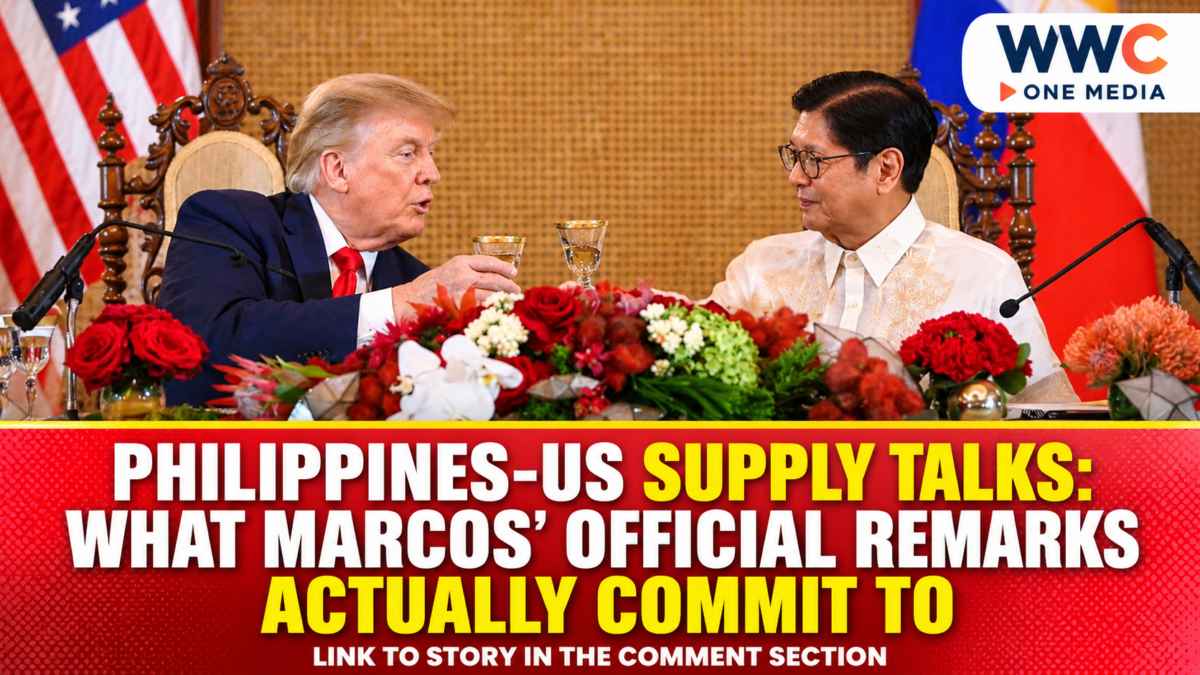
The Philippines is seeking wider access to American food and energy products after President Ferdinand Marcos Jr. met US President Donald Trump in Manila on November 18, 2026. But Marcos’ subsequent public explanation describes an effort to add purchasing options, with the commercial details still under development—not a confirmed policy requiring the country to buy all its agricultural and energy imports from one supplier.
That distinction matters because the practical consequences will be determined by the terms governments eventually agree on: which products qualify, how prices compare, what volumes can be delivered and whether Philippine buyers remain free to source from other markets.
The public documents currently available show an initiative with potential commercial value, but they do not establish a completed purchasing arrangement with fixed volumes, exclusive sourcing rules or an implementation date.
What the Philippines-US supply initiative covers
In a November 20 press conference in Shenzhen, Marcos separated the wider trade discussions with Washington into two parts.
The first concerns the tariff schedule the United States had sought to impose on Philippine goods. Marcos said that measure had been struck down in court, but that the issue had reopened broader discussions about trade between the two countries.
The second concerns food and energy. Marcos said the discussions with Trump focused on finding cheaper sources of imported commodities and expanding the Philippines’ access to American agricultural and energy products.
He described the US market as newly accessible for products that had previously faced regulatory barriers. He cited soybeans and wheat as possible agricultural purchases and said rice had also been discussed, although he was uncertain whether the United States could supply it.
The Presidential Communications Office’s November 21 account similarly described the initiative as wider access to American agricultural and energy supplies. It said the administration viewed additional sourcing options as a way to pursue more competitive prices and strengthen food and energy security. Presidential Communications Office+1
The official documents do not establish exclusive sourcing
The distinction between increased purchases and exclusive sourcing is central to understanding the proposal.
The White House’s November 18 fact sheet said the two leaders committed to address the US trade deficit with the Philippines through increased Philippine imports of American energy and agricultural products. It did not specify a requirement for the Philippines to source 100% of its food or energy from the United States. The White House
Marcos’ own explanation also emphasized diversification. In the Shenzhen transcript, he said the Philippines was continuing to develop partnerships with countries around the world so that it would not depend on only one source when essential supplies were needed.
That approach is commercially significant. A country that can compare offers from several suppliers has more room to assess price, delivery schedules, product quality and reliability. A single-source arrangement, by contrast, could leave buyers more exposed if a supplier experiences production problems, shipping delays or a sudden change in export policy.
The documents reviewed do not establish that the Philippines has accepted an exclusive purchasing obligation. They also do not provide a final list of products, minimum purchase volumes, pricing formula or enforcement mechanism.
Why delivered cost matters more than the headline price
For energy importers, a lower quoted price does not automatically translate into cheaper fuel for Filipino consumers and businesses.
The final cost can also depend on shipping distance, freight rates, insurance, storage, payment terms and the specifications of the product being purchased. These considerations are particularly relevant when comparing supplies from different regions.
The Philippines has already been exploring other ways to strengthen fuel security. Its plans to secure access to petroleum reserves stored overseas illustrate how supply resilience can involve storage rights and emergency access, not simply the identity of the country selling the fuel. WWC previously examined those proposed overseas oil-reservation arrangements.
Agricultural procurement requires a similarly careful assessment. Importers must consider the delivered price, product specifications, availability, food-safety requirements and the effect of additional supply on local producers.
The Philippines’ dependence on imported commodities is not limited to one product. For example, WWC’s report on the country’s palm oil import dependence and domestic production plans shows how import exposure can become a longer-term domestic industry and investment issue.
Philippine farmers and exporters also need clear terms
A broader trade relationship can create opportunities for Philippine businesses, but the benefits will depend on the products and conditions covered.
If the United States provides more accessible markets for Philippine exports, local producers may gain another destination for their goods. However, market access does not guarantee sales. Exporters still need to meet food-safety and regulatory standards, maintain reliable production and compete on delivered cost.
The same principle applies to agricultural imports. Additional foreign supply could help buyers respond to shortages or price increases, but it may also create stronger competition for local producers if imported goods arrive at lower prices.
That is why the government’s eventual negotiating details matter to farmers, food processors, importers and consumers. The terms should make clear whether purchases are voluntary and commercially negotiated, what safeguards apply to domestic industries and how the government will assess whether imported products offer value.
The wider regional picture is also relevant. ASEAN lawmakers have discussed stronger food reserves and energy coordination, reflecting the importance of maintaining multiple ways to respond to supply disruptions. WWC’s coverage of regional food and energy security proposals provides additional context for why diversification is not solely a bilateral concern.
What happens next
Marcos said government secretaries had started working on the details after the November 18 meeting in Malacañang. The Presidential Communications Office also said the administration wanted the tariff track finalized as soon as possible, while the food and energy initiative still required further work. Presidential Communications Office+1
The next meaningful step will be the publication of concrete terms. These should identify the products covered, the procurement process, any purchase targets, pricing conditions, delivery arrangements and the treatment of existing suppliers.
For businesses, those details will determine whether the initiative creates a commercially competitive option or remains a broad statement of intent. For households, the key question is whether any savings in procurement and transportation costs eventually reach retail prices.
Until the terms are made public, the proposal should be understood as an effort to expand access and negotiate additional supply—not proof that the Philippines has committed to buy all its food and energy from the United States.
Frequently asked questions
Has the Philippines agreed to buy all its food and energy from the United States?
The official Philippine transcript describes an effort to expand supply options and develop new partnerships. The White House fact sheet refers to increased imports, but neither document specifies a 100% exclusive sourcing requirement.
What did Marcos discuss with Trump?
Marcos said the discussions included access to American agricultural and energy products, with the aim of finding more affordable sources of imported commodities.
Is the US-Philippines trade arrangement already final?
Marcos said the details of the food and energy initiative still had to be worked out. The public documents reviewed do not provide a complete set of final purchasing terms.
Could the initiative lower food and fuel prices?
It could create additional sourcing options, but lower prices are not guaranteed. The outcome will depend on purchase prices, freight, exchange rates, product availability and domestic distribution costs.
Will Philippine farmers be affected?
Potentially. The effect will depend on which agricultural products are imported, the quantities involved, the timing of shipments and whether safeguards or support measures are included in the final arrangements.