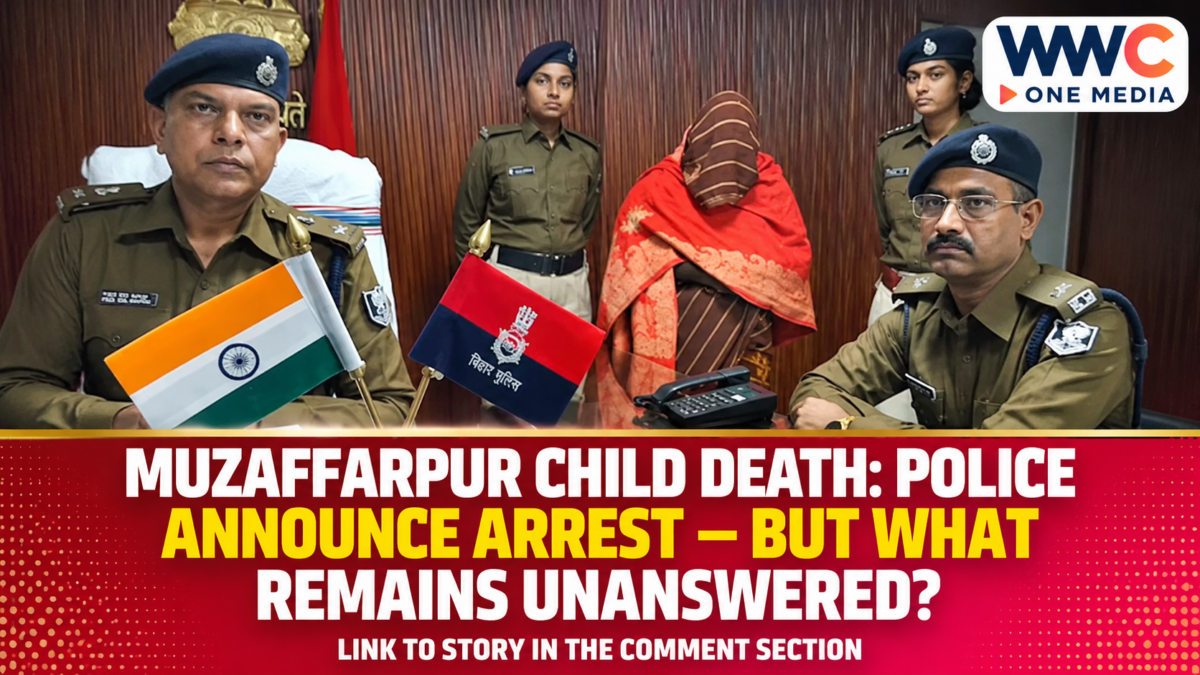
MUZAFFARPUR, INDIA — Police in Bihar’s Muzaffarpur district announced on Nov. 21 the arrest of a woman in connection with the killing of a minor girl. A separate announcement from the district police referenced a media briefing by its rural police superintendent.
The Muzaffarpur child death case raises broader questions about the protection of vulnerable children, the responsibilities of law enforcement and the safeguards available under India’s legal system.
While the arrest represents a significant development, the publicly accessible police announcements provide limited information about the circumstances surrounding the child’s death.
The distinction between an investigative finding and a judicial determination remains essential, particularly in criminal proceedings involving children.
Muzaffarpur child death: What police have confirmed
The district police announced that one female suspect had been arrested in connection with the killing of a minor girl.
The announcement establishes that authorities have taken investigative action. However, it does not independently establish the suspect’s criminal responsibility or provide a complete account of the evidence.
An arrest should not be interpreted as the conclusion of a criminal investigation.
Further official documentation would help clarify the circumstances surrounding the death, the legal provisions being applied and the evidence supporting the police action.
Similar distinctions between confirmed developments and unresolved allegations were examined in WWC ONE MEDIA’s coverage of the Bulandshahr child death investigation.
Responsible reporting requires that investigators’ allegations remain separate from findings ultimately established through judicial proceedings.
Why protecting children requires more than criminal investigations
India’s Protection of Children from Sexual Offences Act of 2012, commonly known as the POCSO Act, establishes a framework for responding to offences involving children.
Its provisions address the reporting of suspected offences, the treatment of children during investigations and arrangements for their protection.
Section 19 establishes reporting obligations and procedures for police authorities. Where officers determine that a child requires immediate assistance, protective arrangements must be made.
The legislation also establishes a mechanism for notifying child welfare authorities and the appropriate court.
These requirements illustrate an important principle: responding to an alleged offence involves more than gathering evidence against a suspect.
Authorities must also consider the child’s immediate safety, access to assistance and continuing welfare.
WWC’s separate coverage of the Ameenpur child rescue examined the importance of distinguishing a successful police intervention from the longer-term responsibilities of child protection institutions.
The circumstances of that incident differ from the Muzaffarpur investigation, but both subjects highlight the importance of understanding what happens beyond an initial police announcement.
Accessible justice for children with disabilities
Children who experience communication difficulties may require additional assistance when interacting with investigators or participating in legal proceedings.
Section 26 of the POCSO Act provides for interpreters, translators and specialised communication assistance where appropriate.
Section 38 provides comparable arrangements when courts receive evidence from children who require such support.
These provisions recognise that conventional questioning methods may not meet every child’s communication needs.
WWC analysis: A justice system becomes more accessible when it accommodates the individual rather than requiring every individual to navigate identical procedures.
For children with disabilities, effective communication can be particularly important when reporting concerns, expressing fears or describing circumstances that require intervention.
The availability of trained professionals and appropriate communication support should therefore be considered part of the broader safeguarding framework.
Whether these arrangements were relevant to or used in the Muzaffarpur case has not been established in the official materials reviewed.
Why the child’s identity must remain protected
Cases involving minors require particular caution when personal information is released publicly.
Section 23 of the POCSO Act restricts publication of information that could reveal a protected child’s identity. The restrictions extend beyond the child’s name to other potentially identifying details.
This approach recognises that several seemingly ordinary pieces of information, when combined, can expose an individual’s identity.
News organisations must therefore consider the consequences of publishing photographs, residential information and identifiable family details.
The importance of responsible media coverage has also been examined in WWC’s reporting on Iloilo City’s child protection and media initiatives.
Although Philippine and Indian laws differ, the underlying editorial responsibility is comparable: informing the public without unnecessarily compromising a child’s privacy or dignity.
Public interest does not require the publication of every personal detail connected with a criminal investigation.
What happens next
Further police announcements and publicly accessible judicial records could provide a clearer account of the Muzaffarpur investigation.
Important matters requiring additional verification include the formal charges, the evidentiary basis for the arrest and the status of any subsequent court proceedings.
Separate questions concerning previous safeguarding interventions cannot be answered responsibly without the relevant official documentation.
The available information does not establish whether any particular institution failed to fulfil its responsibilities. Such conclusions would require evidence showing what authorities knew, when they received that information and what action they took.
WWC analysis: The wider public interest lies not only in establishing criminal responsibility but also in understanding whether protective systems can identify risks and respond effectively.
Police investigations, judicial proceedings and child welfare reviews perform different functions. Each should be evaluated using the appropriate records rather than assumptions drawn from incomplete information.
For now, the confirmed development remains the police announcement of an arrest. Questions concerning the complete circumstances of the child’s death remain subject to further verification.
Frequently asked questions
What happened in Muzaffarpur, Bihar?
District police announced on Nov. 21, 2026, that a woman had been arrested in connection with the killing of a minor girl.
Has anyone been convicted in the Muzaffarpur child death case?
No conviction was established in the publicly accessible official materials reviewed. An arrest is not equivalent to a finding of guilt.
What is India’s POCSO Act?
The Protection of Children from Sexual Offences Act of 2012 establishes legal protections for children, including procedures for investigations, safeguarding and court proceedings.
Does Indian law provide communication assistance for children with disabilities?
Yes. The POCSO Act contains provisions allowing specialised assistance during the recording of children’s statements and court evidence.
Why are identifying details being withheld?
Protecting children’s privacy and dignity is an important editorial responsibility, particularly when criminal investigations may involve sensitive allegations.