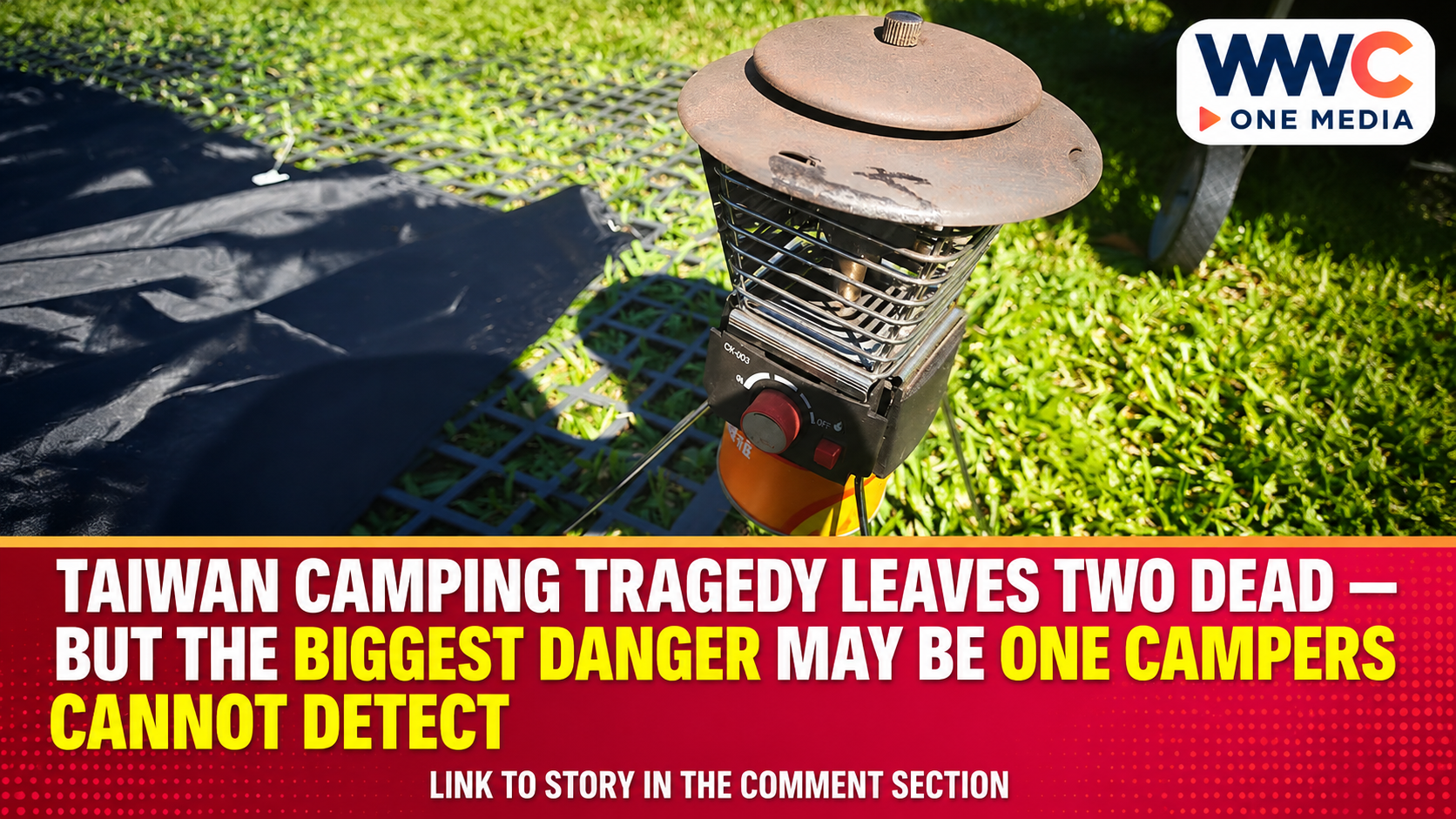
TAOYUAN, Taiwan — Taiwan camping safety remains an important public health concern as outdoor travellers face the dangers of carbon monoxide poisoning from fuel-burning heaters, portable stoves and charcoal grills used inside enclosed shelters.
Taoyuan’s existing fire safety guidance identifies poorly ventilated spaces and the indoor use of combustion equipment as potentially life-threatening hazards.
For campers preparing for colder nights in mountainous destinations, staying warm should never come at the expense of personal safety.
Unlike smoke from a visible fire, carbon monoxide cannot be detected through smell or sight, making exposure particularly dangerous when people are asleep.
Taiwan Camping Safety: Why Portable Heaters Can Become Dangerous
Portable gas stoves, charcoal burners and other fuel-powered appliances are commonly associated with outdoor cooking and heating.
However, equipment intended for outdoor use should not be brought inside tents for warmth.
Burning fuel can release carbon monoxide, which may accumulate inside enclosed spaces and interfere with the body’s ability to transport oxygen.
A person exposed to the poisonous gas may lose consciousness or experience life-threatening complications.
Preparing suitable clothing and equipment before travelling is particularly important in colder destinations, as highlighted in WWC ONE MEDIA’s coverage of winter mountain climbing dangers in Japan.
Outdoor travellers should arrange appropriate sleeping equipment rather than depend on combustion appliances inside their accommodation.
Taiwan Has Documented Similar Camping Emergencies
The dangers associated with camping equipment are not merely theoretical.
On Dec. 25, 2022, three people were taken to hospital following a carbon monoxide poisoning incident at a campsite in Ren’ai Township, Nantou County.
The affected individuals included two adults and one child. Blood tests subsequently confirmed carbon monoxide poisoning.
Poor ventilation during the use of a gas-powered heater inside a tent was identified as the suspected cause.
The incident illustrates why equipment intended to provide comfort during cold weather can become hazardous when used in inappropriate surroundings.
Why Carbon Monoxide Poisoning Is Difficult to Detect
Carbon monoxide poisoning can initially resemble other common illnesses, potentially making it difficult for affected individuals to recognise the seriousness of their condition.
Symptoms may include:
- Headaches and dizziness
- Unusual weakness
- Nausea and vomiting
- Confusion
- Chest discomfort
- Loss of consciousness
People who are asleep may experience fatal exposure before recognising any warning symptoms.
Campers experiencing unexplained illness should consider whether fuel-burning appliances have been operating nearby, particularly when several members of the same group become unwell.
Suspected carbon monoxide exposure requires immediate emergency medical attention.
How Campers Can Stay Warm Without Dangerous Equipment
Travellers preparing for overnight camping should consider insulated sleeping bags, thermal clothing and other non-combustion methods of staying warm.
Portable cooking equipment should remain outdoors, away from enclosed sleeping areas.
Campers should also review equipment instructions, assess expected weather conditions and prepare suitable supplies before leaving home.
WWC ONE MEDIA’s coverage of weather-related travel and outdoor safety precautions highlights another important aspect of preparation: understanding environmental conditions before undertaking outdoor activities.
A suitable carbon monoxide detector may provide an additional warning mechanism, but it should never be treated as permission to operate outdoor combustion equipment inside a tent.
If an alarm activates or poisoning is suspected, occupants should immediately move into fresh air and contact emergency services.
Taoyuan Continues Its Campsite Safety and Registration Programme
Taoyuan’s municipal government has introduced consultation services throughout 2026 to assist campsite operators with registration and regulatory requirements.
The programme includes in-person consultations, telephone assistance, online support and professional advice concerning soil and water conservation.
Consultation locations include the Luofu Visitor Centre and Lala Mountain Visitor Centre.
The initiative is intended to support legally operated, safer and more welcoming camping environments.
Travellers can also consult Taiwan’s official camping information platform when researching registered campsites.
Checking whether recreational facilities meet applicable requirements should form part of a wider travel safety routine, similar to reviewing water quality and recreational safety conditions in New Zealand before undertaking outdoor activities.
Registration checks, however, should not replace personal precautions when using camping equipment.
What Happens Next for Camping Safety?
Camping safety requires attention from both visitors and accommodation operators.
Clear equipment restrictions, accessible emergency contact information and appropriate safety instructions can help travellers make informed decisions.
Visitors should prepare for changing temperatures, identify emergency access arrangements and familiarise themselves with local campsite rules before travelling.
In Taiwan, people requiring emergency fire or ambulance assistance can call 119.
The essential precaution remains straightforward: keep outdoor fuel-burning appliances outside sleeping shelters and choose safer alternatives for overnight warmth.
For outdoor travellers across Asia-Pacific, preparing the right equipment is not simply a matter of comfort. It is a fundamental part of protecting everyone participating in the trip.