TAIPEI, TAIWAN — November 27, 2026 — Taiwan has retained tariff exemptions for 322 agricultural products under the latest proposed United States trade measures, preserving an important competitive advantage for its agricultural and fisheries industries as Washington intensifies its scrutiny of global manufacturing practices.
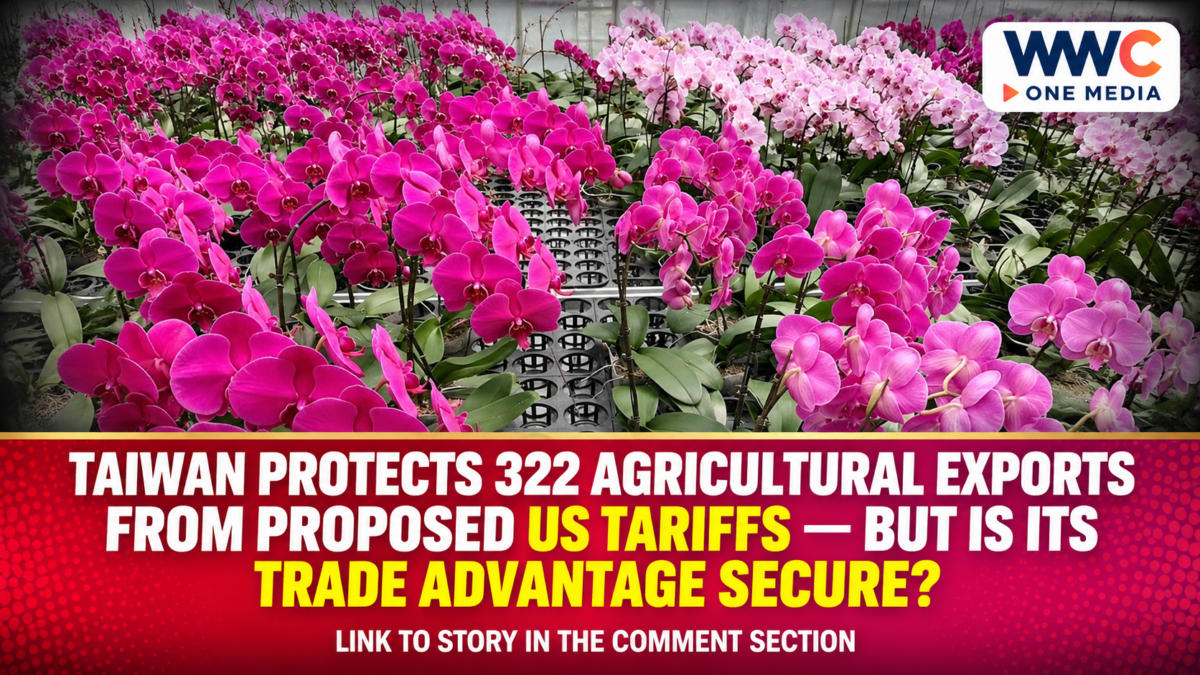
Among the protected products are tea, guava, moth orchids and flamingo flowers, with 26 agricultural items benefiting from exemptions specifically granted to Taiwan.
The development comes after Washington proposed tariffs of up to 15% on Taiwanese goods following an investigation into structural manufacturing overcapacity under Section 301 of the US Trade Act of 1974.
While the exemptions provide some reassurance for agricultural businesses, the proposed tariff arrangements remain subject to further legal procedures.
Taiwan agricultural tariffs: 322 products retain exemptions
Taiwan’s Ministry of Agriculture has confirmed that the agricultural exemptions contained in the latest US tariff proposal match those under an earlier Section 301 trade action concerning forced-labour imports.
The retention of these exemptions means eligible agricultural products would avoid the proposed additional duties associated with the manufacturing overcapacity investigation.
Taiwan’s existing general agricultural tariff treatment remains at 10%, without an additional most-favoured-nation (MFN) tariff being stacked on top, under the arrangements described by the ministry.
However, individual products may receive different treatment depending on applicable exemptions and customs classifications.
The development forms part of Washington’s broader Section 301 tariff proposals affecting 14 economies, which could reshape trade conditions across the Asia-Pacific region.
Taiwan’s orchids, edamame and seafood retain competitive advantages
Taiwan continues to benefit from relatively favourable tariff treatment on several agricultural and fisheries exports compared with international competitors.
The differences are particularly notable in ornamental plants, frozen vegetables and seafood.
| Agricultural product | Taiwan tariff treatment | Competitor tariff treatment |
|---|---|---|
| Moth orchids | 0% | Netherlands: 10% |
| Moth orchids | 0% | Canada: 50% |
| Edamame | 10% | China: 41.3% |
| Tilapia | 10% | China: 37.5% |
| Mahi-mahi | 10% | Peru: 12.5% |
These are the current comparative rates identified by Taiwan’s agricultural authorities, rather than the final rates under the newly proposed US trade action.
For Taiwanese exporters, lower duties could help preserve competitive pricing, maintain commercial relationships and support access to American buyers.
Nevertheless, tariffs represent only one component of international competitiveness. Transportation expenses, product quality, production capacity and exchange-rate movements can also influence the final cost of imported goods.
The evolving tariff landscape is particularly relevant to Asian seafood exporters facing proposed US trade restrictions, as importers evaluate potential changes to their international sourcing arrangements.
Why the United States is proposing new tariffs
The latest US trade investigation began on March 11, 2026, covering 16 economies and trading partners.
On November 25, Washington issued findings in 14 investigations, concluding that certain government policies and practices related to manufacturing capacity were actionable under Section 301.
In Taiwan’s case, US trade officials raised concerns about industrial development policies, government-supported research, manufacturing incentives and industrial financing.
The American government argues that such practices can disadvantage US manufacturers and restrict commercial opportunities.
Washington’s proposed tariff treatment for Taiwan takes into consideration existing trade duties, bilateral consultations and commitments under the US–Taiwan Agreement on Reciprocal Trade.
Although the investigation primarily concerns manufacturing, its potential consequences extend beyond industrial goods because the proposed measures cover imports more broadly, subject to exemptions.
Similar questions surround South Korea’s existing trade arrangements with the United States, illustrating how bilateral agreements interact with separate US trade investigations.
Taiwan mobilises NT$18 billion to support agriculture
Taiwan has allocated NT$18 billion under a special resilience budget to strengthen its agricultural sector.
The support programme focuses on financial assistance, industrial competitiveness and expansion into overseas markets.
Agricultural authorities also plan to expand the NT$30 billion agricultural security fund to safeguard the interests of farmers and fisheries workers.
These measures could help agricultural businesses respond to changing international trade conditions while pursuing alternative commercial opportunities.
Export diversification can reduce dependence on a single overseas market, although developing new distribution networks and securing customers may require substantial investment.
Agricultural trade also remains central to broader international negotiations, including China’s agricultural purchasing commitments and tariff discussions with the United States.
What happens next?
Taiwan’s agricultural authorities intend to continue working with the Executive Yuan’s Taiwan-US economic and trade working group to preserve favourable tariff arrangements.
The immediate priority is ensuring that the outcome of the US investigation remains consistent with Taiwan’s negotiated trade interests.
For agricultural exporters and American importers, the eventual tariff schedules and product-specific exemptions will be particularly important.
Businesses should distinguish between existing customs duties, proposed tariff changes and exemptions that apply only to specified trade measures.
Taiwan’s retention of 322 agricultural exemptions offers meaningful protection under the current proposal. However, the final outcome will determine whether that advantage can be maintained over the longer term.