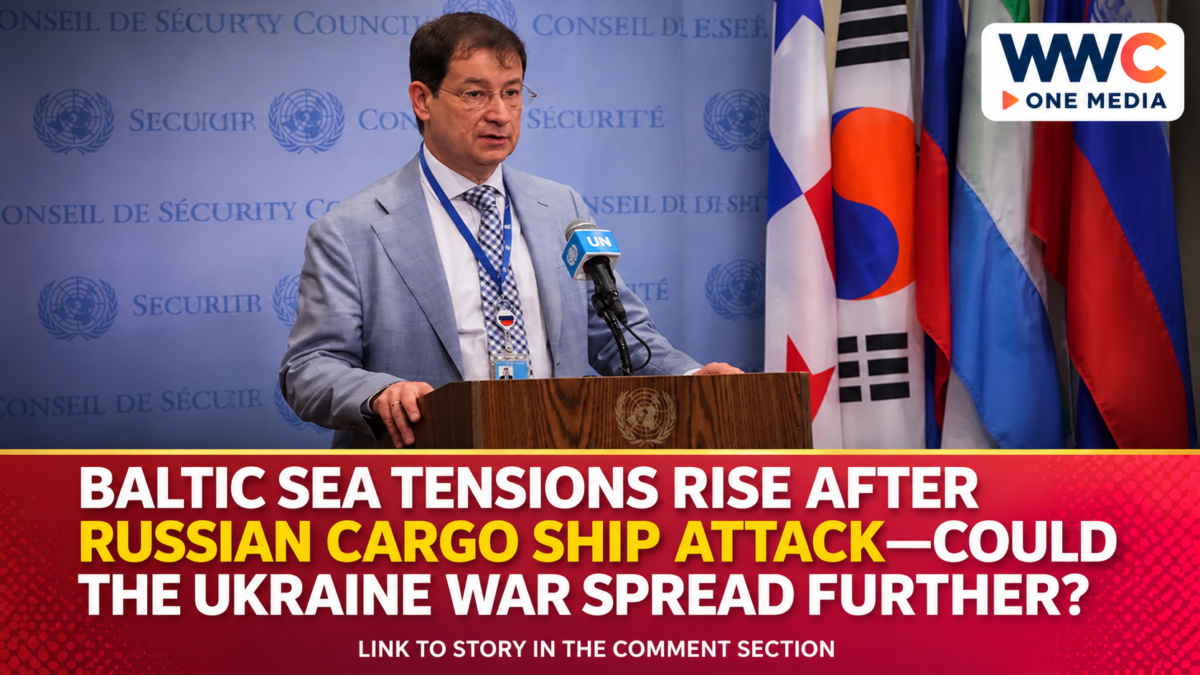
Baltic Sea tensions have intensified following an incident involving the Russian cargo vessel Sparta II on November 21, 2026, prompting emergency maritime cooperation between Estonia and Finland and raising wider questions about European security.
Estonia has rejected suggestions that it authorised foreign military operations using its airspace or maritime territory, maintaining that it takes violations of its national boundaries seriously.
The incident highlights the increasingly sensitive relationship between maritime security, the Russia–Ukraine war and the North Atlantic Treaty Organization’s (NATO) collective defence commitments.
Baltic Sea tensions grow following Sparta II incident
Estonian maritime rescue authorities received an alert on November 21 that the Sparta II, a dry cargo vessel identified by Estonia as belonging to an organisation under Russia’s Defence Ministry, had been struck and was on fire.
The vessel subsequently drifted from Estonia’s exclusive economic zone into Finland’s exclusive economic zone before entering Finnish territorial waters.
Estonian Foreign Minister Margus Tsahkna confirmed that his government was coordinating with Finnish authorities and regional allies in response to the incident.
At Finland’s request, Estonia dispatched the naval vessel Kindral Kurvits to assist with firefighting and preparations to contain potential maritime pollution.
The emergency response demonstrates how a maritime incident involving a Russian vessel can require immediate cooperation between neighbouring European countries, regardless of the broader political disagreements surrounding the war.
Estonia rejects authorisation of foreign military operations
Estonia has maintained that it did not grant any foreign country permission to conduct military operations using its airspace or maritime territory.
Tsahkna reiterated Estonia’s position on November 23, stating that the country had not authorised its territory or airspace to be used for Ukrainian drone attacks against Russia and would not permit such activities.
Estonia also maintained that the November 21 incident had not increased the level of military threat facing the country.
The distinction between an unauthorised airspace violation and government-approved military participation is important when assessing whether an incident represents a wider international confrontation.
The disagreement comes amid continuing debates surrounding NATO’s military posture and Russia’s European security demands.
NATO’s nuclear policy remains focused on deterrence
NATO maintains a nuclear deterrence framework intended to discourage aggression, prevent coercion and preserve peace.
Its current nuclear policy was updated in 2024 and builds upon the alliance’s 2022 Strategic Concept and subsequent decisions by member governments.
NATO identifies the United States, United Kingdom and France as its three nuclear-armed member countries.
The alliance also maintains that circumstances requiring the use of nuclear weapons are extremely remote.
Nuclear deterrence does not automatically mean that conventional military incidents will result in nuclear retaliation. Political decisions, security assessments and the circumstances of any confrontation remain central to how governments respond.
The Sparta II incident therefore needs to be distinguished from an established change in NATO’s nuclear readiness or an official decision to enter direct military conflict with Russia.
What NATO’s collective defence treaty actually means
Article 5 of the North Atlantic Treaty establishes the principle that an armed attack against a member country, within the treaty’s applicable scope, is treated as an attack against the alliance.
However, the treaty allows individual members to determine the actions they consider necessary when assisting an ally.
It does not prescribe an automatic nuclear response.
Article 4 separately provides a mechanism for member countries to consult whenever they believe their security, territorial integrity or political independence is threatened.
These provisions are particularly relevant to incidents near national boundaries, where determining responsibility and understanding the circumstances of an event are essential before deciding how to respond.
Diplomatic negotiations also remain relevant to the wider security environment, including ongoing discussions about European participation in negotiations involving Russia and Ukraine.
Maritime security has wider implications for international trade
For businesses operating across Asia-Pacific and European markets, developments in the Baltic Sea warrant attention beyond their immediate military implications.
Maritime emergencies can potentially create operational challenges involving vessel safety, insurance coverage, environmental protection and shipping schedules.
Companies involved in international logistics must also distinguish security incidents from regulatory restrictions that could independently affect their commercial activities.
WWC ONE MEDIA has previously examined the commercial implications of proposed European sanctions targeting Russian financial institutions, shipping and energy services.
However, the Sparta II incident alone does not establish that wider shipping restrictions, insurance premium increases or international supply disruptions have occurred.
Such consequences would require separate confirmation.
What happens next?
Further official clarification regarding the circumstances of the Sparta II incident will be important in determining its broader diplomatic consequences.
Estonia’s stated position remains that foreign military operations are not authorised through its airspace or maritime territory.
NATO’s published security framework, meanwhile, continues to distinguish collective defence, political consultations and nuclear deterrence.
The central question is whether governments can prevent individual maritime incidents from developing into direct international confrontations while maintaining communication and protecting maritime safety.
For now, the confirmed emergency response and Estonia’s official statements provide a clearer picture than speculation about an imminent nuclear conflict.