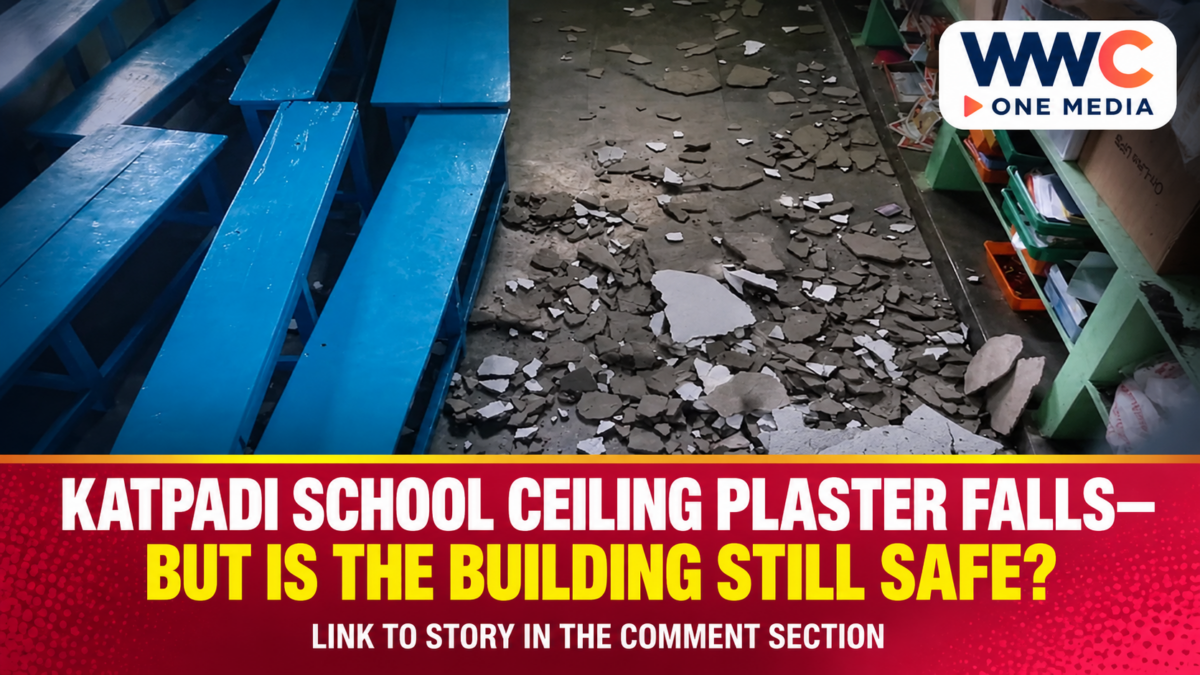
VELLORE, INDIA — The safety of government school buildings deserves attention beyond their inauguration, particularly when classrooms accommodate young children who depend on public education facilities.
Katpadi, one of the seven administrative development blocks in Vellore district, Tamil Nadu, provides a local setting for examining the importance of construction quality, infrastructure maintenance and classroom safety.
School safety must extend beyond construction
Completing a government-funded classroom should not mark the end of infrastructure oversight.
Regular inspections, preventive maintenance and clear procedures for reporting building defects should form part of school infrastructure management.
Across Asia, education infrastructure remains an important public investment, as highlighted by developments involving safer and more resilient school buildings.
Why ceiling damage deserves immediate attention
Damage to ceiling plaster should be assessed by qualified professionals before conclusions are reached about the condition of a building.
Detached plaster does not necessarily establish that the structural roof itself has failed. However, falling building material presents a potential safety hazard inside occupied classrooms.
School administrators should prioritise student protection while qualified personnel determine the extent and cause of any damage.
Public construction and accountability
Government-funded education projects should be supported by transparent procurement, construction documentation and appropriate quality assessments.
The wider issue of accountability in publicly funded school construction deserves sustained attention across the region.
Construction completion certificates, inspection records and contractual maintenance obligations are important documents when evaluating the performance of public infrastructure projects.
Keeping education accessible and safe
Infrastructure concerns should not force families to choose between classroom safety and uninterrupted education.
Temporary learning arrangements should be considered whenever an occupied classroom presents a potential hazard.
Previous regional coverage of school building damage and precautionary closures in Thailand highlights the importance of maintaining access to education while protecting students.
What should happen next?
Any suspected classroom defect should be documented, professionally assessed and addressed before the affected area returns to normal use.
Public communication should distinguish confirmed engineering findings from preliminary observations and unverified allegations.
For families, the priority remains straightforward: children should be able to attend school without unnecessary risks to their safety.