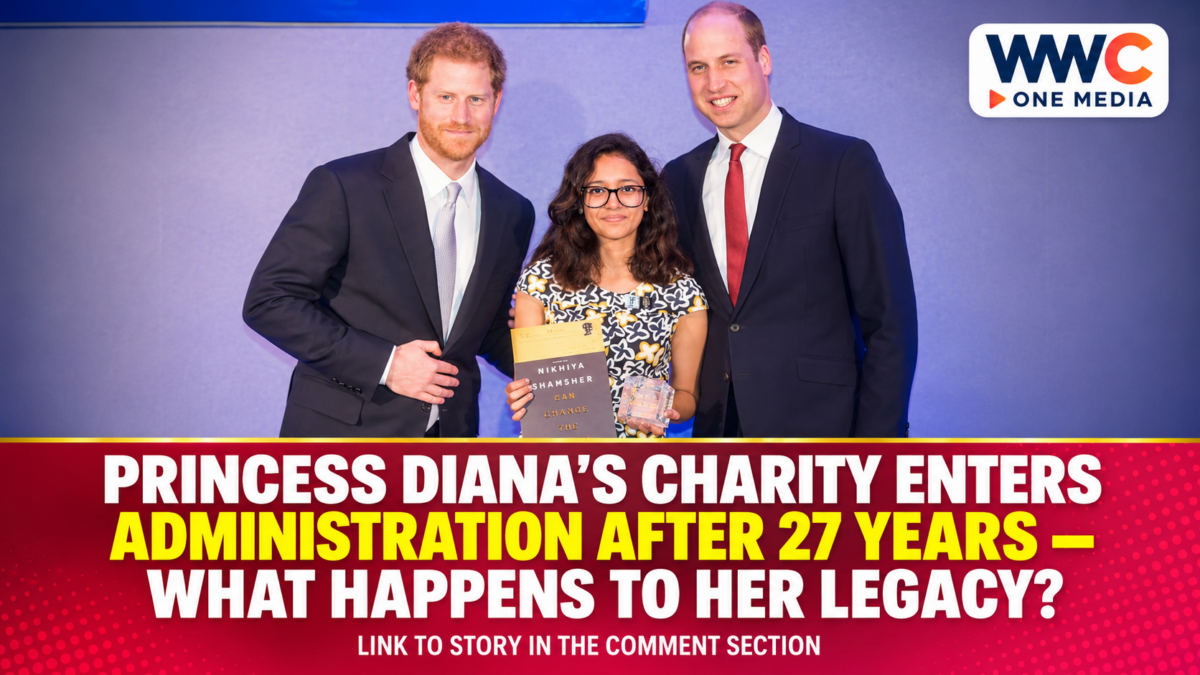
LONDON, United Kingdom — The Diana Award charity, established in memory of Diana, Princess of Wales, entered administration on Nov. 26, 2026, placing the future of its youth empowerment initiatives under uncertainty.
Licensed insolvency practitioners Nick Parsk and Carrie James, partners at Oury Clark Chartered Accountants, were appointed as administrators of the organisation.
The development marks a significant turning point for an institution dedicated to encouraging young people to contribute to their communities and become agents of positive social change.
For beneficiaries, donors and supporters, attention now turns to whether the charity’s activities can continue under a financially sustainable arrangement.
Diana Award charity enters a critical chapter
The Diana Award was established to carry forward Princess Diana’s commitment to helping others, particularly young people.
Its mission extended beyond recognising individual achievements, encompassing personal development and community participation.
The organisation was formally incorporated as a company limited by guarantee on March 10, 2006. Unlike a conventional commercial enterprise, it has no share capital.
Its entry into administration highlights the distinction between an organisation’s charitable mission and its ability to maintain financially sustainable operations.
Even institutions associated with internationally recognised public figures must manage their financial commitments and operating resources.
What does administration mean for the Diana Award?
Under the United Kingdom’s insolvency framework, administration places control of an organisation and its assets in the hands of appointed insolvency practitioners.
The process provides an opportunity to assess whether an organisation can be rescued or whether alternative arrangements would produce a better outcome for creditors.
Administration does not automatically mean permanent closure.
Possible outcomes include restructuring, transferring viable operations, reaching an agreement with creditors or proceeding towards liquidation if recovery proves impractical.
The administrators must evaluate the organisation’s circumstances before determining which options are available.
Financial sustainability remains an important consideration for institutions delivering public and community services, including those involved in supporting military veterans and their communities.
A legacy that extends beyond royal recognition
Princess Diana’s humanitarian work included advocacy for children, homeless people, individuals living with HIV and AIDS, and people affected by disabilities.
Her public activities also included campaigning against landmines.
Diana died on Aug. 31, 1997, following a car accident in Paris, France.
The Diana Award became one of the initiatives associated with her humanitarian legacy, placing young people and their contributions to society at the centre of its work.
The charity’s financial difficulties do not erase the significance of the achievements it has recognised.
However, its administration raises questions about how institutions dedicated to humanitarian causes can preserve their missions when their existing operating structures face financial challenges.
Youth development and the future of social impact
Charitable organisations can provide opportunities for young people to build confidence, develop leadership skills and participate in their communities.
These objectives are particularly relevant to education and youth development initiatives across Asia-Pacific economies, including ongoing discussions surrounding Indonesia’s education and teacher reforms.
For organisations that recognise emerging leaders, the long-term value of their work extends beyond award ceremonies.
Recognition can encourage young individuals to continue pursuing community projects, social innovation and public service.
The importance of recognising achievement is also reflected in initiatives such as the entrepreneurship award received by former Royal Marine Oliver Spence.
These are separate initiatives, but they illustrate the broader role that recognition and institutional support can play in personal and professional development.
What happens next?
The immediate focus will be on the administration process and any proposals concerning the Diana Award charity’s future.
Under the standard UK administration framework, insolvency practitioners generally have eight weeks to prepare their proposals.
These proposals can outline how the organisation’s financial affairs will be managed and whether its operations can be preserved, transferred or brought to an orderly conclusion.
Beneficiaries and supporters will need to await formal announcements concerning the future of individual programmes and activities.
No definitive outcome for the charity’s long-term operations has been established in the records reviewed.
While the organisation faces uncertainty, the humanitarian ideals associated with Princess Diana remain separate from the financial condition of any individual institution.