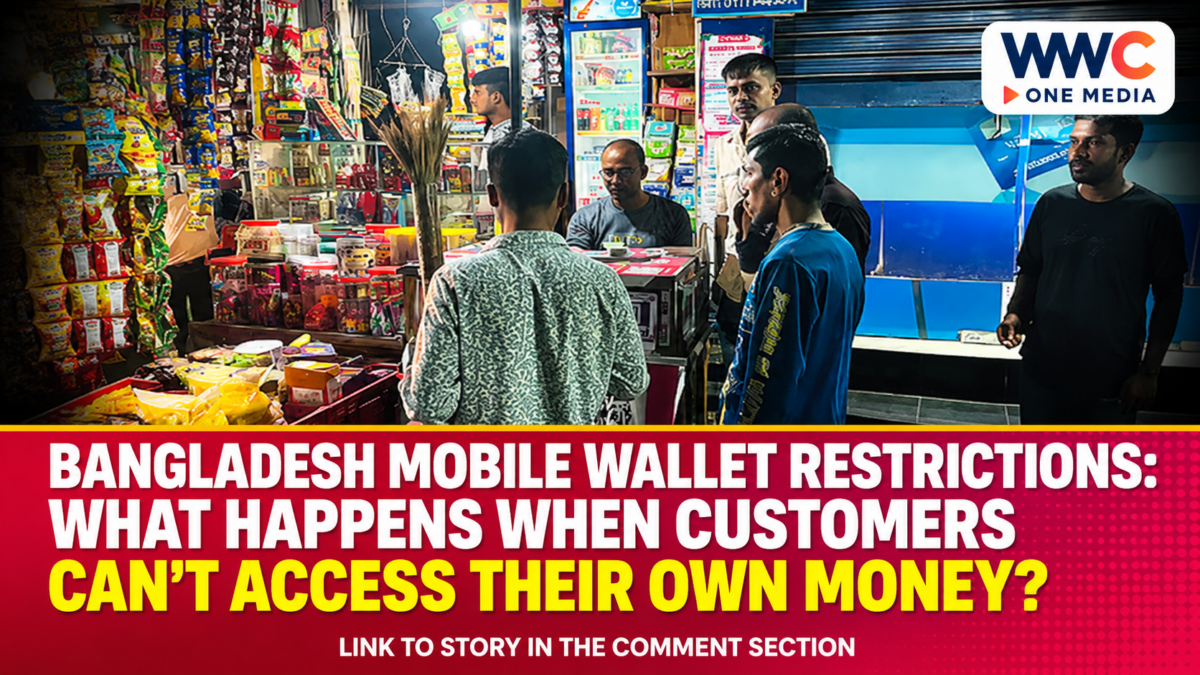
DHAKA, BANGLADESH — November 27, 2026 — Bangladesh’s mobile financial services regulations establish consumer protection and complaint resolution requirements for digital payment providers, alongside obligations to prevent financial crime and monitor suspicious transactions.
For customers who encounter Bangladesh mobile wallet restrictions, the regulatory framework provides a formal avenue for disputing account-related problems and escalating unresolved complaints to the central bank.
The issue raises an important question for the country’s digital economy: how can financial institutions maintain effective security controls while protecting legitimate customers’ access to their money?
For households, students and small businesses that depend on electronic payments, the inability to complete a transaction could have consequences extending well beyond the inconvenience of a failed payment.
Bangladesh mobile wallet restrictions and financial regulations
Bangladesh Bank introduced its revised Mobile Financial Services (MFS) Regulations on February 15, 2022, replacing the regulatory framework issued in 2018.
The framework seeks to expand affordable financial services while maintaining safeguards against money laundering and terrorist financing.
Mobile financial service providers must comply with customer identification requirements and applicable financial intelligence regulations. They are also responsible for maintaining appropriate customer verification records.
These obligations form part of the broader security infrastructure supporting Bangladesh’s financial technology industry.
The country’s ongoing efforts to modernise financial infrastructure, including Midland Bank’s banking technology transformation, also highlight the importance of maintaining dependable digital financial services.
However, technological advancement alone cannot eliminate the risk of customers encountering account access problems.
When money is available but customers cannot use it
An electronic wallet balance and the ability to complete a transaction are two different things.
A transaction restriction does not, by itself, establish that the customer’s money has disappeared or that the account holder has committed an offence.
Account-related problems require individual assessment to establish their cause and determine the appropriate resolution.
For a student facing an application deadline, a household paying essential bills or a merchant purchasing supplies, even a temporary interruption could create financial difficulties.
Clear communication becomes particularly important when customers cannot determine whether a problem involves their individual account, identity verification or a broader service interruption.
Financial institutions must balance legitimate security objectives with the need to minimise unnecessary disruption to ordinary economic activity.
Digital payment security remains a regulatory priority
Bangladesh’s mobile financial services framework requires providers to maintain security and internal control systems that protect transaction information and authenticate account holders.
Providers are also required to monitor the activities of their distribution networks and authorised agents.
These safeguards are intended to support the integrity of electronic financial transactions.
Across Asia-Pacific, digital identity protection has become an increasingly important subject of financial security discussions. WWC ONE MEDIA has separately examined Singapore’s investigation into alleged misuse of digital identities and electronic wallets.
Such regional developments illustrate the policy challenge facing digital financial systems: security controls must be effective without unnecessarily restricting legitimate economic participation.
Nevertheless, suspicious activity indicators should not be confused with a final determination of criminal responsibility.
Customers have a formal complaint mechanism
Bangladesh’s 2022 mobile financial services regulations contain specific provisions governing customer disputes.
Section 17.3 requires providers to operate round-the-clock dispute-handling services and resolve disputes received through their contact centres within 10 working days.
This requirement should not be interpreted as an automatic guarantee that every restricted account must be reopened within that period, particularly where separate legal or regulatory restrictions may apply.
Customers experiencing account access problems should initially contact their respective financial service provider.
For bKash customers, assistance is available through its customer service hotline, 16247, as well as its online support channels.
If the initial response does not resolve the problem, customers may submit a formal complaint to the provider’s complaint department.
Unresolved complaints can subsequently be escalated to Bangladesh Bank’s Customer Interest Protection Centre.
How customers can escalate unresolved complaints
Bangladesh Bank maintains an official consumer complaint mechanism covering mobile financial services, banks and finance companies.
Customers who have exhausted the appropriate provider-level complaint process may contact the central bank through its designated hotline, 16236, during working hours on official working days.
Complaints may also be submitted electronically or in writing.
Supporting documents, previous correspondence and the financial service provider’s response can help establish the circumstances surrounding an unresolved complaint.
Customers should retain their transaction reference numbers and account-related notifications. They should also avoid giving passwords, PINs or verification codes to individuals claiming that they can restore access to restricted accounts.
Financial fraud prevention is a wider regional concern, as explored in WWC ONE MEDIA’s coverage of Malaysia’s national financial scam response mechanisms.
What happens next?
The key priority in any mobile wallet restriction case is establishing the actual reason for the interruption and the procedure required to resolve it.
As of November 27, 2026, WWC ONE MEDIA has not independently established an official account suspension total, district-wide suspension order or service restoration timetable for Gopalganj through publicly available primary records.
Customers should therefore distinguish verified regulatory requirements from unconfirmed claims about widespread account closures.
For Bangladesh and the wider Asia-Pacific digital economy, confidence in financial technology depends on both effective security measures and dependable consumer protection.
A digital payment system must protect money from unauthorised activity while providing legitimate customers with accessible procedures for resolving disputes.