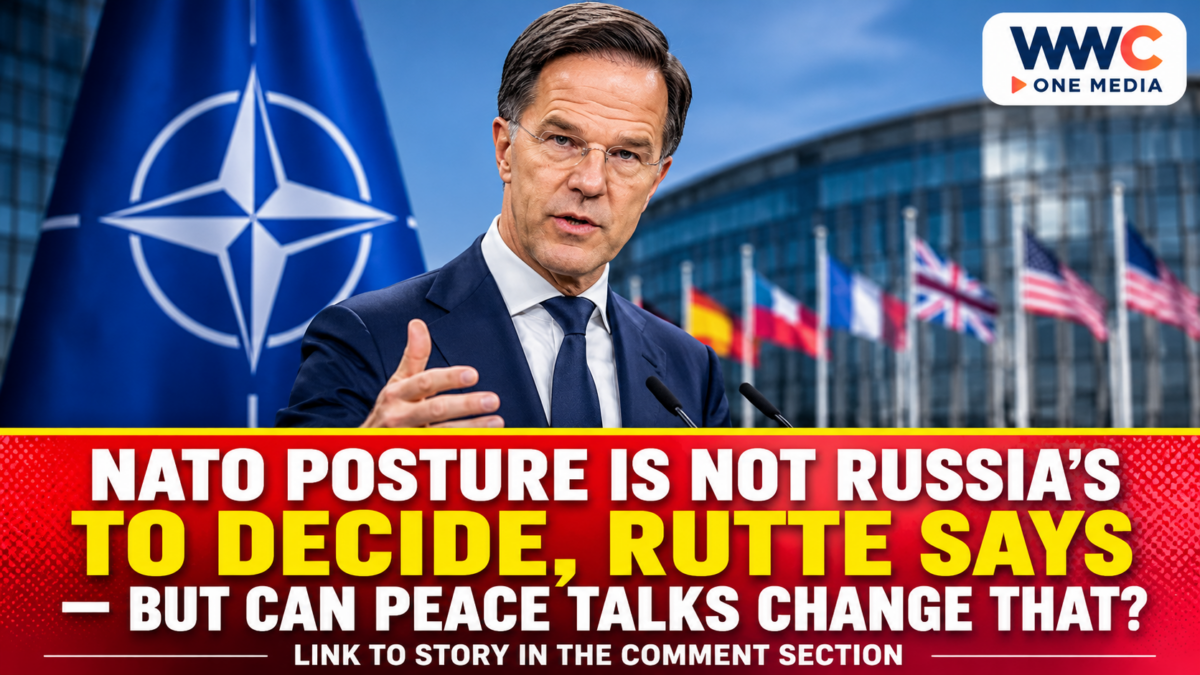
BERLIN, November 26, 2026 — NATO Secretary General Mark Rutte has rejected Russia’s demand for the alliance to roll back its military position in Eastern Europe, saying decisions about NATO’s posture belong exclusively to its member states. He made the remarks on November 23 during the 72nd Annual Session of the NATO Parliamentary Assembly in Berlin, as discussions about a possible settlement to the war in Ukraine continue.
Rutte’s statement addresses a central dispute in the wider negotiations: whether Russia can secure changes to Europe’s security arrangements as part of a future agreement to end the war. His position is that discussions with Moscow may take place, but the alliance’s members—not an outside government—will determine NATO’s military posture and membership decisions.
The distinction matters because a negotiated settlement in Ukraine could involve more than a ceasefire. It could also raise questions about future security guarantees, the deployment of forces and the balance of power across Europe.
Russia’s 1997 demand remains a red line for NATO
During the Berlin session, Rutte referred directly to proposals Russia put forward in 2021. He described them as demands for NATO to move back from its current position to the alliance’s 1997 borders.
Rutte said those proposals were unacceptable and that there was no support within NATO for such a rollback. He also stated that decisions about the alliance’s posture could only be made by its members.
The reference is significant because the 1997 date predates several major rounds of NATO enlargement in Central and Eastern Europe. A rollback to that point would raise questions about the security arrangements of countries that joined the alliance afterward.
Rutte did not announce a new military deployment or a change in NATO policy during the session. Instead, he described the alliance’s position as a guiding principle for any future discussions with Russia.
That distinction is important: rejecting an external veto over NATO decisions does not, by itself, mean that every possible security issue is closed to diplomacy.
NATO posture and Ukraine’s membership are separate decisions
The Berlin exchange also addressed Ukraine’s long-term relationship with NATO.
A Ukrainian delegate asked Rutte about reports of a possible proposal linking Ukraine’s NATO membership with territorial concessions. The question raised whether such an arrangement had been seriously discussed and what position the secretary general held.
Rutte said Ukraine’s membership remained a possibility under the alliance’s established position, but acknowledged that there was currently no unanimity among NATO members to admit the country.
He also stressed that decisions about who becomes a NATO member belong to the alliance.
This reflects the distinction between a political commitment to Ukraine’s future and an actual invitation to join. The 2024 Washington Summit Declaration reaffirmed that Ukraine’s future is in NATO and described its path toward membership as irreversible. However, it also stated that an invitation would be extended when allies agree and the required conditions are met.
In practical terms, Ukraine cannot join simply because one government supports its membership or because a proposal appears in peace negotiations. The alliance’s collective decision-making process remains decisive.
WWC ONE MEDIA has previously examined the unresolved question in its report on Ukraine’s NATO membership and the territorial questions facing peace talks.
Peace negotiations could reopen Europe’s security debate
Rutte’s remarks came as diplomatic efforts involving the United States, Ukraine and European governments continued.
In his Berlin remarks, he said the United States was working to get substantive talks moving and that Washington was aligning its approach with Ukraine and European partners. But he cautioned that meaningful negotiations with Russia still depended on Moscow’s willingness to participate.
At a separate joint press conference with German Chancellor Friedrich Merz on November 23, Rutte also said that real peace negotiations with Russia still had to begin. He described the American effort as substantial and said European governments were consulting closely with Washington and Kyiv.
The diplomatic context is important. Any settlement that addresses Ukraine’s future security could also raise questions about NATO’s military presence, the role of European governments and the guarantees intended to prevent another conflict.
Those issues are not interchangeable. A ceasefire would concern the stopping of hostilities; a peace agreement would require broader political decisions; and NATO membership would remain subject to the alliance’s own procedures.
The latest Russia-Ukraine peace negotiations have therefore renewed attention on the security arrangements that could follow any agreement.
The eastern flank remains a collective defence priority
The debate is not limited to the question of Ukraine’s membership.
During the Berlin session, Rutte discussed NATO’s eastern flank in response to concerns raised by delegates about regional security. He described the alliance’s activities across land, sea and air as areas that need to work together in an integrated way.
He also referred to coordination between NATO’s senior military command and national defence officials. Some operational details, he said, could not be discussed publicly.
At the joint press conference with Merz, Rutte pointed to Germany’s military role in Lithuania, describing the German brigade there as important to the security of NATO’s eastern flank. He also mentioned German aircraft helping defend allied skies and the German Navy’s role in protecting critical infrastructure in the Baltic Sea.
These examples illustrate how NATO’s eastern defence arrangements involve contributions from multiple allies rather than a single deployment or policy decision.
The alliance’s 2024 Washington Summit Declaration also reaffirmed its commitment to collective defence and described NATO as a defensive alliance. It stated that members would continue strengthening deterrence and defence against threats from all directions.
For countries along the eastern flank, the practical question is how those commitments translate into readiness, coordination and reinforcement—not simply what political statements are made during negotiations.
What this could mean for Russia and Europe
Analysis: Rutte’s position leaves room for diplomacy while drawing a boundary around NATO’s decision-making authority.
Russia may raise concerns about the military balance in Europe during negotiations. NATO members may also discuss arms control, risk reduction or other security arrangements. But those discussions do not automatically give Moscow authority over the alliance’s internal decisions.
For European governments, the issue is also about whether any future agreement can provide stability without weakening the security arrangements of countries that joined NATO after 1997.
For Ukraine, the challenge is different. Its government is seeking a durable security arrangement, but the alliance has not reached unanimous agreement on membership. That gap between a stated long-term commitment and the current political reality remains unresolved.
WWC ONE MEDIA has also reported on the humanitarian side of the diplomatic process, including the proposed Russia-Ukraine prisoner exchange following the Abu Dhabi talks. Such measures can produce practical results, but they do not settle the wider questions of territory, military posture or future security guarantees.
The central test for negotiators will be whether they can address Russia’s stated security concerns without allowing an outside power to decide the future of NATO members or Ukraine.
What happens next
The next major developments will depend on whether substantive negotiations with Russia begin and whether the United States, Ukraine and European governments can maintain a coordinated position.
For NATO, the immediate issue is continuing to strengthen collective defence while keeping its political decisions within the alliance’s established procedures.
For Ukraine, the unresolved questions include the form of future security guarantees, the conditions for any lasting ceasefire and whether NATO membership can eventually secure unanimous support.
Rutte’s Berlin remarks do not settle those questions. They do, however, make clear that NATO’s military posture and membership decisions will remain matters for the alliance itself.
FAQ
What did Mark Rutte say about Russia’s demands on NATO?
Rutte said Russia’s 2021 proposals for NATO to roll back to its 1997 borders were unacceptable. He said only NATO allies can decide the alliance’s military posture.
Can Russia decide where NATO deploys its forces?
No. Rutte said decisions about NATO’s posture belong to the alliance’s member states, not governments outside NATO.
Is Ukraine guaranteed NATO membership?
No immediate membership has been agreed. NATO has reaffirmed Ukraine’s future path toward membership, but an invitation requires agreement among allies and the fulfilment of conditions.
Why is the NATO eastern flank important?
The eastern flank includes allied territory near Russia, Belarus and Ukraine. NATO coordinates land, air and maritime defence activities there to support deterrence and collective security.
Could Ukraine peace talks change NATO’s military posture?
Negotiations could discuss wider European security arrangements, but NATO’s own posture and membership decisions remain subject to the alliance’s internal decision-making process.
Primary-record basis: NATO’s November 23, 2026 Parliamentary Assembly transcript, its November 23 joint press conference with German Chancellor Friedrich Merz, and the 2024 Washington Summit Declaration.