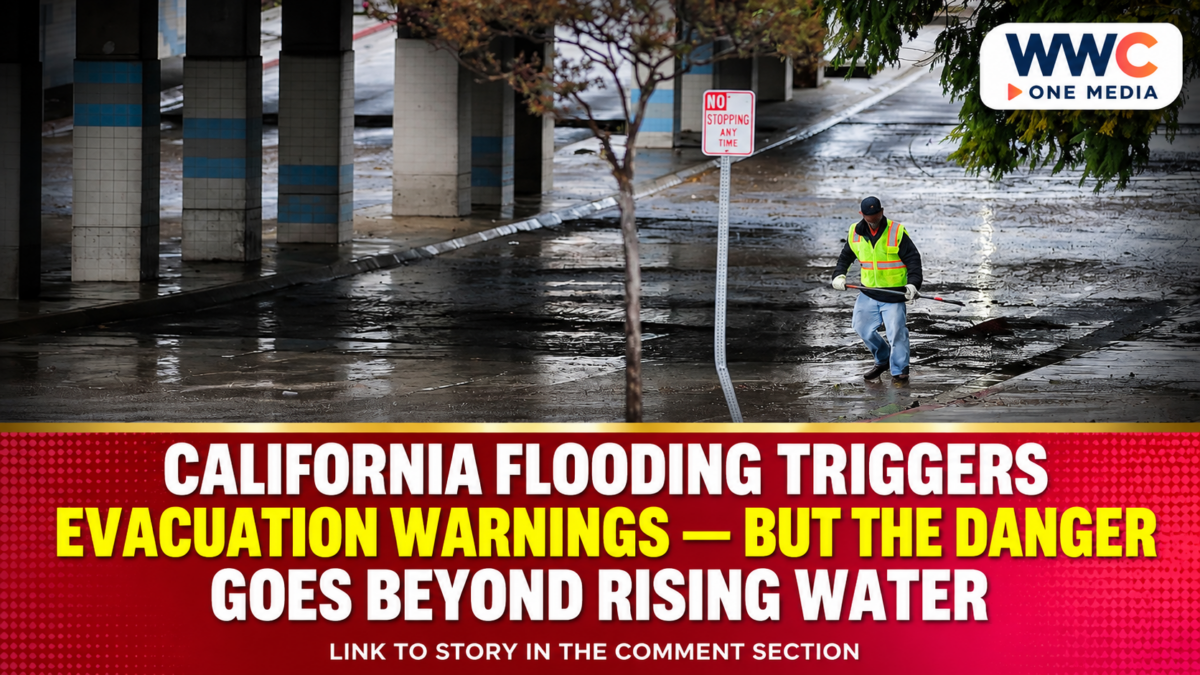
LOS ANGELES, United States — Heavy rainfall swept across Southern California on Nov. 19, 2026, triggering flash flood warnings, disrupting roads and prompting emergency preparations in communities vulnerable to mudslides and debris flows.
The California flooding brought particular concern to neighbourhoods affected by previous wildfires, where damaged vegetation and unstable terrain increased the potential for dangerous runoff.
Emergency preparations began before the heaviest rainfall arrived, with rescue teams mobilised and evacuation warnings issued for vulnerable residential areas.
Beyond the immediate disruption to motorists, the storm highlighted another dimension of California’s disaster exposure: communities recovering from wildfires can remain vulnerable to subsequent weather emergencies.
California Flooding Threatens Wildfire-Scarred Communities
Emergency officials began warning residents about the approaching storm on Nov. 18, identifying recently burned areas as particularly vulnerable.
These included communities affected by the January 2025 wildfires.
Evacuation warnings for identified vulnerable residences were scheduled to take effect at 6 p.m. local time on Nov. 18. Sheriff’s deputies conducted targeted outreach, including visits to residential properties identified as potentially at risk.
By the following morning, dangerous rainfall conditions had developed across portions of Los Angeles County.
A flash flood warning issued at 8:03 a.m. Pacific Standard Time on Nov. 19 covered western-central Los Angeles County, including the Palisades burn scar.
The bulletin identified Malibu, Pacific Palisades, the Hollywood Hills and Sherman Oaks among the locations exposed to potential flooding.
Expected rainfall intensity reached approximately 25.4 millimetres within 30 minutes in the warned area.
That figure represented a forecast rainfall rate rather than a confirmed accumulation across every affected neighbourhood.
Road Disruptions Spread Beyond Los Angeles
The severe weather also created transportation hazards elsewhere in Southern California.
Preliminary storm reports documented road closures and debris-related incidents across Santa Barbara, San Luis Obispo and Ventura counties.
Near Orcutt in Santa Barbara County, debris forced the closure of a roadway at the intersection of Highway 1 and Solomon Road.
Prefumo Canyon Road in San Luis Obispo County was also closed after large rocks obstructed the roadway.
Meanwhile, a large boulder was reported in the southbound lanes of the Pacific Coast Highway near Point Mugu in Ventura County.
These incidents demonstrated how storm-related transportation hazards can extend beyond streets covered by floodwater.
The combination of dangerous road surfaces and disrupted transport routes is also relevant to other parts of the Pacific region, including communities recently affected by Ontario’s freezing rain and hazardous road conditions.
Why the Danger Extends Beyond Floodwater
The Southern California emergency involved several overlapping hazards.
While urban flooding threatened streets, underpasses and waterways, emergency planners also identified mudflows and debris movement as significant concerns in previously burned areas.
Residents living near vulnerable hillsides were therefore advised to remain attentive to emergency notifications and changing local conditions.
The distinction matters because an evacuation warning is a precaution against potential danger. Its issuance does not establish that every property within the affected area has already suffered damage.
Similarly, a forecast of intense rainfall does not mean that every community will experience identical precipitation or flooding.
Local terrain and existing vulnerabilities must be considered when assessing individual exposure.
Emergency Teams Mobilised Across Los Angeles County
Los Angeles County activated emergency resources ahead of the storm, including search-and-rescue personnel and aviation resources equipped to support water-rescue operations.
Emergency coordination teams were placed on alert, while resources were positioned in preparation for potential incidents.
Additional winter shelters were opened for people experiencing homelessness, and outreach personnel contacted vulnerable individuals living near waterways.
Residents were encouraged to prepare evacuation arrangements, identify alternative routes and keep essential documents, medications and other necessities accessible.
The importance of emergency assistance beyond the immediate rescue phase has also been examined in Malaysia’s flood recovery and civil defence response.
Disaster Preparedness Remains a Pacific-Wide Concern
The California storm provides a timely example of why emergency preparedness must account for multiple hazards rather than individual disasters in isolation.
Wildfire recovery, transportation resilience, emergency communications and evacuation planning are interconnected challenges.
For governments and emergency management organisations, the broader policy question is how communities can remain operational when successive emergencies affect the same infrastructure and population.
Similar questions surrounding disaster resilience feature in Japan’s plans to establish secondary capitals as protection against major emergencies.
Although the hazards and geographic circumstances differ, maintaining essential services during emergencies remains an important consideration across the Asia-Pacific region.
What Happens Next?
The longer-term questions following the Nov. 19 storm concern infrastructure inspections, road accessibility and the continued vulnerability of communities affected by earlier wildfires.
The preliminary storm records do not establish a comprehensive damage assessment or final financial cost.
Residents planning travel through potentially affected areas should consult updated local road information and emergency notices rather than rely on warnings issued during the Nov. 19 event.
Motorists should avoid attempting to cross flooded roads and follow any instructions issued by emergency personnel.
The immediate storm may pass, but the underlying need to prepare vulnerable communities for subsequent rainfall events remains.