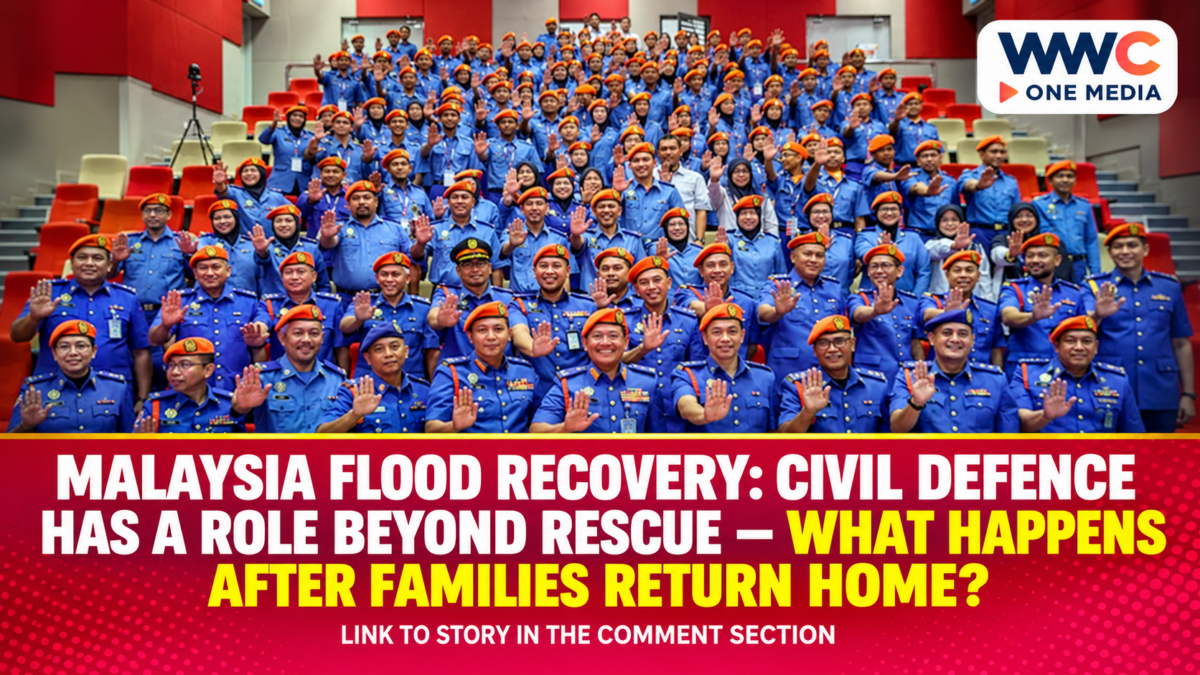
KUALA LUMPUR, Malaysia — Malaysia’s flood recovery framework extends beyond emergency evacuations, with the Malaysian Civil Defence Force (APM) mandated to assist communities in cleaning up and rebuilding areas affected by disasters.
Its civil defence training programmes also provide opportunities for students from skills-training institutions to develop emergency preparedness capabilities, reinforcing the country’s approach to disaster management.
While emergency shelters provide immediate protection, restoring affected communities remains another important stage of the disaster response process.
Malaysia flood recovery extends beyond evacuations
The Malaysian Civil Defence Force, locally known as Angkatan Pertahanan Awam Malaysia, operates under the Civil Defence Act 1951 (Act 221).
Its responsibilities encompass emergency assistance, humanitarian services, public protection and post-disaster recovery.
Under its established recovery objectives, APM assists with clearing disaster-affected areas, reconstruction activities and counselling for affected individuals.
These responsibilities highlight the importance of planning for the period after floodwaters recede.
WWC ONE MEDIA previously examined Malaysia’s nationwide flood shelter preparations, covering the emergency infrastructure intended to protect displaced communities during the monsoon season.
Recovery represents a separate component of that broader disaster management framework.
Civil defence training develops practical emergency skills
Malaysia operates the Civil Defence Institution Team, known by its Malay abbreviation PISPA, as an institutional training programme.
The programme is designed to develop leadership, civil defence knowledge and emergency preparedness among students.
APM identifies pre-university students and participants from skills-training institutions as eligible groups under its broader civil defence education framework.
The general PISPA curriculum includes training in first aid, evacuation centre management, firefighting and other civil defence skills.
Participants who complete the established programme can pursue further involvement with APM through designated district civil defence offices.
Technical and Vocational Education and Training (TVET) provides another potential avenue for developing practical capabilities that may complement disaster recovery operations.
However, specific assignments must be distinguished from general training qualifications and confirmed operational deployments.
Northeast Monsoon remains a major seasonal concern
Malaysia’s Northeast Monsoon brings periods of intense rainfall, particularly along the eastern coast of Peninsular Malaysia, western Sarawak and eastern Sabah.
Disaster preparedness during the season includes emergency communications, evacuation arrangements, humanitarian assistance and public safety measures.
Flood conditions can differ considerably between districts, requiring local monitoring rather than relying exclusively on nationwide preparedness announcements.
WWC ONE MEDIA has previously covered dangerous river levels and flood concerns in Kapit, Sarawak, examining the importance of distinguishing measured water levels from confirmed impacts on communities.
Local conditions remain essential when determining the assistance required in affected areas.
What happens when evacuation centres close?
APM’s Disaster and Operations Management Division coordinates emergency assistance and humanitarian activities as part of its wider civil defence responsibilities.
Its functions include emergency communications, rescue services, public education and coordination with other agencies.
The organisation’s recovery mandate also recognises that affected communities may require assistance after immediate emergency conditions have improved.
The distinction between evacuation and recovery is important because the closure of a temporary shelter does not necessarily establish that every affected household has fully recovered.
WWC’s coverage of the Bentong floods and changing evacuation conditions previously examined the importance of separating active shelter operations from the wider consequences of flooding.
APM’s established recovery functions provide an institutional framework for supporting communities beyond the emergency response stage.
Disaster preparedness requires coordination
Malaysia’s civil defence operations include coordination with external agencies, emergency response teams and humanitarian service providers.
Its public preparedness programmes are intended to strengthen awareness of emergency procedures and disaster risks.
These activities complement operational arrangements involving trained personnel and emergency facilities.
WWC ONE MEDIA also examined flood preparedness and high-tide concerns in Sabak, Kelantan, where the distinction between preparedness and confirmed evacuation was central to understanding local conditions.
For disaster-affected communities, the relevant questions include what assistance has been authorised, where personnel have been assigned and which recovery services are available.
What happens next?
Further official operational announcements will be necessary to establish the number of vocationally trained civil defence personnel assigned to specific flood recovery missions.
Deployment locations, available recovery services and the scope of assistance will also require confirmation.
Malaysia’s established civil defence framework already covers preparedness, emergency intervention and post-disaster assistance. Its institutional training programmes provide a mechanism for developing personnel capable of supporting those responsibilities.
The next stage is determining how these capabilities are translated into operational assistance for communities affected by flooding.