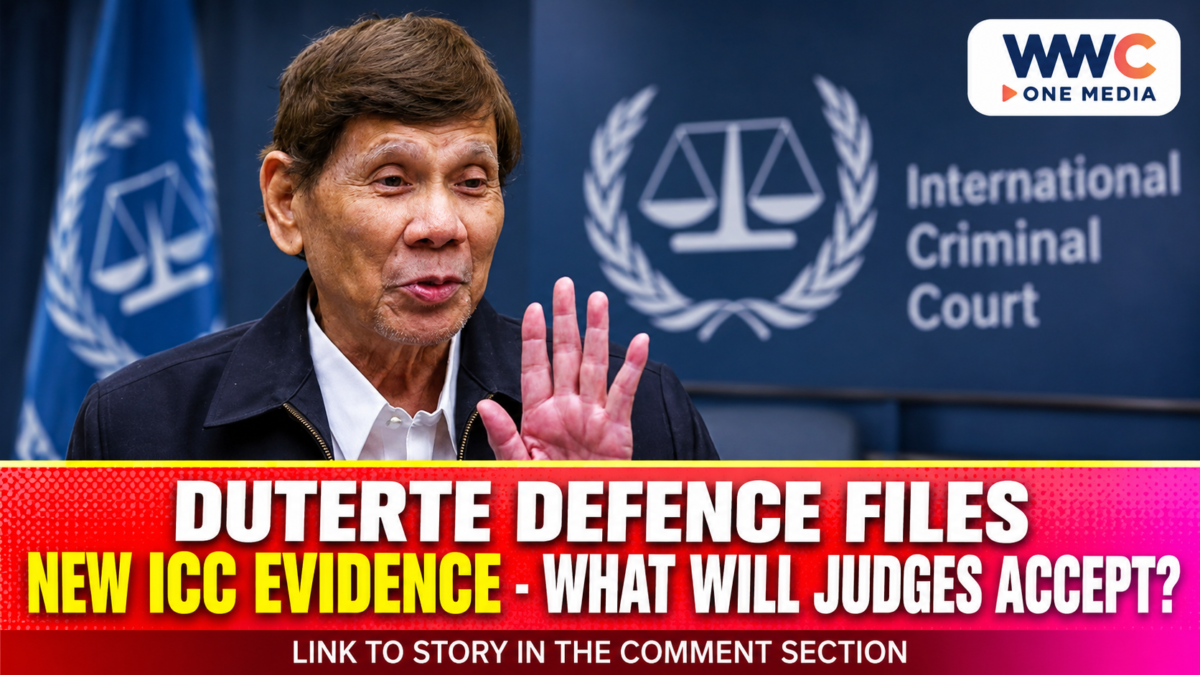
THE HAGUE, Netherlands — Former Philippine president Rodrigo Roa Duterte’s defence team has made another evidence disclosure to the International Criminal Court (ICC), adding a new procedural development just days before his trial is scheduled to open on November 30, 2026.
The filing, titled Defence Third Communication of Disclosure of Evidence on 24 November 2026, was registered by the ICC on November 25 under case number ICC-01/21-01/25-571. The court record also identifies a separate 10-page Annex A accompanying the communication.
The disclosure comes as the prosecution, defence and representatives of victims prepare for proceedings involving allegations of crimes against humanity connected to the Philippines’ anti-drug campaign.
The immediate question is not simply how much material the defence has submitted. It is how the parties will use the documents, how the prosecution may respond and what weight the judges will ultimately give the evidence.
A New Filing Before a Major International Trial
The ICC docket identifies the November 25 submission as the defence’s third communication concerning disclosure of evidence in the case against Duterte.
The filing was made during the trial phase of the proceedings. Its accompanying annex is separately listed in the court record.
The disclosure is a procedural step. It does not, by itself, establish that the material has been admitted as evidence, that judges agree with the defence’s interpretation or that the prosecution’s allegations have been disproved.
That distinction matters in an international criminal trial, where documents, photographs, reports and other material must be considered within the applicable legal framework.
The defence has the right to present material supporting its position. The prosecution, in turn, must establish the charges through evidence tested in court. Judges must assess the competing submissions before reaching a determination.
The latest filing therefore adds to the preparation of the case, but it does not decide its outcome.
What the ICC Case Is About
Duterte faces three counts of crimes against humanity involving alleged murder and attempted murder in the Philippines between November 1, 2011 and March 16, 2019.
The ICC’s case information sheet divides the allegations into three categories:
- Murders in or around Davao City during Duterte’s mayoral period, allegedly involving the Davao Death Squad.
- Murders of alleged high-value targets during his presidential period.
- Murders and attempted murders during barangay clearance operations under his presidency.
The allegations cover years when Duterte served in local government in Davao City and later as president of the Philippines.
On April 23, 2026, Pre-Trial Chamber I unanimously confirmed all three charges and committed the case to trial. The chamber found substantial grounds to believe that Duterte may bear criminal responsibility under the forms of liability identified in its decision.
That ruling allowed the case to proceed. It was not a final judgment of guilt.
Duterte remains entitled to the presumption of innocence, and the prosecution must prove its case at trial.
Why the Evidence Dispute Matters
The volume, relevance and reliability of evidence have become significant issues in the preparation of the proceedings.
The defence has previously raised concerns about the prosecution’s disclosed material and the time required to examine it. It has also challenged aspects of the evidence and the way prosecutors connect Duterte to the alleged crimes.
The defence’s latest communication adds another disclosure to the record. However, the public docket entry and its accessible description do not establish the specific evidentiary purpose of every item in the annex.
That limitation is important. A law, government order, research report or media article may provide background or support a particular argument, but its presence in a disclosure does not automatically prove the facts asserted in it.
The judges must consider the relevance and evidentiary value of material in the context of the charges and the parties’ arguments.
The distinction between disclosure and admission is particularly important for readers following the case. Disclosure makes material known to the other parties as part of the proceedings. It does not mean the court has endorsed the material or accepted the conclusions that one side may draw from it.
Earlier proceedings have also involved disputes over how digital and documentary material should be assessed. These issues are part of the wider challenge of managing a large evidentiary record while protecting the rights of the accused and the interests of victims.
Trial Opens on November 30
The ICC has scheduled the opening of Duterte’s trial for November 30, 2026, before Trial Chamber III.
The chamber is composed of Presiding Judge Joanna Korner, Judge Keebong Paek and Judge Nicolas Guillou.
The ICC’s November case information sheet confirms that Duterte was surrendered to the court’s custody on March 12, 2025, after his arrest by Philippine authorities. It also records that the charges were confirmed on April 23, 2026.
The court has authorised 539 victims to participate in the proceedings. Their participation gives victims a formal role in the case through their common legal representatives, subject to the rules and directions of the chamber.
The trial is expected to examine the prosecution’s allegations, the defence’s response and the evidence presented by both sides.
For the wider public, the proceedings will be an opportunity to follow how the court evaluates claims involving alleged killings, command responsibility and the relationship between government policy and individual criminal responsibility.
The Legal Questions Ahead
The latest disclosure comes at a consequential moment. With the opening date approaching, the parties must be ready to address the charges and the material they intend to rely on.
The central questions remain whether the prosecution can prove the alleged crimes and Duterte’s individual responsibility, whether the defence can successfully challenge the prosecution’s case, and how the chamber will assess the evidence.
The ICC proceedings also take place against the background of the Philippines’ withdrawal from the Rome Statute. The country’s withdrawal took effect on March 17, 2019. The ICC maintains jurisdiction over alleged crimes committed while the Philippines was a State Party, including the period covered by the charges in this case.
That jurisdictional position is part of the legal background to the proceedings, not a determination of Duterte’s guilt.
What Happens Next?
The scheduled opening on November 30 will move the case into its trial proceedings. The court will hear the parties and consider the evidence under the procedures established by Trial Chamber III.
The latest defence communication is one part of that preparation. The filing does not, on its own, change the charges, establish a defence or determine what evidence the judges will rely on in their final assessment.
The most consequential developments will come as the prosecution presents its case, the defence challenges the allegations and the chamber rules on matters requiring judicial determination.
For now, the new disclosure adds another document to an already closely watched international proceeding. The question that will matter most is not simply what each side submits, but what can be established through evidence tested before the judges.
Frequently Asked Questions
When will Rodrigo Duterte’s ICC trial begin?
The ICC has scheduled the opening of the trial for November 30, 2026, before Trial Chamber III in The Hague, Netherlands.
What is the latest defence filing?
The ICC docket lists a document titled Defence Third Communication of Disclosure of Evidence on 24 November 2026, registered on November 25 under case number ICC-01/21-01/25-571. It has a separately listed 10-page Annex A.
Does the new disclosure mean the ICC has accepted the defence evidence?
No. A disclosure is not the same as a judicial decision admitting or accepting the material. The judges must assess the evidence under the court’s procedures.
What charges does Duterte face?
He faces three counts of crimes against humanity involving alleged murder and attempted murder committed in the Philippines between November 1, 2011 and March 16, 2019.
Has Duterte been convicted?
No. The ICC confirmed the charges and committed him to trial, but those decisions are not a final conviction. Duterte remains presumed innocent unless and until the court finds him guilty.