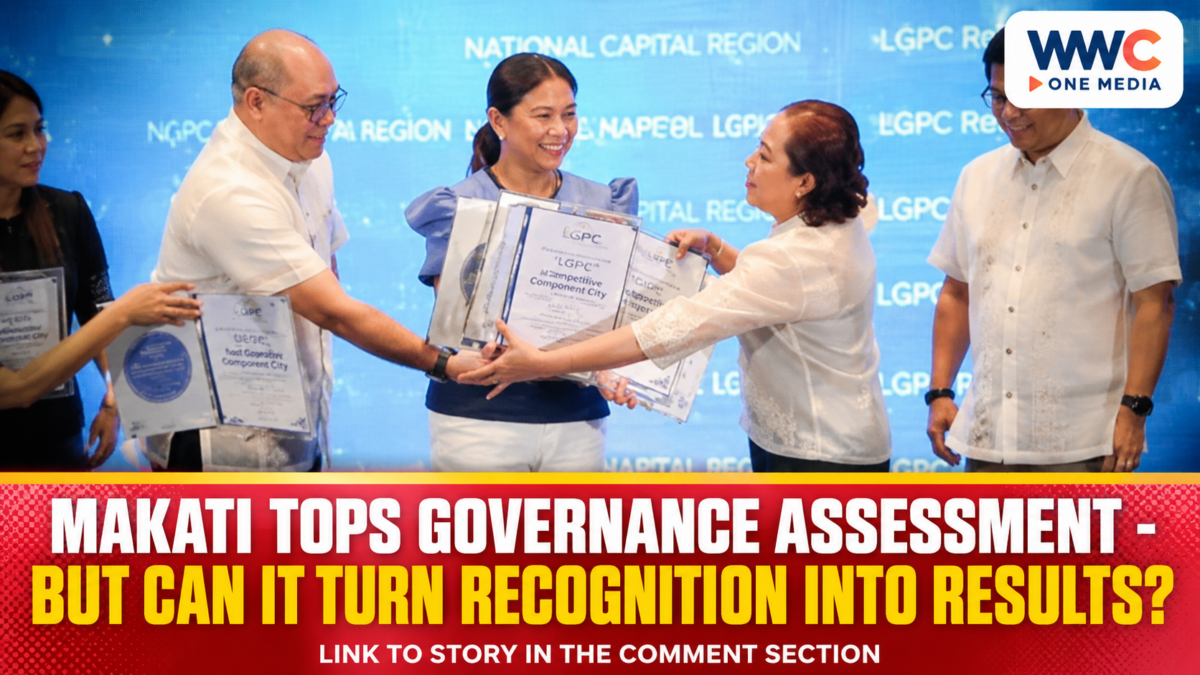
MAKATI CITY, Philippines — November 26, 2026 — Makati has secured a leading position in Metro Manila’s latest local governance assessment, earning first place in the 2025 Local Government Unit Compliance Assessment (LGU-CA) during the Department of the Interior and Local Government–National Capital Region’s 2026 Urban Governance Exemplar Awards.
The recognition puts the city among the local governments highlighted for their governance practices, but it also raises a more important question: how effectively can awards and compliance rankings translate into better public services for residents?
The awards ceremony took place on November 23, 2026, at Park Inn by Radisson North Edsa in Quezon City. The programme recognised the work of Metro Manila’s 17 local government units across several areas, including transparency, environmental management, child protection, public safety and disaster resilience.
For Makati, the confirmed first-place ranking in the LGU-CA is a significant governance distinction. Yet the value of such recognition ultimately depends on whether residents experience improvements in the services and accountability systems behind it.
Makati takes first place in the 2025 LGU assessment
The DILG-NCR identified Makati as the top-ranked city in the 2025 Local Government Unit Compliance Assessment during the 2026 Urban Governance Exemplar Awards.
The assessment forms part of a broader regional programme recognising local governments for institutional performance and governance practices.
The award programme was organised under the theme, “Excellence That Inspires, Governance That Transforms.” It highlighted transparency, accountability, institutional development and responsive public service as important elements of local administration.
Makati City Mayor Maria Lourdes Nancy S. Binay was among the local leaders recognised during the programme. The DILG-NCR announcement also noted her emphasis on measuring good governance through its positive impact on people’s lives.
The distinction matters because compliance assessments look beyond the public image of a city government. They provide a framework for examining whether local institutions meet particular standards and carry out their responsibilities.
However, a top ranking in one assessment should not automatically be interpreted as proof that every city service is performing well. Residents’ experiences, service-delivery outcomes and the consistent implementation of policies remain important measures of performance.
Governance awards cover more than city hall operations
The 2026 Urban Governance Exemplar Awards recognised initiatives across several areas of local government.
These included compliance with the Full Disclosure Policy, which promotes public access to information about local government operations and financial matters.
The programme also covered open governance initiatives, including participation in Open Government Partnership cohorts and the establishment or strengthening of Local People’s Councils.
Environmental management was another major area. Through the Manila Bay Clean-up, Rehabilitation, and Preservation Program, the DILG-NCR recognised local initiatives involving solid waste management, liquid waste management and the management of informal settler families.
The programme also highlighted local government performance involving Peace and Order Councils, Anti-Drug Abuse Councils, committees addressing trafficking and violence against women and children, and local councils for the protection of children.
Other areas included the Child-Friendly Local Governance Audit, gender and development initiatives, and disaster preparedness programmes such as BRAVE AKO and the Metro Manila Resilience Hub.
These are regional programme areas, not a list of awards that should automatically be attributed to Makati. The DILG-NCR’s public announcement specifically confirms Makati’s first-place LGU-CA result while describing the broader categories recognised across participating local governments.
Transparency is becoming a bigger test for local governments
The emphasis on disclosure and accountability reflects a wider challenge facing local governments: citizens increasingly expect to understand how public resources are used and whether government programmes deliver measurable benefits.
Transparency is not limited to publishing documents. Information must be accessible, understandable and sufficiently detailed to allow residents to examine government decisions.
For example, the Full Disclosure Policy is intended to make important local government information available to the public. Its practical value depends on whether records are updated, complete and easy to locate.
Makati’s recognition comes amid broader calls for stronger accountability across Philippine local governments. More than 100 local chief executives under the Mayors for Good Governance movement have also renewed commitments to responsible management of public funds, citizen participation and transparent leadership.
The wider discussion is important because governance awards are only one part of the accountability process. Public disclosure, independent scrutiny and meaningful citizen participation must continue after the ceremony ends.
WWC has previously examined mayors’ renewed push for transparency and accountable local leadership, including the importance of moving from public commitments towards practical mechanisms that allow citizens to monitor government performance.
Child protection and environmental management remain key priorities
The regional awards also placed attention on services that directly affect vulnerable communities.
Child-protection assessments, for example, examine the functionality of local councils responsible for coordinating programmes and interventions for children.
These structures matter because local governments play a role in identifying community needs, coordinating social services and supporting initiatives intended to protect children from abuse, neglect and exploitation.
Environmental management presents another demanding responsibility, particularly for highly urbanised cities.
Solid waste collection, wastewater management and the conditions of informal settlements can affect public health, drainage, waterways and the quality of urban life.
For cities connected to the Manila Bay rehabilitation programme, these responsibilities extend beyond administrative compliance. They require coordination among local agencies, communities and national government institutions.
The DILG-NCR’s recognition programme therefore places several everyday public-service responsibilities alongside institutional governance standards.
Awards are a starting point, not the final measure
Makati’s first-place LGU-CA ranking gives the city a positive result to build on. But the longer-term test is whether its governance systems continue to meet standards and produce visible improvements.
That means examining how quickly local offices respond to complaints, whether public information remains accessible, how effectively social programmes reach their intended beneficiaries and whether environmental initiatives produce measurable results.
Independent oversight is also important. Recognition from a government assessment programme does not remove the need for audits, public scrutiny or the regular evaluation of local programmes.
The Commission on Audit, for example, has a constitutional role in examining government accounts and the use of public resources. WWC has also examined the new COA leadership and the importance of strengthening audit independence. Local governance performance and public financial accountability are connected: both depend on reliable records, clear procedures and the ability to verify results.
Makati’s recognition should therefore be viewed as an important performance milestone, not a blanket endorsement of every government programme or transaction.
What happens next
The next challenge for Makati is to sustain its performance and demonstrate that governance standards translate into better outcomes for residents.
That includes maintaining transparent public records, strengthening community participation, improving the delivery of social services and ensuring that environmental and public-safety programmes remain effective.
The DILG-NCR awards also give other Metro Manila local governments a regional benchmark for comparing their own institutional practices and identifying areas that need improvement.
Makati has secured first place in the 2025 LGU Compliance Assessment. The more important measure, however, will be whether the city can maintain that standard while making public services more accessible, responsive and accountable.
For residents, the real value of a governance award is not the recognition itself. It is what changes in their daily lives after the ceremony is over.
Frequently asked questions
1. What award did Makati receive in the 2026 Urban Governance Exemplar Awards?
The DILG-NCR confirmed that Makati ranked first in the 2025 Local Government Unit Compliance Assessment (LGU-CA).
2. When and where were the 2026 Urban Governance Exemplar Awards held?
The ceremony took place on November 23, 2026, at Park Inn by Radisson North Edsa in Quezon City.
3. Which government agency organised the awards?
The Department of the Interior and Local Government–National Capital Region organised the 2026 Urban Governance Exemplar Awards: LGU Awards and Recognition.
4. What areas of governance were recognised?
The regional programme covered transparency, environmental management, child protection, peace and order, anti-drug initiatives, gender and development, and disaster resilience, among other areas.
5. Does Makati’s first-place ranking mean all its government services are performing well?
Not necessarily. The ranking confirms performance in the specific LGU Compliance Assessment. Other services and programmes still require their own monitoring, evaluation and public accountability.