INTERNATIONAL BUSINESS — The Philippines–Chile trade deal is opening a new chapter in economic relations between Southeast Asia and Latin America, creating potential opportunities for exporters, entrepreneurs, service providers and investors seeking markets beyond their traditional trading partners.
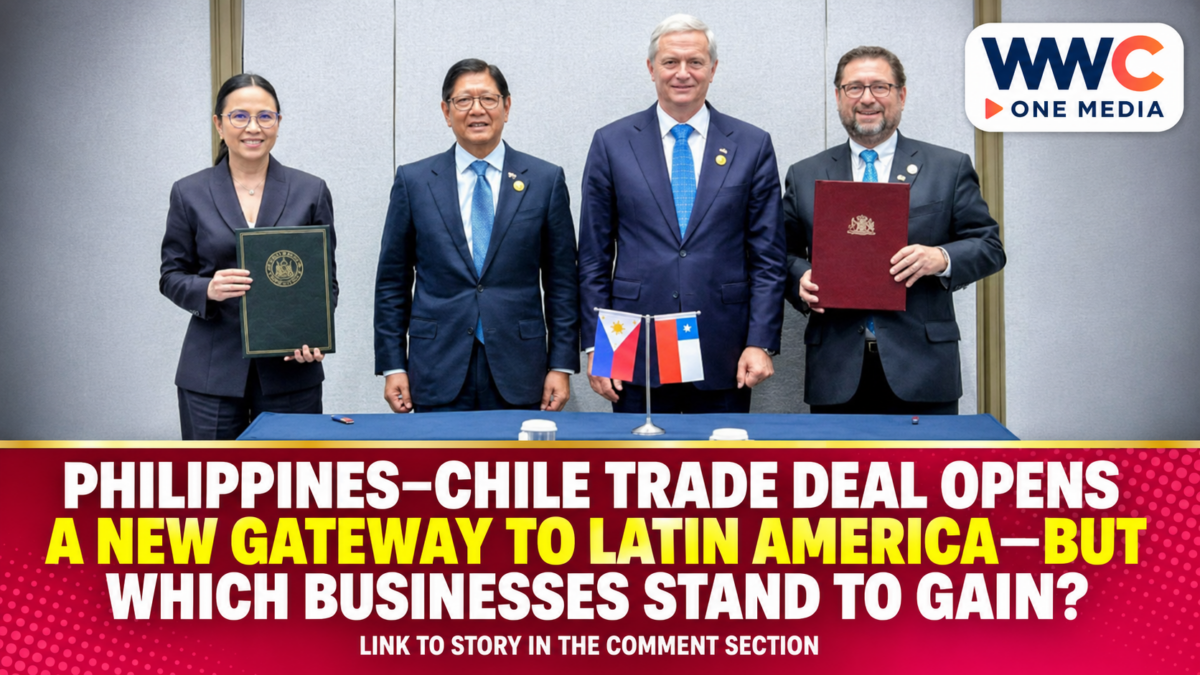
The Philippines and Chile signed their Comprehensive Economic Partnership Agreement (CEPA) on Nov. 19, 2026, on the sidelines of the 33rd Asia-Pacific Economic Cooperation (APEC) Economic Leaders’ Meeting in Shenzhen, China.
President Ferdinand Marcos Jr. and Chilean President José Antonio Kast witnessed the signing, marking the Philippines’ first bilateral free trade agreement with a Latin American country.
The landmark agreement seeks to improve commercial access, diversify supply chains and strengthen economic cooperation between the two Pacific economies.
For businesses on both sides of the Pacific, the opportunity extends beyond merchandise exports. It could also create new avenues for professional services, technology partnerships, investments and international business expansion.
Philippines–Chile Trade Deal Opens New Commercial Opportunities
The agreement follows the conclusion of trade negotiations on July 24, 2026, establishing a broader economic partnership covering goods, services and investments.
Its significance lies in the opportunity to develop commercial relationships across two geographically distant but potentially complementary markets.
For Philippine exporters, Chile represents another destination for products and services. For Chilean enterprises, the Philippines offers opportunities to expand commercial engagement in Southeast Asia.
Businesses could use the agreement to diversify their customer base, establish distribution partnerships and explore alternative suppliers.
The development complements other international market expansion initiatives, including the Philippines–Canada free trade agreement negotiations.
However, the commercial advantages of these agreements will depend on their implementation and the ability of businesses to meet market requirements.
More Than 10,467 Product Categories Covered by Preferential Treatment
Under the agreement, more than 10,467 Chilean tariff lines are set to receive preferential treatment when exported to the Philippines.
The coverage represents approximately 90% of the value of Chile’s existing exports to the Philippine market.
Potential beneficiaries include agricultural producers, fisheries, food manufacturers and industrial suppliers. Products identified within the preferential framework include salmon, fresh fruits, dairy products, timber, copper and lithium.
For importers, improved tariff treatment could create opportunities to negotiate more competitive supply arrangements.
Consumers could eventually benefit from increased product choices, although reductions in retail prices would depend on transportation expenses, exchange rates, distribution costs and market competition.
Industrial businesses could also explore additional sourcing options for production materials, particularly in sectors connected to electronics and advanced manufacturing.
The potential industrial advantages are examined further in WWC ONE MEDIA’s coverage of the Philippines–Chile trade pact and manufacturing costs.
Technology, Professional Services and Small Businesses Could Benefit
One important feature of the Philippines–Chile CEPA is its coverage of service industries.
The agreement addresses commercial opportunities in information technology, professional and business services, education, tourism, transportation, logistics and research-related activities.
This creates potential avenues for technology companies, consulting firms and other service-oriented enterprises seeking international clients.
Unlike merchandise exporters, some digital businesses may be able to reach overseas customers without establishing extensive physical distribution networks.
Nevertheless, companies must still consider applicable licensing requirements, local regulations, taxation and contractual obligations.
The negotiating agenda also addressed micro, small and medium enterprises (MSMEs), intellectual property and the digital economy.
For smaller businesses, the practical challenge will be converting improved market access into commercially viable transactions.
International partnerships could help enterprises identify buyers, understand consumer preferences and develop products suitable for overseas markets.
A US$143 Million Trade Relationship With Room to Expand
Merchandise trade between the Philippines and Chile reached US$143 million in 2025.
Existing Philippine exports to Chile include printing machinery, projectors, sulphuric acid and fishing nets.
Chilean shipments to the Philippines include food products, particularly salmon, alongside paperboard and wine.
The existing trade relationship provides a commercial foundation from which businesses could pursue additional opportunities.
The broader search for international customers also extends to agriculture, as demonstrated by ongoing efforts to expand Philippine agricultural exports into Canada and Brazil.
However, preferential market access alone cannot guarantee higher export volumes. Businesses must remain competitive in pricing, product quality, delivery reliability and compliance with importing-country standards.
Southeast Asia and Latin America Strengthen Economic Connections
The agreement forms part of a wider commercial relationship between Chile and Southeast Asia.
Chile already maintains trade agreements with several Southeast Asian economies, including Singapore, Vietnam, Thailand, Malaysia, Brunei and Indonesia.
Total merchandise trade between Chile and ASEAN reached US$5.186 billion in 2025, compared with US$2.710 billion in 2016.
The Philippines–Chile agreement adds another bilateral framework to these expanding economic connections.
Across the Asia-Pacific, businesses are also monitoring other trans-Pacific trade initiatives, including the recently signed Peru–Thailand free trade agreement.
These partnerships could encourage companies to reconsider their sourcing strategies, export destinations and international investment plans.
Importantly, bilateral agreements do not automatically provide preferential access to every country within a regional trading network. Eligibility remains subject to the applicable provisions of each agreement.
What Happens Next for Businesses?
The signing of the Philippines–Chile CEPA represents a significant milestone, but businesses must distinguish between the signing of a trade agreement and its entry into force.
Importers and exporters should monitor the publication of implementation schedules, product-specific tariff concessions, customs procedures and origin requirements.
Service providers must also examine the commitments applicable to their respective industries before making expansion decisions.
The agreement’s long-term economic impact will ultimately depend on whether businesses can translate improved market access into sustainable sales, investment, commercial partnerships and employment opportunities.
For entrepreneurs across the Asia-Pacific and Latin America, the agreement represents a new opportunity to explore international markets—but the commercial results will depend on execution.
Frequently Asked Questions
What is the Philippines–Chile trade deal?
The Philippines–Chile Comprehensive Economic Partnership Agreement is a bilateral trade agreement covering goods, services and investment between the Philippines and Chile.
When was the Philippines–Chile CEPA signed?
The agreement was signed on Nov. 19, 2026, during the APEC meetings in Shenzhen, China.
Which businesses could benefit from the agreement?
Potential beneficiaries include exporters, agricultural producers, importers, manufacturers, technology companies, professional service providers and logistics businesses.
Are lower tariffs already available under the agreement?
The signing does not automatically activate preferential tariffs. Businesses must confirm the agreement’s entry into force and applicable implementation requirements before claiming preferential treatment.
Why is the agreement important to the Asia-Pacific region?
It creates an additional framework for trade and investment between Southeast Asia and Latin America, potentially supporting commercial diversification and stronger trans-Pacific business relationships.