The Philippines and Canada have completed negotiations for a bilateral free trade agreement, moving the proposed pact into the final political and legal stages before signing. The two governments are targeting 2027 for the agreement’s signature, but businesses still do not have the full text, tariff schedules or detailed implementation rules.
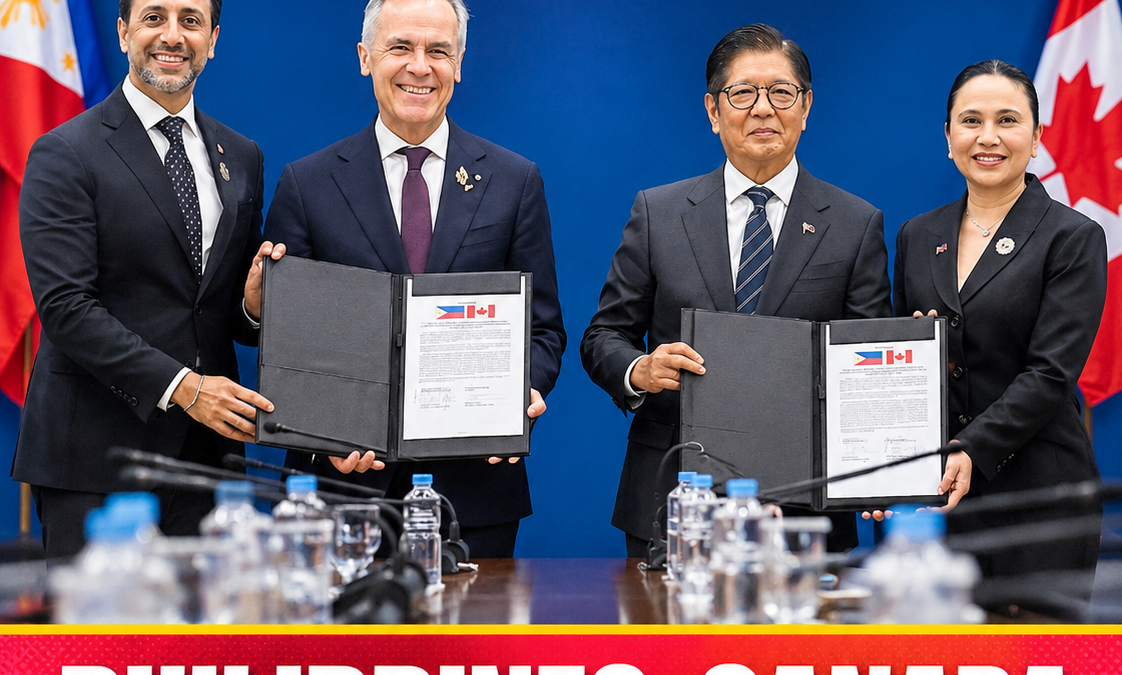
President Ferdinand R. Marcos Jr. and Canadian Prime Minister Mark Carney witnessed the exchange of a signed joint statement on Nov. 14, 2026, during their meeting on the sidelines of the 49th ASEAN Summit and Related Summits in Pasay City. The document marked the conclusion of negotiations; it was not the signing of the free trade agreement itself. Philippine Information Agency+1
That distinction is important. The announcement establishes a major milestone in the two countries’ economic relationship, but it does not mean Philippine exporters can immediately claim lower tariffs or that Canadian goods now enter the local market under new preferences. Those benefits will depend on the final treaty text and when it takes effect.
What the Philippines-Canada FTA milestone actually means
The governments have announced that the negotiating phase has concluded and that they are working toward signing the agreement in 2027. The Philippine government’s public announcement says the proposed pact covers market access for goods and services, investment and micro, small and medium enterprises (MSMEs). Philippine Information Agency+1
However, the public announcements reviewed do not provide the complete negotiated text. They do not set out product-by-product tariff reductions, the timetable for removing duties, rules of origin, customs procedures or the specific commitments that businesses will have to meet.
For exporters, a tariff preference is useful only if a product meets the rules of origin and documentation requirements. Market access for services also does not automatically remove licensing or professional regulations.
Negotiations covered more than tariffs
The first formal negotiating round, held in Manila from Feb. 18 to 20, 2026, covered six areas: market access for goods, trade in services, temporary movement of business persons, investment, intellectual property, and legal and institutional issues. First Canada-Philippines FTA negotiation round
The negotiating record shows that teams reviewed draft chapters and worked through market access, investment, services and dispute settlement. These were negotiating workstreams, not a list of final concessions; their inclusion in early talks does not prove every proposal survived unchanged.
That broader scope matters because trade agreements can affect investment, service delivery, intellectual property and the movement of business personnel—not only goods crossing borders.
The Philippines has been pursuing other market-access initiatives at the same time. WWC previously examined the unfinished agenda around ASEAN-EU trade negotiations and other proposed deals. The Canada agreement adds another track to the country’s effort to diversify commercial relationships.
The trade relationship is already substantial
Canada’s official announcement put two-way merchandise trade between the countries at $3.4 billion in 2025, up 7.4% from 2024. It also reported that Canada’s stock of direct investment abroad in the Philippines was approximately $1.7 billion in 2025, an increase of 44% from the previous year. Prime Minister of Canada
These figures provide a baseline, but do not show how much additional Philippine exports, investment or employment the agreement will generate.
The Canadian government also said the agreement could increase exports up to three times by 2035. The announcement does not clearly identify that projection as a Philippine export forecast, so it should not be read as a promise that Philippine exports will triple. Prime Minister of Canada+1
The test for Philippine producers will be whether they can compete on price, quality, volume and delivery while meeting Canadian standards. Better access creates an opening; firms still need the capacity to use it.
MSMEs and service providers need the fine print
The Philippine government has highlighted MSMEs as potential beneficiaries, alongside businesses trading goods and services. The opportunity could extend to firms that supply larger exporters, as well as businesses seeking Canadian customers directly.
The government’s public explanation acknowledges that specific MSME assistance and eligibility provisions have not yet been detailed. Questions remain over export-readiness support, documentation, customs processes and which products will receive the clearest improvements. Philippine Information Agency
Digital services are another area to watch. The public announcements identify services and digital trade as part of the proposed agreement’s scope, which may be relevant to Filipino professionals and firms selling services across borders. The actual value, however, will depend on the final commitments and any remaining domestic rules. Philippine Information Agency
Export readiness also includes labour practices and supply-chain records. WWC has covered Canada-backed work to strengthen labour protections in Philippine supply chains, a separate initiative that highlights the importance of responsible sourcing and recruitment.
Agriculture and food trade will require careful preparation
Agriculture is among the sectors identified in Canada’s public description of the potential commercial opportunity. Philippine producers may see room to reach more buyers, but agricultural trade is shaped by more than tariffs. Prime Minister of Canada
Food exporters must still meet sanitary and phytosanitary rules, inspection, traceability, packaging and supply requirements. Lower duties cannot replace food-safety compliance or reliable delivery.
The eventual agreement could also affect competition and product availability, but it is too early to predict price changes. Outcomes will depend on tariff schedules, exchange rates, logistics costs and implementation.
WWC’s earlier examination of global food-trade pressures and the Philippines’ exposure provides useful context: keeping trade predictable matters, but governments must also consider food security and domestic producers.
What happens next
The immediate target is a 2027 signing. Before businesses can rely on preferential treatment, the final agreement must be made public, signed and brought into force after the required steps in both countries. Prime Minister of Canada+1
Key details to watch include tariff schedules, rules of origin, services and investment commitments, customs procedures, safeguards and practical support for MSMEs.
For now, the conclusion of negotiations is a meaningful diplomatic and commercial milestone—not an instant change in the cost of imports or the earnings of exporters. The real measure of success will be whether the final agreement gives Philippine firms usable access to Canadian customers and whether local businesses are prepared to meet the conditions that come with it.
Frequently asked questions
Have the Philippines and Canada signed the free trade agreement?
No. The governments announced the conclusion of negotiations on Nov. 14, 2026, and are working toward signing the agreement in 2027. The signed document exchanged by the trade ministers was a joint statement marking the conclusion of negotiations, not the FTA itself. Philippine Information Agency+1
When will the Philippines-Canada FTA take effect?
No effective date has been announced in the public materials reviewed. The agreement must be signed and complete the applicable steps before it can enter into force.
What sectors could benefit from the agreement?
The public announcements identify goods, services, investment and MSMEs as areas covered by the proposed agreement. The final text will determine the specific products, services and commitments. Philippine Information Agency+1
Will Philippine products immediately face lower tariffs in Canada?
No immediate tariff change has been announced. Any preferential rates will depend on the final tariff schedules, rules of origin and the agreement’s entry into force.
Could Filipino freelancers benefit?
Potentially. Services and digital trade are identified in the public announcements as areas of the proposed agreement. The actual opportunities will depend on the final commitments and applicable professional and regulatory requirements.