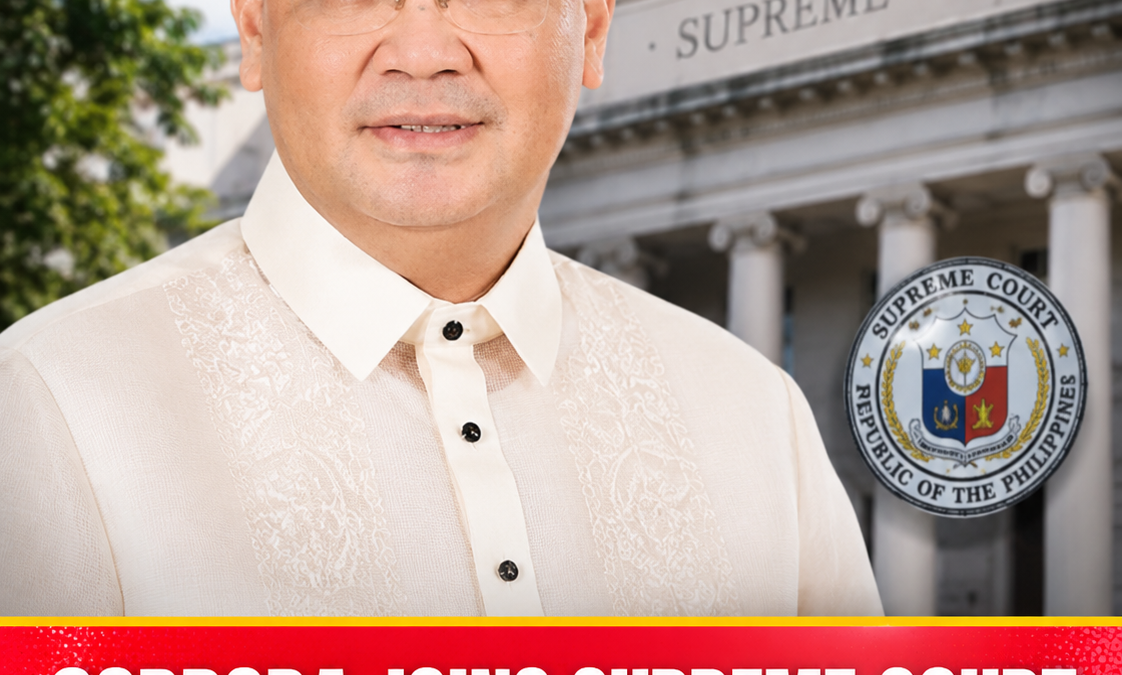
MANILA, Philippines — President Ferdinand R. Marcos Jr. has appointed Commission on Audit (COA) Chairperson Gamaliel Asis Cordoba as the Supreme Court’s 196th Associate Justice, placing a former telecommunications regulator and government auditor on the country’s highest tribunal.
The appointment was announced on November 13, 2026, with Cordoba set to succeed Associate Justice Amy C. Lazaro-Javier, whose mandatory retirement was scheduled for November 16.
The move brings a senior official from the government’s auditing institution into the Judiciary at a time when public accountability, government spending and constitutional disputes remain prominent national concerns.
Cordoba’s appointment also highlights the constitutional process behind Supreme Court selections: the Judicial and Bar Council screens candidates and submits a shortlist, while the President makes the final choice from the nominees.
Cordoba’s appointment closes the selection process for the vacancy
The Presidential Communications Office confirmed the appointment in a November 13 briefing. The government identified Cordoba as the 196th Associate Justice of the Supreme Court and said he would succeed Lazaro-Javier.
The selection followed the Judicial and Bar Council’s screening process for the vacancy.
On October 29, the JBC submitted its shortlist of nominees to the President. Cordoba was among the candidates named in the official announcement, alongside Court of Appeals and Court of Tax Appeals justices, the Solicitor General and a Commission on Elections commissioner. Supreme Court of the Philippines+1
The shortlist is an important part of the appointment process, but it does not itself appoint anyone. It gives the President a constitutionally prepared group of nominees from which to select the next justice.
The sequence is also relevant because the Supreme Court vacancy arose from a scheduled retirement, rather than the creation of a new judicial position.
For readers following the broader movement of judicial appointments, WWC previously examined the separate vacancy created when Rodil V. Zalameda became chief justice in its report on the JBC opening applications for Zalameda’s vacated Supreme Court seat. That is a different vacancy from the one filled by Cordoba.
From telecommunications regulation to government auditing
Cordoba’s public-sector career has covered two major areas of government oversight and regulation.
Before leading COA, he served as a commissioner of the National Telecommunications Commission from 2009 to 2022. The Commission on Audit’s official profile identifies him as the NTC’s longest-serving commissioner and notes that he served under four Philippine presidents.
His NTC tenure included work involving telecommunications infrastructure, permits for towers and fibre-optic installations, and the expansion of internet services.
The government’s appointment announcement also cited his role in efforts to open the telecommunications industry to another major player and in the entry of satellite internet services into the Philippine market.
Cordoba moved to COA after Marcos appointed him chairperson on October 21, 2022. COA’s official profile describes the agency as the country’s supreme audit institution, responsible for examining government revenues, expenditures and the use of public resources. Commission on Audit+1
That background is relevant to understanding the experience he brings to the Judiciary. However, experience in auditing or telecommunications regulation should not be treated as a prediction of how a justice will decide cases. Supreme Court decisions must be based on the Constitution, statutes, evidence and legal arguments before the Court.
What his COA record says about public accountability
The PCO announcement highlighted Cordoba’s leadership of a comprehensive fraud audit of flood-control projects. It said the work resulted in at least 50 fraud audit reports being submitted to the Office of the Ombudsman and the Independent Commission for Infrastructure.
The same announcement cited the institutionalisation of GPS-based geotagging for government infrastructure projects as a way to strengthen monitoring and verification.
These are significant parts of the government’s stated record of his work at COA. Fraud audit reports, however, are not equivalent to final criminal judgments. Their submission to investigative bodies does not automatically establish that every person or contractor covered by an audit committed an offence.
The distinction matters in public accountability reporting. Audit findings can identify irregularities, documentation gaps or matters requiring further investigation, but legal responsibility must be determined through the appropriate process.
WWC has previously examined the importance of audit documentation in its coverage of COA findings involving the Office of the Vice President’s relief operations. A separate report also discussed calls for a document-based investigation of flood-control projects.
Those stories concern separate government matters. They provide context for the public role of audit records, not evidence about Cordoba’s future judicial decisions.
The qualifications and constitutional process behind the appointment
The 1987 Constitution sets specific qualifications for membership in the Supreme Court.
A justice must be a natural-born Filipino citizen, at least 40 years old, and must have served as a judge of a lower court or practised law in the Philippines for at least 15 years. The Constitution also requires members of the Judiciary to possess proven competence, integrity, probity and independence.
It further establishes the Judicial and Bar Council as the body responsible for recommending nominees for judicial appointments.
Under Article VIII, Section 9, the President appoints Supreme Court justices from a list of at least three nominees prepared by the JBC for each vacancy. These appointments do not require confirmation by the Commission on Appointments. Official Gazette+1
The process gives the JBC a screening role while leaving the final selection to the President.
The constitutional framework also requires a Supreme Court vacancy to be filled within 90 days from its occurrence. This deadline is intended to prevent vacancies in the country’s highest court from remaining unfilled indefinitely.
The appointment of a new justice is therefore more than a personnel change. It is an exercise of constitutional authority involving both the JBC and the President.
His education and legal background
The government’s announcement identifies Cordoba as both a lawyer and an economist.
He earned a Bachelor of Arts degree in Economics in 1992 and a Juris Doctor degree in 1996 from Ateneo de Manila University. He passed the Philippine Bar examinations in 1997.
Before entering government service in 2001, he practised law at Siguion Reyna, Montecillo and Ongsiako and worked as a tax lawyer at SyCip, Gorres, Velayo & Co.
The combination of legal training, economic education, regulatory work and public auditing gives Cordoba experience across several areas of government and professional practice.
The significance of that background will ultimately depend on how he approaches the judicial responsibilities of the position. A Supreme Court justice must decide cases independently and apply the law to the records and arguments presented, regardless of previous government assignments.
What happens next?
Cordoba’s appointment fills the vacancy associated with Lazaro-Javier’s scheduled retirement. The next public milestones concern the transition into the position and his participation in the work of the Supreme Court.
The Court’s official announcements and records will provide the basis for confirming the date of his assumption of office, his participation in en banc and division matters, and the cases assigned to him.
The appointment also comes as the JBC handles a separate vacancy following Zalameda’s elevation to chief justice. That process should not be confused with Cordoba’s appointment, which concerns the seat vacated by Lazaro-Javier.
For the public, the more important test will be the work that follows: the legal reasoning, independence and consistency reflected in the decisions of the Court.
Cordoba arrives with a career spanning government regulation and public auditing. His next role will require him to exercise a different constitutional responsibility — deciding cases as a member of the Judiciary.
Frequently asked questions
1. Who appointed Gamaliel Asis Cordoba to the Supreme Court?
President Ferdinand R. Marcos Jr. appointed Cordoba as the Supreme Court’s 196th Associate Justice, with the appointment announced on November 13, 2026.
2. Whom will Cordoba succeed?
He will succeed Associate Justice Amy C. Lazaro-Javier, whose retirement was scheduled for November 16, 2026.
3. What government position did Cordoba hold before his appointment?
He was chairperson of the Commission on Audit. Before that, he served as a commissioner of the National Telecommunications Commission from 2009 to 2022.
4. Was Cordoba included in the JBC shortlist?
Yes. The Judicial and Bar Council’s October 29 announcement included Cordoba among the nominees submitted to the President for the Supreme Court Associate Justice vacancy.
5. Does a Supreme Court appointment require confirmation by the Commission on Appointments?
No. Article VIII, Section 9 of the 1987 Constitution provides that Supreme Court justices are appointed by the President from a JBC shortlist, and these appointments do not require confirmation by the Commission on Appointments.