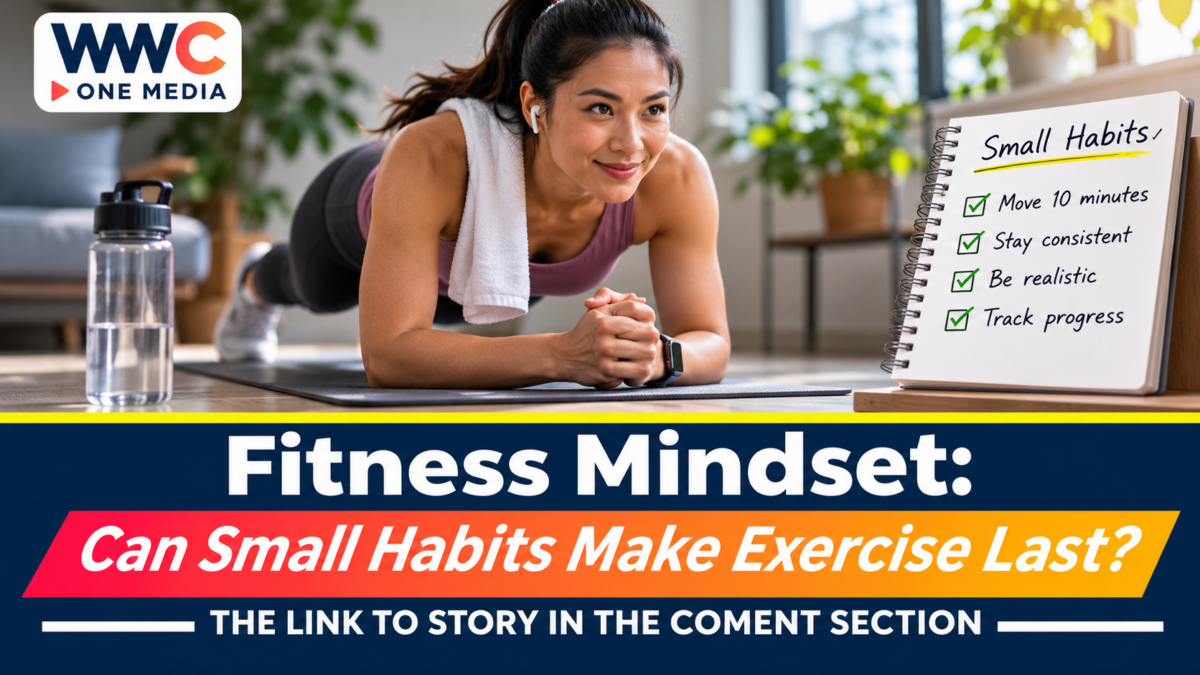
Building a fitness mindset does not have to begin with an expensive membership, an intense workout or a dramatic personal transformation. Public-health guidance reviewed in November 2026 points to a simpler starting point: choose movement you can repeat, give it a place in your calendar and increase the challenge gradually.
For people balancing work and family life, exercise needs a realistic place in the weekly routine.
Fitness mindset begins with achievable goals
The World Health Organization recommends that adults aged 18 to 64 complete 150–300 minutes of moderate-intensity aerobic activity each week, or 75–150 minutes of vigorous activity, or an equivalent combination. It also recommends muscle-strengthening activities involving major muscle groups on at least two days weekly.
Those figures describe a public-health target, not a requirement to complete every minute immediately. The same guidance says some physical activity is better than none, and people who are inactive should begin with smaller amounts before gradually increasing duration, frequency and intensity.
That distinction changes the starting question. Rather than asking whether a beginner can immediately sustain a demanding gym programme, it is more useful to ask which form of safe movement fits an ordinary week. Walking, cycling, dancing and some household activities can contribute to physical activity.
A person returning to exercise might begin with short walks and build towards recommended levels.
Make exercise easier to start, not harder to avoid
The US Centers for Disease Control and Prevention identifies lack of time, energy, motivation, social support and convenient facilities as common barriers to movement. Its recommendations are practical: schedule sessions, choose activities that need little equipment, involve another person and find indoor alternatives when weather interferes.
A planned appointment can remove a decision from a busy day. For example, a worker could reserve ten minutes for a walk after lunch or before the evening commute. This is an illustrative routine, not a clinically proven formula or a guarantee of results.
The CDC also recommends beginning slowly and choosing times when energy is usually higher. That makes a flexible schedule more sensible than an all-or-nothing pledge to exercise before sunrise every day.
Equipment is not the deciding factor. Our earlier coverage of everyday walking and its genuine benefits provides a useful reminder that ordinary movement need not be packaged as a miraculous new fitness technique.
Use enjoyment and company to build consistency
A realistic routine has to compete with many other demands. The CDC suggests selecting enjoyable activities and asking friends or relatives to join regular sessions. It also recommends groups or classes for people who find company encouraging.
For some, that could mean weekend badminton, dancing at home or a neighbourhood walk. Others may prefer organised sessions. WWC’s earlier look at community-oriented fitness classes in Makati illustrates how a shared activity can also become a social appointment, although a paid class is not necessary to be physically active.
The useful principle is not that one exercise brand or training method is superior. It is that people have different preferences, schedules and physical abilities. A routine that fits the individual is more likely to remain feasible when work becomes hectic or the weather changes.
Progress can also be recorded simply, without treating a fitness tracker as essential. A calendar checkmark or short diary of activity can help someone see whether their plan is realistic and decide when to adjust it.
Avoid turning missed workouts into failure
Public-health recommendations are weekly targets. They do not demand an identical workout on every day of the week. The CDC encourages people to incorporate movement into routines, including walking during a break or using stairs when appropriate.
Missing one planned session does not erase earlier activity. A more constructive response is to review the obstacle: Was the timing unsuitable? Was the activity too strenuous? Would a shorter session or different location be easier next time?
A smaller fallback option can preserve opportunities for movement without encouraging exercise through illness or injury.
There is also a difference between sustainable improvement and pushing for rapid change. The WHO advises gradual progression, particularly for people who have been inactive. Those with chronic conditions or concerns about safe exercise should discuss appropriate activities with a qualified health professional.
Fitness is broader than appearance or performance
Movement offers reasons to stay active that are unrelated to a number on the weighing scale. CDC public-health materials describe potential benefits including better sleep, reduced anxiety and lower blood pressure, as well as lower long-term risk of several chronic diseases.
Such benefits depend on individual circumstances and do not guarantee a specific health outcome. Fitness advice should not be marketed as a cure for depression, a substitute for prescribed treatment or a guaranteed weight-loss method.
The goal also changes through life. WWC has explored the importance of strength, balance and mobility in healthy ageing. For older adults, maintaining independence may matter more than training for a race or achieving a particular appearance.
A practical fitness mindset therefore allows the objective to evolve: more comfortable walking, improved strength for everyday tasks, or a regular opportunity to move with others. Those are meaningful aims without promising a dramatic transformation.
What happens next
For someone starting this week, a useful first step is to choose one safe, enjoyable activity, identify when it fits, and record whether it happened. If the plan proves manageable, add time or another session gradually. If it proves unrealistic, change the plan rather than abandoning physical activity altogether.
The evidence-based direction remains consistent: build towards recommended weekly movement, include strength activities, and respect individual health needs. A fitness mindset is not a test of constant enthusiasm; it is a practical way of making regular activity possible.
Frequently asked questions
How do I develop a fitness mindset as a beginner?
Choose an enjoyable activity, schedule a manageable session and increase gradually. Consistency matters more than beginning with a demanding programme.
How much exercise should adults aim for each week?
The WHO recommends 150–300 minutes of moderate-intensity aerobic movement or 75–150 minutes of vigorous movement, plus strength activities on at least two days each week.
Does walking count as exercise?
Yes. Walking can contribute to recommended physical activity, depending on its intensity. Even modest activity is preferable to none.
What if I lose motivation or miss a workout?
Review the barrier and adapt the timing, duration or activity. Public-health guidance recommends scheduling exercise and choosing manageable alternatives rather than relying only on motivation.
Do I need a gym membership to become more active?
No. Walking, dancing and other low-equipment activities can support an active lifestyle. Choose activities that are safe and suitable for your health and abilities.