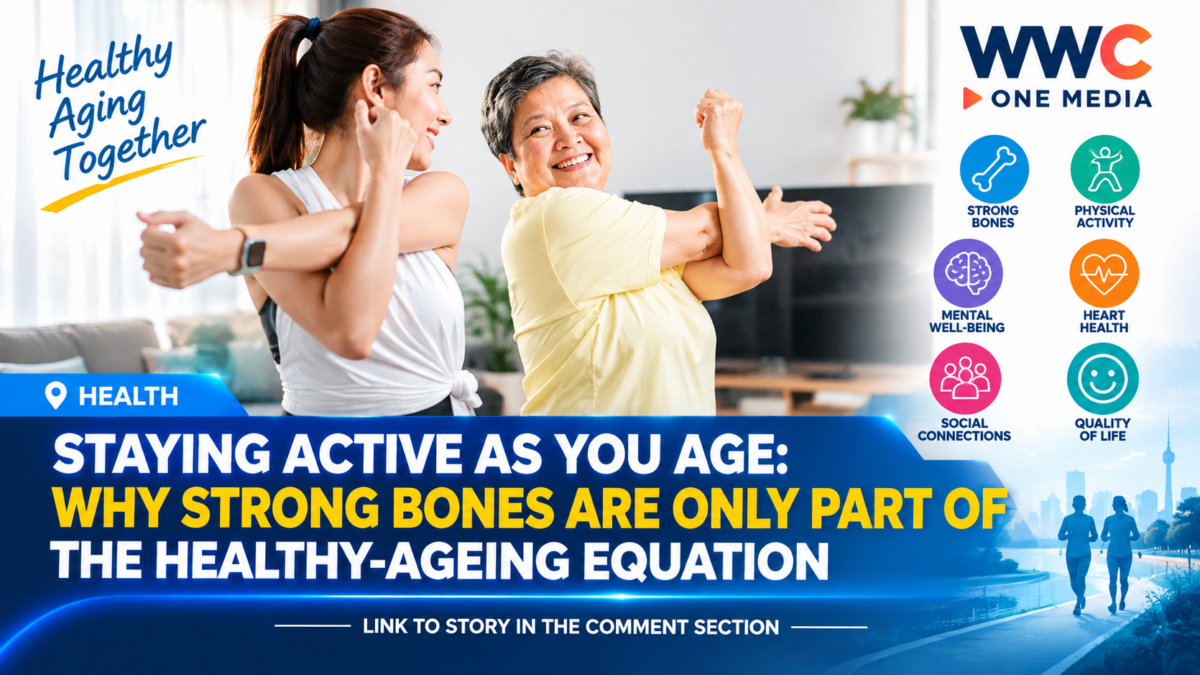
SINGAPORE — Staying active as you grow older is about far more than keeping your bones strong. Experts and health guidance increasingly point to a broader combination of regular movement, muscle strength, balance and good nutrition as key factors in maintaining mobility and independence.
The importance of bone health is especially significant because bone loss can develop gradually without obvious warning. Bone is living tissue that is continuously broken down and rebuilt, while bone density generally declines with age. Women can experience more rapid bone loss after menopause as oestrogen levels fall.
But protecting the skeleton does not mean simply taking care of bones in isolation.
Why movement matters as we age
Weight-bearing activities such as brisk walking and climbing stairs place healthy stress on the skeleton and can help maintain bone strength. Resistance exercises, including squats and exercises using resistance bands or weights, can also strengthen muscles while placing beneficial loads on bones.
Balance and core-strengthening activities become increasingly important as people age because maintaining stability can help reduce the likelihood of falls.
For people with osteoporosis or other medical conditions, however, exercise should be appropriate to their individual circumstances and discussed with a healthcare professional where necessary.
Bone health and immune health are connected to everyday habits
The article also highlights another part of healthy ageing that can sometimes receive less attention: overall physical resilience.
Nutrition supports many of the body’s basic functions. Calcium and vitamin D are important for bone health, while nutrients including zinc, iron and vitamin A contribute to normal immune function. A varied diet remains the foundation, with fortified foods or beverages potentially serving as a way to complement meals when people find it harder to obtain enough nutrients through food alone.
This does not mean a single food, drink or supplement can replace a balanced diet or regular physical activity. Healthy ageing is better viewed as the result of consistent habits maintained over time.
The bigger goal: staying mobile and independent
As people get older, maintaining the ability to walk comfortably, climb stairs, perform everyday tasks and remain physically independent can become just as important as any individual health measurement.
Current healthy-ageing guidance similarly emphasizes regular physical activity, strength and balance exercises, adequate nutrition and other everyday lifestyle habits rather than relying on a single intervention.
The message is straightforward: ageing does not have to mean giving up movement.
Building and maintaining strength, eating a varied diet and staying physically active can help support mobility and independence over the years ahead.
And as bone health becomes a bigger concern with age, the question may no longer be simply how to protect the skeleton — but how to keep the entire body strong enough to keep moving.
WWC ONE MEDIA G,A