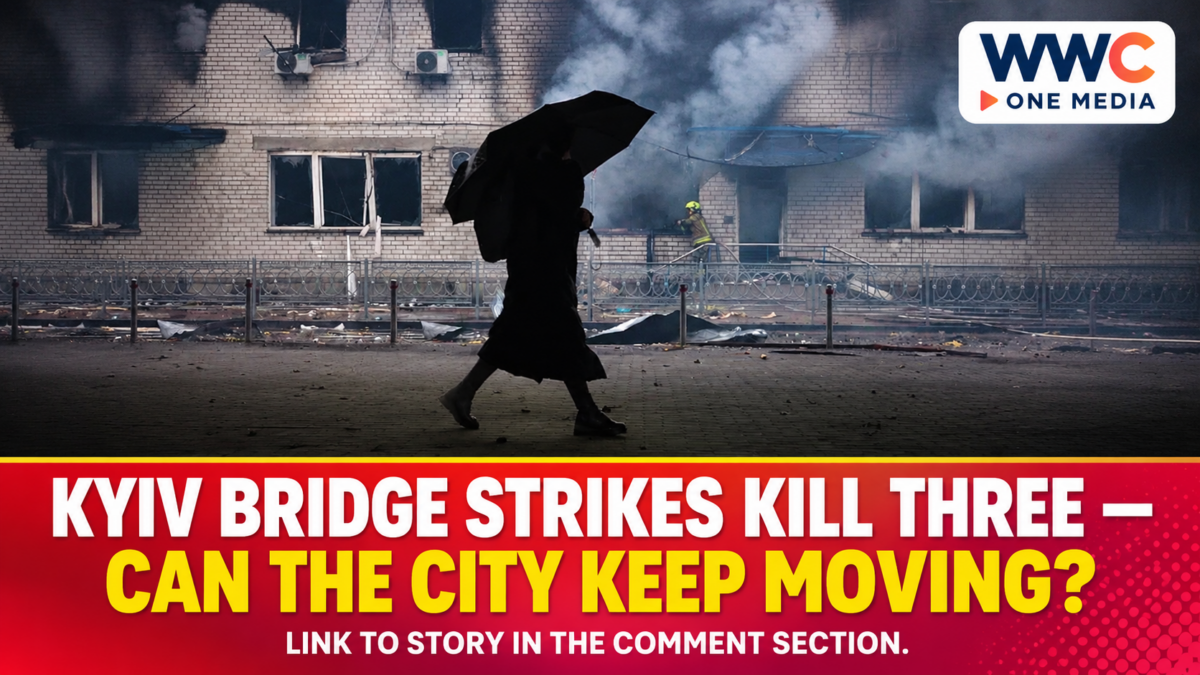
KYIV, Ukraine — A Russian ballistic missile attack on Kyiv on Nov. 20, 2026, killed three people and damaged several crossings over the Dnipro River, city authorities reported. The strikes also disrupted water and electricity supplies, turning a security emergency into a transport and public-services challenge for the Ukrainian capital.
Kyiv’s health authorities said the three people killed were, on preliminary information, employees of the municipal water utility Kyivvodokanal. Approximately 15 people were injured, including seven taken to hospital. Those figures were preliminary, and the public records reviewed do not establish a final toll.
The question is how Kyiv can keep residents and emergency services moving while crossings face restrictions and repairs.
Kyiv bridge strikes disrupt three crossings
City updates identified damage to the Podilsko-Voskresenskyi bridge crossing and the Darnytskyi Bridge, together with another hit on the Southern Bridge. These are distinct pieces of the capital’s road network, and officials did not say that all three had collapsed or were permanently unusable.
In an early-morning update, authorities said travel from the right bank to the left bank was closed on the Podilsko-Voskresenskyi crossing. They reported damage at Darnytskyi Bridge but did not publish a complete structural assessment of that crossing.
The Southern Bridge remained subject to restricted traffic. The city said movement was permitted from the left bank to the right bank for vehicles weighing up to 10 tonnes and public transport weighing up to 18 tonnes.
Engineers needed to examine the damage after the air-raid alert ended. That distinction matters: a reported strike establishes an incident, not the full engineering condition or a timetable for reopening.
Three deaths and a public-service emergency
Kyiv’s municipal health department reported three deaths and approximately 15 injuries after the overnight attack. Its initial information identified the dead as Kyivvodokanal workers, a detail the authorities still treated as preliminary.
Seven injured people were taken to city hospitals, while medical teams assisted others at the scene. Without a later official final count, those figures should not be presented as a completed accounting of the casualties.
The same attack damaged water-utility facilities. City updates described reduced water pressure in several districts, with some buildings potentially facing temporary supply interruptions.
Holosiivskyi, Sviatoshynskyi, Solomianskyi and Shevchenkivskyi districts were specifically listed in a water-pressure warning. An earlier update also noted reduced pressure in Pecherskyi district.
Water supply is part of the broader infrastructure picture. Damage to treatment, pumping or distribution assets can affect households beyond the immediate impact site, although the city updates reviewed did not establish which individual components failed.
Why damaged bridges matter beyond traffic
Kyiv’s river crossings connect communities, businesses and transport routes on opposite banks. When one crossing closes or traffic is limited by direction or vehicle weight, journeys may shift to alternatives that have their own constraints.
On Nov. 20, municipal buses numbered 110, 111 and 112 were rerouted after the Podil crossing closed in the direction of the left bank. The city directed those services through the Northern Bridge.
Mayor Vitali Klitschko urged residents to avoid unnecessary private-car journeys and called on employers able to do so to introduce remote-working arrangements. These measures were intended to ease traffic, not halt all river crossings.
This follows an earlier round of disruption. On Nov. 17, city transport authorities reported that the Northern and Southern bridges were closed, while other crossings operated under varying arrangements. WWC previously examined Russian-reported drone interceptions and Kyiv bridge damage during that period.
The changing restrictions underline why a single bridge-status report cannot reliably describe every subsequent day. Commuters need the latest transport notices rather than assumptions based on earlier closures.
Water and electricity problems add pressure
Municipal updates also recorded electricity interruptions in parts of Holosiivskyi, Darnytskyi, Dniprovskyi, Pecherskyi and Solomianskyi districts. Other areas faced emergency outages associated with equipment damage and pressure on the grid.
Technical teams were working on restoration, but the records reviewed did not provide a complete timetable or confirm that all affected homes had service restored.
Transport and utilities are interconnected in practical terms. Businesses depend on staff movement, water and power, while households need reliable routes and basic services. When several systems are disrupted together, the burden can extend beyond the areas directly struck.
An earlier WWC report on ballistic missile attacks and Kyiv’s power infrastructure examined these overlapping vulnerabilities. The Nov. 20 municipal notices provide a fresh example of how transport restrictions and service outages can occur during the same emergency.
What the official record says about the wider campaign
Ukraine’s president, Volodymyr Zelenskyy, warned on Nov. 6 that Ukrainian intelligence anticipated further attacks on energy infrastructure, Dnipro crossings and civilian facilities. That was an official Ukrainian assessment, not proof of the motive behind any particular later strike.
At a Nov. 9 meeting with military and civilian officials, the president discussed threats to bridges and the power grid and the need for coordinated responses. These statements provide context for the government’s preparations; they do not replace a technical inspection of the bridges hit on Nov. 20.
The wider conflict has also involved attacks on the bridge linking Russia and Crimea. WWC’s earlier examination of Ukraine’s claims about the Kerch Bridge explains why official claims of damage must be distinguished from independently established structural and operational conditions.
Analysis: The significance of the Kyiv attack lies partly in the simultaneous pressure on mobility and basic services. The available municipal record documents real disruption, but it does not justify claiming that the capital has been physically cut in two or that every affected bridge is beyond repair.
What happens next
The first priority is an updated engineering assessment for each damaged crossing. Authorities will also need to clarify whether direction and weight restrictions change, and when redirected bus services can resume their usual routes.
For households and businesses, verified restoration notices for electricity and water will matter just as much. Casualty figures may also be revised as authorities complete their assessments.
The public record supports a clear conclusion: the Nov. 20 strikes caused deaths and disrupted crucial parts of Kyiv’s transport and utility systems. It does not yet establish the final damage bill, permanent loss of any bridge or a definitive date for normal operations to return.
Frequently asked questions
How many people were killed in the Nov. 20 Kyiv attack?
Kyiv authorities reported three deaths. They provisionally identified the victims as workers for the city’s water utility, Kyivvodokanal.
Which Kyiv bridges were damaged?
The city identified the Podilsko-Voskresenskyi crossing, Darnytskyi Bridge and Southern Bridge. Their precise engineering condition had not been fully established in the official updates reviewed.
Were all Kyiv bridges closed?
No. City notices described restrictions at specific crossings and diversion of some buses via the Northern Bridge, not a blanket closure of every crossing.
Did the attack affect water and power?
Yes. City updates reported damaged water-utility facilities, low water pressure in multiple districts and electricity interruptions in parts of Kyiv.