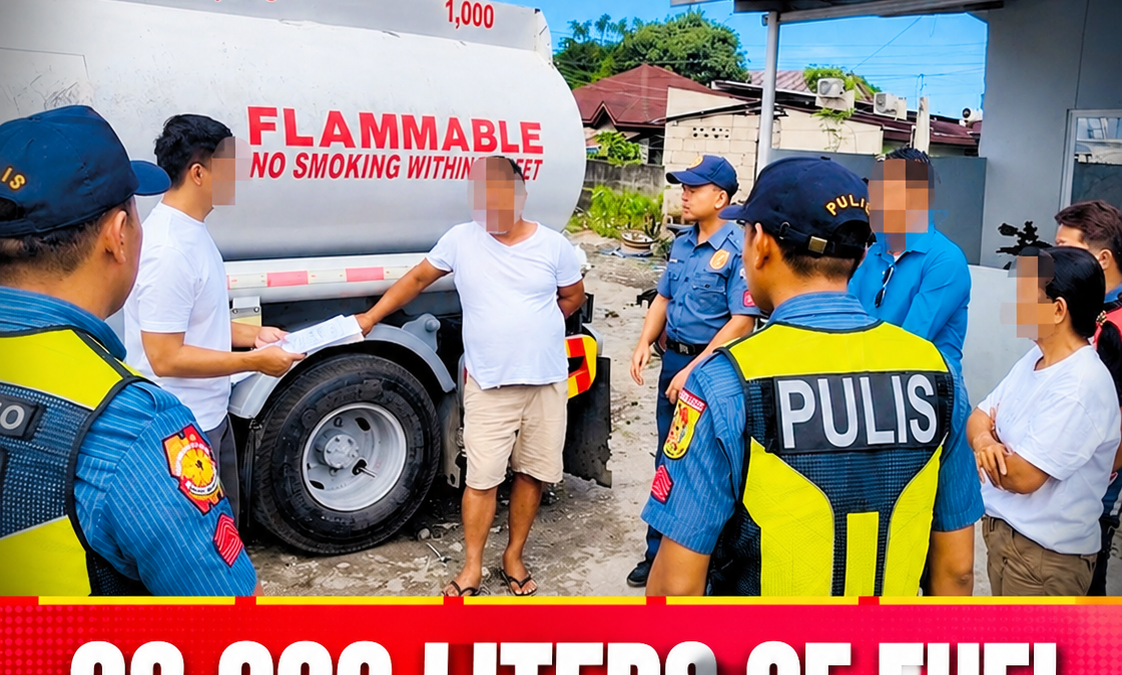
TARLAC CITY, Philippines — Authorities seized approximately 93,000 litres of gasoline and diesel and arrested nine people during a court-authorised operation at a fuel distribution facility in Barangay San Rafael, Tarlac City, on Nov. 12, 2026.
The inventory included fuel stored in tanker trucks, intermediate bulk containers and storage tanks, along with transfer equipment, financial documents and ₱146,537 in cash. The operation has placed the facility’s fuel-handling and distribution activities under investigation, with authorities expected to examine the origin of the products and the records behind their movement.
The case raises an important question for the petroleum industry: can investigators establish a documented and lawful chain of supply, storage and distribution for the products found at the site?
An arrest or seizure does not establish guilt. The evidence must still be examined through the appropriate legal process.
Tarlac fuel raid: Breaking down the 93,000-litre inventory
The reported inventory consists of three categories of petroleum products.
Nine tanker trucks contained approximately 88,000 litres of unleaded gasoline. Another 3,000 litres of gasoline were held in 22 intermediate bulk containers, while two storage tanks contained 2,000 litres of diesel.
The three quantities add up to approximately 93,000 litres.
Authorities also confiscated fuel-transfer equipment, financial documents and ₱146,537 in cash described in the police account as believed to be proceeds from fuel sales.
These details matter because the investigation is not limited to the amount of fuel recovered. The containers, vehicles, equipment and documents may help investigators reconstruct how the products were stored, transferred and distributed.
However, the public inventory does not independently establish the ownership of every item, the original supplier of the fuel or the identity of its intended buyers.
Nine people arrested, including the facility owner
The police account identified nine arrested individuals: the establishment’s 46-year-old owner and eight employees.
The operation involved personnel from the Regional Special Operations Group of the Regional Intelligence Division 3, the Tarlac City Police Station, the Tarlac Police Provincial Office’s Provincial Intelligence Unit and the Criminal Investigation and Detection Group in Tarlac.
The operation reportedly lasted approximately four hours.
The arrested individuals and confiscated materials were brought to the Regional Special Operations Group–Regional Intelligence Division 3 for documentation and appropriate legal proceedings.
The publicly available account does not identify the arrested individuals by name or provide their individual responses to the allegations. It also does not establish whether all nine people had the same responsibilities or level of involvement in the facility’s activities.
Those distinctions are important. Employment at a facility does not automatically establish that an individual knowingly participated in an unlawful transaction.
The law cited in the operation
The police account identified Batas Pambansa Blg. 33, as amended by Presidential Decree No. 1865, as the legal basis for possible charges.
The legislation addresses prohibited acts involving petroleum and petroleum products, including illegal trading and other activities covered by the law.
The specific offence applicable to an individual depends on the evidence and the conduct established during the investigation. Authorities must identify the relevant acts and demonstrate how they fall within the applicable legal provisions.
A previous Supreme Court decision, Charlie Te v. Hon. Augusto V. Breva, provides legal background on proceedings involving petroleum-related allegations and a search warrant. The case is separate from the Tarlac operation and does not determine the outcome of the current investigation.
For companies and operators in the fuel business, the broader lesson is the importance of maintaining proper documentation and complying with applicable requirements for petroleum-related activities.
Why the seized documents and equipment matter
The financial documents recovered during the operation could be important to determining the commercial activity behind the facility.
Investigators may examine purchase records, delivery documents, sales transactions and other available business records to establish where the petroleum products came from and where they were supposed to go.
The tanker trucks and containers may also provide information about transportation and storage arrangements. Fuel-transfer equipment could help investigators understand how products were moved between vehicles or storage facilities.
These are possible investigative uses of the recovered materials, not confirmed findings about the Tarlac facility.
The public police account does not disclose the actual contents of the financial documents, the identity of suppliers or customers, the establishment’s permits, or any laboratory findings concerning the seized products.
The distinction between an inventory and proof of an offence must remain clear as the investigation proceeds.
Other fuel enforcement cases put the issue in context
The Tarlac operation is not the only fuel-related enforcement case covered by WWC ONE MEDIA.
In September, WWC reported on a suspected fuel-pilferage operation in Navotas, where authorities recovered more than 20,000 litres of diesel and other items. That case involved different circumstances and should not be treated as evidence of a connection to the Tarlac investigation.
Another WWC report examined a ₱99.6-million maritime enforcement haul in Western Mindanao, which included undocumented diesel alongside other intercepted goods. The operation was separate from the Tarlac case, but it provides additional context on the enforcement challenges surrounding petroleum transport and documentation.
The wider energy picture also matters. WWC has examined the proposed ASEAN joint oil-stockpiling arrangement, which could give participating countries access to emergency petroleum supplies held in neighbouring markets. That initiative concerns regional energy security rather than illegal fuel trading, but it highlights the importance of reliable fuel supply chains and transparent handling arrangements.
What happens next?
The next important developments will come from the investigation and any subsequent legal proceedings.
Authorities will need to establish the origin of the seized petroleum products, determine the relevant business and transport records, and assess whether the evidence supports specific charges against any of the arrested individuals.
Several questions remain unanswered in the publicly available police account:
- Who supplied the gasoline and diesel?
- Where were the products supposed to be delivered?
- What licences or permits did the facility hold?
- What do the seized financial documents show?
- Has a formal criminal complaint been filed, and what specific charges are being pursued?
The answers could help clarify whether the operation involved prohibited petroleum trading or other conduct covered by the law.
Until those details are established, the case should be treated as an ongoing investigation. The arrested individuals remain entitled to due process, and the seizure itself is not a final finding of criminal liability.
Frequently asked questions
1. How much fuel was seized in Tarlac?
Authorities reported approximately 93,000 litres: 88,000 litres of unleaded gasoline in nine tanker trucks, 3,000 litres of gasoline in 22 intermediate bulk containers and 2,000 litres of diesel in two storage tanks.
2. Where did the fuel operation happen?
The operation took place at a fuel distribution facility in Barangay San Rafael, Tarlac City, on Nov. 12, 2026.
3. How many people were arrested?
Nine people were arrested, identified in the police account as the facility’s 46-year-old owner and eight employees.
4. What law was cited by authorities?
The police account cited Batas Pambansa Blg. 33, as amended by Presidential Decree No. 1865, which covers prohibited acts involving petroleum and petroleum products.
5. Have the arrested individuals been convicted?
The publicly available police account reports arrests and the seizure of materials. It does not establish a conviction. Any criminal liability must be determined through the appropriate legal proceedings.
6. What happens to the seized fuel?
The police account states that the confiscated items were brought to the Regional Special Operations Group–Regional Intelligence Division 3 for documentation and appropriate legal proceedings. It does not specify the final disposition of the petroleum products.