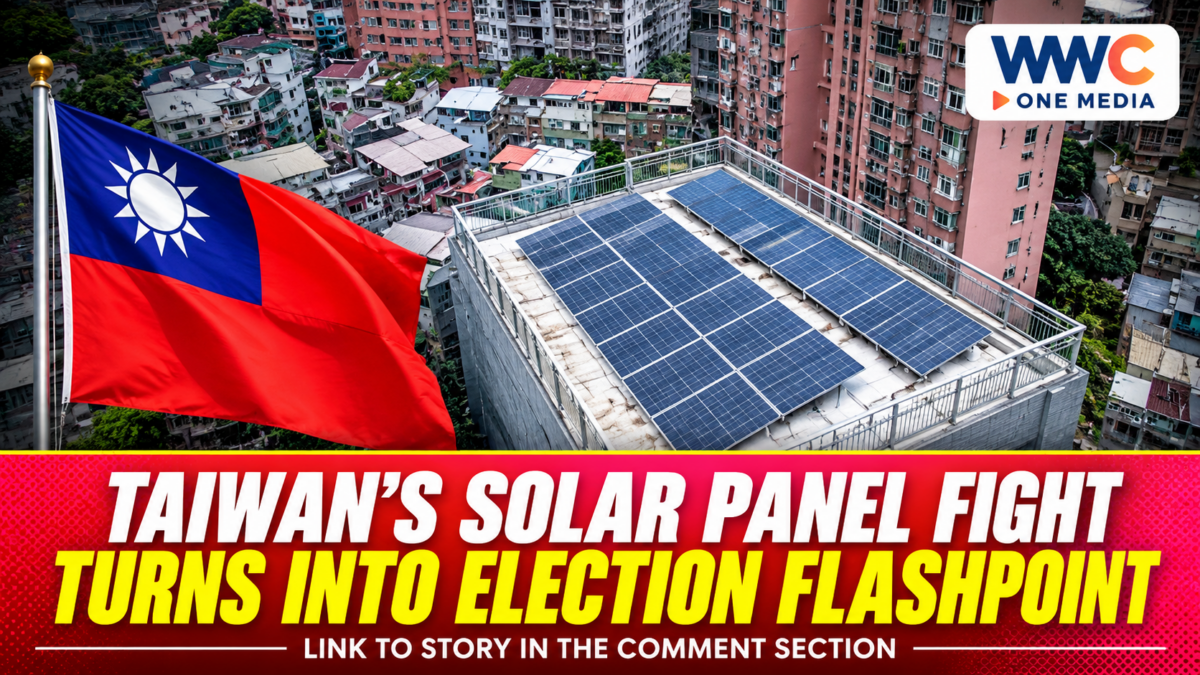
TAIPEI, Taiwan — A dispute over solar panels on drinking-water reservoirs has become one of the more contentious issues in Taiwan’s final days of campaigning, bringing together concerns about water safety, renewable energy and the political future of the island’s electricity system.
The controversy centres on two different questions: whether floating solar installations at existing reservoirs create environmental risks, and whether Taiwan should continue expanding renewable energy as it balances electricity demand, energy security and its climate commitments.
The distinction matters because the debate surrounding Feitsui Reservoir, an important drinking-water source for Taipei, is not the same as the dispute over the existing solar installation at Wushantou Reservoir in Tainan.
The Water Resources Agency (WRA) has said it has no plan to install solar panels at Feitsui. Meanwhile, Taiwan’s Ministry of Environment has reported that water-quality monitoring at Wushantou found results within relevant drinking-water standards.
The political argument, however, has grown beyond the technical details.
Feitsui Reservoir: No Solar Installation Plan, Says Water Agency
Feitsui Reservoir in New Taipei City is an important source of drinking water for the greater Taipei area. Its protection has become a campaign issue amid claims that the central government intends to install solar panels there.
The WRA has rejected that interpretation.
In its November 2026 clarification, the agency explained that earlier correspondence between 2022 and 2024 involved a nationwide assessment of potential locations for solar energy installations. The exercise covered rooftops, ground areas and water surfaces. It was intended to identify possible sites, not order reservoir authorities to install solar facilities.
The agency said the nationwide assessment had concluded in 2024. Since then, its focus for solar development has been on sites outside reservoir water surfaces. It also said it had neither required additional installations on reservoir waters nor instructed any authority to proceed with floating solar projects.
The distinction is important: an assessment of renewable-energy potential is not an approved construction project.
Feitsui is managed separately from Taiwan Water Corporation, and the WRA has said the reservoir does not offer sufficient benefits for a solar installation. Its position is that the reservoir’s management authority should make the relevant professional assessment.
For residents who depend on the reservoir, the issue is not simply whether solar power is desirable. It is whether any proposed development can meet strict standards for water quality, structural safety and reliable supply.
Wushantou Is a Different Case
The debate in Tainan concerns Wushantou Reservoir, where a floating solar photovoltaic installation has been operating since 2022.
Unlike Feitsui, Wushantou already has a solar facility. Its presence has attracted renewed attention during the local election campaign, particularly over concerns about chemicals allegedly used to clean panels and the possibility of contamination.
Taiwan’s Ministry of Environment addressed the water-quality concerns in October 2025. It said monitoring results for Wushantou, including the area with floating solar installations, showed that measured indicators complied with relevant drinking-water standards.
The ministry also explained that a separate laboratory experiment involving crushed solar-panel fragments immersed in highly acidic liquid should not be treated as a representation of normal reservoir conditions. The experimental liquid had a pH of approximately 2.88, which the ministry said was substantially different from the natural conditions normally found in reservoirs.
The agency’s explanation does not mean that solar installations should be exempt from environmental monitoring. Rather, it highlights the need to distinguish between controlled laboratory experiments, actual reservoir measurements and the standards used to assess drinking-water safety.
The WRA has also said that water-quality testing at existing floating-solar locations, including Wushantou and Agongdian reservoirs, met applicable standards.
The distinction between the two reservoirs is central to understanding the controversy: Feitsui has no planned solar installation, while Wushantou has an existing facility subject to water-quality scrutiny.
Why the Solar Debate Has Become Political
The controversy has become more visible as Taiwan approaches its Nov. 28, 2026 local elections.
The dispute is particularly prominent in Tainan, where Wushantou Reservoir has become part of the campaign debate. It has also expanded into a broader argument about the direction of national energy policy.
The Chinese Nationalist Party (KMT) has made reservoir solar installations a campaign issue and proposed restrictions on solar facilities at reservoirs used for drinking water or irrigation. The Democratic Progressive Party (DPP), which governs nationally, has defended renewable-energy development while arguing that environmental safeguards and water-quality protections must remain in place.
The wider argument is not limited to the two parties’ positions on individual projects. It raises questions about how Taiwan should balance renewable-energy expansion with land availability, environmental protection and public confidence.
A separate legislative development adds important context. On Nov. 14, 2025, Taiwan’s Legislative Yuan passed amendments to Article 5 of the Environmental Impact Assessment Act. The changes specified solar photovoltaic systems and project scales that must undergo environmental impact assessment.
The legislature described the amendments as an effort to respond to renewable-energy development needs while strengthening environmental safeguards. The Ministry of Environment subsequently announced implementing changes to the relevant environmental assessment standards in February 2026.
That legislative record is more nuanced than describing every new environmental requirement as an outright ban on solar energy. Environmental review can impose additional obligations on developers, but it can also provide a clearer framework for projects that meet the requirements.
Taiwan’s Electricity Mix Adds Pressure to the Debate
The political argument is unfolding against a changing electricity mix.
Taiwan’s official energy statistics show that renewable sources accounted for 13.3% of total electricity generation in 2025, compared with 4.8% in 2016.
Within renewable generation, solar photovoltaic power accounted for 43.4% in 2025. Natural gas supplied 47.7% of the island’s total electricity generation, coal 35.3% and nuclear power 1.1%.
These figures show why decisions about renewable energy have consequences beyond individual reservoirs.
Solar power has become an increasingly significant part of Taiwan’s energy supply, but it is not the entire solution to electricity demand. Its output varies with sunlight and weather, while grid operators must maintain reliable electricity supply throughout the day.
The island therefore faces a wider planning challenge involving generation capacity, storage, transmission infrastructure and the role of different energy sources.
For a technology-driven economy with major semiconductor and advanced-manufacturing operations, reliable electricity is an economic and industrial concern as well as an environmental one.
WWC ONE MEDIA has previously examined Taiwan’s coal phase-out timetable and the pressure on electricity reserves. The reservoir solar controversy is another part of the same policy challenge: changing the energy mix requires decisions about where new capacity can be built and what safeguards should apply.
Nuclear Power Is Also on the November Ballot
The solar controversy is taking place alongside a separate national debate over nuclear power.
Taiwan’s Central Election Commission has scheduled National Referendum Case No. 22 for Nov. 28, the same day as the local elections. The official question asks whether voters support using nuclear power to revitalise the economy and abolishing the government’s nuclear-free homeland energy policy.
The referendum does not directly approve the construction of a new nuclear plant or automatically restart an existing facility. It asks voters to express their position on the policy.
That distinction matters because nuclear power and solar energy are different parts of the country’s electricity debate. A vote on the nuclear-free policy does not settle questions about reservoir solar installations, environmental assessments or renewable-energy project approvals.
WWC ONE MEDIA’s explainer on Taiwan’s November nuclear referendum examines the separate ballot question and its implications for the island’s energy direction.
What Happens Next?
The immediate political test comes on Nov. 28, when voters choose local officials and decide the separate national nuclear referendum.
The longer-term test will be whether Taiwan can maintain public confidence in its energy transition while protecting drinking-water sources and providing dependable electricity.
The official records establish several important points: the WRA has no plan to install solar panels at Feitsui Reservoir; Wushantou already has a floating solar installation; and environmental authorities have reported that the reservoir’s monitored water quality meets relevant standards.
Those findings do not eliminate the need for continued monitoring, transparent project approvals or public scrutiny. They do, however, provide a more precise basis for evaluating campaign claims.
The larger issue is whether Taiwan’s political parties can move beyond competing slogans and explain how they would deliver a secure, affordable and environmentally responsible electricity system.
The reservoir dispute may influence the final days of campaigning, but Taiwan’s energy future will depend on decisions made long after the ballots are counted.