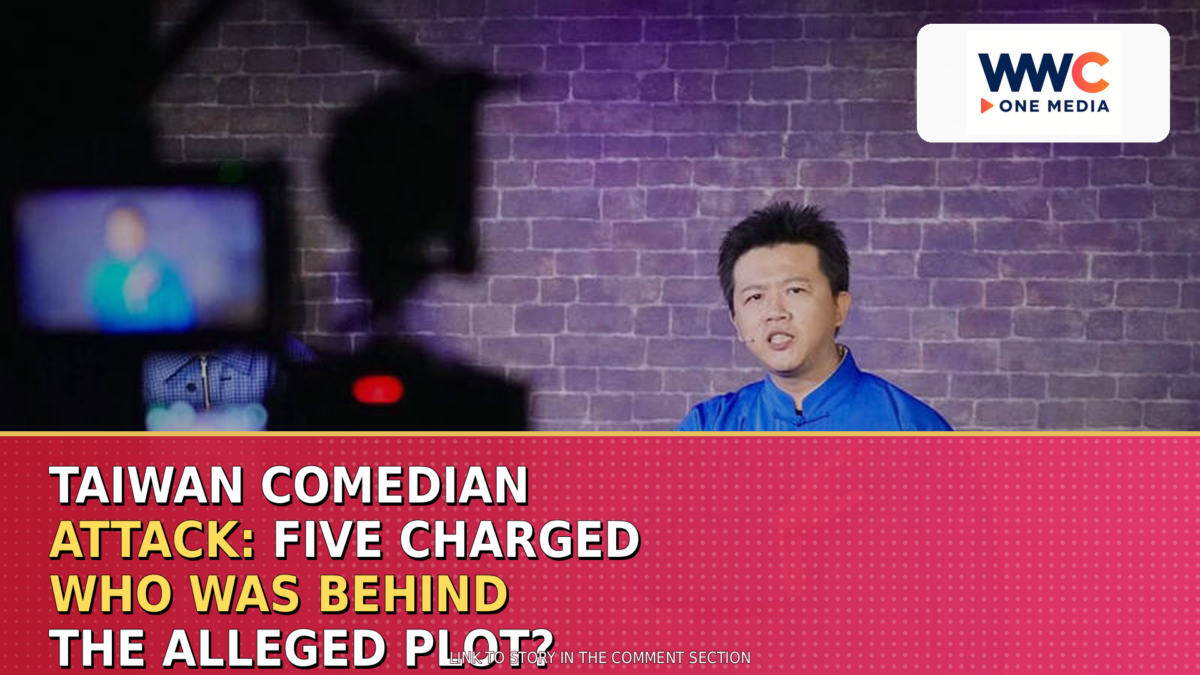
TAIPEI — Taiwan’s Ministry of Foreign Affairs said on October 21, 2026, that prosecutors had charged five local individuals over an alleged attack involving comedian Huang Yi-hao, whose performances have criticised the Chinese Communist Party leadership. The ministry said a Chinese national allegedly financed surveillance of the performer and arranged a traffic incident intended to discourage him from appearing in public.
The case has moved beyond an allegation of an ordinary road incident into a wider debate about whether political intimidation can cross borders and reach artists performing in a democratic society. But the legal distinction remains essential: the five individuals have been charged, and the allegations about the alleged overseas organiser have not been established as a court finding.
Taiwan comedian attack puts surveillance and political speech under scrutiny
In its October 21 press release, Taiwan’s Ministry of Foreign Affairs identified Huang Yi-hao as the artist allegedly targeted. It said a Chinese national had allegedly financed surveillance and orchestrated a traffic accident to attack and discourage him from performing publicly.
The ministry connected the alleged motive to Huang’s criticism of the Chinese Communist Party regime. It also confirmed that the New Taipei District Prosecutors Office had charged five local individuals with various crimes, including attempted aggravated assault.
The ministry described the incident as a suspected example of transnational repression. That is the government’s characterisation of the alleged conduct, not a judicial determination that a foreign government directed the operation.
The distinction matters because the case involves several separate questions: whether the local defendants committed the alleged offences, whether the surveillance and collision were coordinated, and whether the alleged overseas financier was acting on behalf of any state institution. Those questions require evidence and legal findings rather than political conclusions.
Why the case reaches beyond a traffic incident
A traffic collision is ordinarily investigated as a road-safety matter. The circumstances described in Taiwan’s official statement raise a different issue: whether an apparently routine incident was allegedly arranged to prevent a public performer from continuing his work.
If proven, surveillance intended to identify a person’s movements, followed by a deliberate collision intended to stop a performance, would raise concerns beyond physical injury. It would also raise questions about privacy, public safety and the ability of artists to express political views without intimidation.
The issue is not limited to comedy. Public performers, journalists, academics and other people who discuss political subjects rely on the ability to speak without threats or coercion. The broader question is whether intimidation originating outside a country can be organised through people operating inside it.
Taiwan’s earlier case involving an attack on a Taipei comedy venue illustrates why authorities have been examining the security of politically sensitive performances. WWC previously reported on the Taipei comedy club attack and allegations of instructions from China. That was a separate incident, but it involved the same broader concern about pressure surrounding comedy material critical of Beijing.
Five defendants have been charged, not convicted
The Ministry of Foreign Affairs said five local individuals had been charged with various crimes, including attempted aggravated assault. Its statement did not provide the defendants’ full identities, a complete list of charges or a detailed account of the evidence presented to prosecutors.
That limitation is important. An indictment or criminal charge sets out the prosecution’s allegations and allows a case to proceed through the judicial process. It does not establish guilt. The court must assess the evidence, consider the defendants’ responses and determine whether the legal requirements for conviction have been met.
The ministry’s statement also attributes the alleged financing and orchestration to a Chinese national. That allegation should not be expanded into a claim that a particular Chinese government agency or official directed the incident unless evidence in the public record establishes that connection.
For readers, the most reliable way to follow the case is to separate what the government has formally announced from what remains to be decided in court.
The wider debate over comedy, censorship and political criticism
Comedy can make political criticism accessible to audiences through satire, parody and exaggeration. But performers working in different political systems face very different limits on what they can say on stage.
WWC has previously examined the regulatory pressures surrounding live comedy in China in its report on comedian Guo Degang and an investigation over an altered lyric. That case involved entertainment regulation rather than the alleged physical attack in Taiwan, so the two should not be treated as equivalent. It does, however, show how political and cultural rules can shape the environment in which performers work.
A separate WWC report on Na Ying’s unapproved concert tribute and the authorities’ response also explored how entertainment rules can affect live performances. The circumstances differ, but both stories illustrate why the boundaries around performance and expression deserve careful attention.
Taiwan’s Foreign Ministry said freedom of speech is a central democratic principle and that people should not face violent retaliation for expressing criticism. That is the government’s stated position. The criminal proceedings will determine the responsibility of the people charged in this particular case.
What happens next
The immediate next step is the judicial process involving the five charged individuals. The public record reviewed for this report confirms the charges but does not establish a final court judgment.
Further official information would be needed to establish the full evidence, the precise charges against each defendant, the status of any detention or bail orders, and whether investigators have identified or formally charged the alleged overseas financier.
The case also leaves a broader policy question for Taiwan: whether existing laws and enforcement arrangements are sufficient to respond to alleged surveillance, intimidation and violence organised across borders.
That debate should be grounded in specific legal proposals and official decisions, rather than assumptions about the outcome of an individual prosecution.
For now, the confirmed public position is that five local individuals have been charged and Taiwan’s government has publicly condemned what it describes as suspected cross-border repression. The court process—not the political debate—will determine criminal responsibility.
Frequently asked questions
Who is Huang Yi-hao?
Huang Yi-hao is a Taiwanese comedian and artist identified by Taiwan’s Ministry of Foreign Affairs as the person allegedly targeted in the case.
How many people have been charged?
Taiwan’s Ministry of Foreign Affairs said the New Taipei District Prosecutors Office charged five local individuals in connection with the incident.
What does Taiwan allege happened?
The ministry said a Chinese national allegedly financed surveillance of Huang and orchestrated a traffic incident intended to attack and discourage him from performing publicly.
Have the five defendants been convicted?
The official statement confirms charges, not convictions. A court must determine criminal responsibility through the judicial process.
Has a Chinese government agency been proven to have ordered the alleged attack?
The official ministry statement attributes the alleged financing and orchestration to a Chinese national. It does not establish a court finding that a specific Chinese government agency ordered the incident.