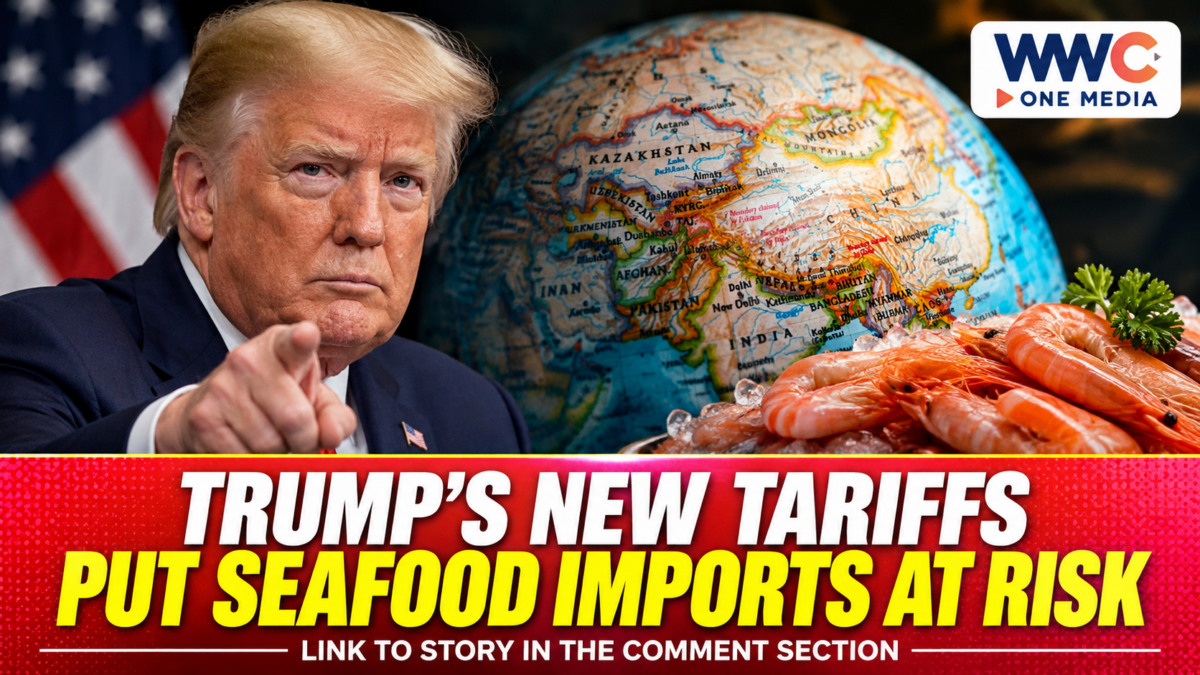
WASHINGTON, DC, USA — Seafood exporters across Asia could face another trade challenge after the Trump administration proposed new tariffs on imports from 14 economies, including India, Indonesia, Vietnam and China.
The proposed measures could affect seafood shipments entering the United States because several of the targeted economies are major suppliers of fish and seafood products to the American market.
India, in particular, is an important source of imported shrimp. Indonesia and Vietnam are also among the United States’ leading seafood trading partners.
But there is a crucial distinction: Washington has not announced a tariff programme specifically targeting seafood. The proposed duties form part of broader investigations into manufacturing overcapacity and trade practices under Section 301 of the Trade Act of 1974.
If implemented without relevant seafood exemptions, the measures could increase the cost of importing products from affected economies. That could put pressure on US seafood importers, distributors, retailers and restaurants, while forcing overseas suppliers to reconsider prices and commercial arrangements.
The proposals are not yet final.
Which Seafood Suppliers Could Be Affected?
The United States Trade Representative (USTR), led by Ambassador Jamieson Greer, announced on Nov. 25 that it had made determinations involving 14 economies: China, the European Union, Singapore, Switzerland, Indonesia, Malaysia, Cambodia, Thailand, South Korea, Vietnam, Taiwan, Bangladesh, Japan and India.
The investigations concern what Washington describes as structural excess capacity and production in manufacturing sectors.
The proposed tariff ceilings differ by economy. The individual notices include:
- India: Up to 25%, with a proposed adjustment to 17% if an appropriate reciprocal trade agreement is reached.
- Indonesia: Up to 18%, with an alternative ceiling of 25% if consultations and existing commitments are considered unsatisfactory.
- Vietnam: Up to 35%, with a proposed adjustment to 20% if an appropriate reciprocal trade agreement is reached.
These are proposed rates, not final duties. They are also described in the notices as net of existing Section 301 tariffs, with exemptions for certain products.
The distinction is important for seafood businesses. A company cannot assume that every shipment from a listed country will automatically face the headline maximum rate. The final treatment will depend on the eventual decision, product classification, applicable exemptions and any negotiated adjustments.
Why India’s Shrimp Industry Is Particularly Exposed
India is one of the most important seafood suppliers to the United States, particularly in the shrimp market.
The US National Oceanic and Atmospheric Administration (NOAA) identifies India among the country’s leading seafood import partners, alongside Canada, Chile, Indonesia and Vietnam.
NOAA’s 2024 fisheries report also shows how dependent American consumers are on international supply. The United States imported 6.4 billion pounds of edible seafood products in 2024, while an estimated 82% of seafood consumed in the country came from foreign imports.
That reliance makes changes in import costs commercially significant.
Shrimp is especially important because it is traded in large volumes and sold through several channels, including supermarkets, food-service distributors, restaurants and seafood processors.
For Indian exporters, the proposed tariff ceiling could create additional uncertainty when negotiating contracts with US buyers. Importers may seek lower prices, renegotiate shipment terms or consider alternative suppliers if the additional duties make Indian products less competitive.
However, the effect will depend on the final tariff treatment and how much of the additional cost businesses can absorb.
Indonesia and Vietnam Also Face Supply-Chain Pressure
Indonesia and Vietnam are also significant seafood suppliers to the American market.
Their exposure is important because the proposed tariff treatment differs from India’s and because both countries have established seafood-processing and export industries serving international buyers.
Vietnam’s proposed ceiling is particularly high at 35%, although the USTR notice identifies a possible 20% rate if an appropriate trade agreement is reached.
Indonesia’s notice proposes an initial ceiling of 18%, with an alternative of up to 25% if existing consultations and commitments are deemed unsatisfactory.
For seafood businesses, the uncertainty could affect more than the price of individual shipments. Buyers may review sourcing arrangements, processing locations, delivery schedules and supplier contracts.
China and the European Union are also included in the wider US investigation. Their participation adds another layer of uncertainty to international trade, although their inclusion should not be confused with proof that every seafood product from those markets will face the same commercial impact.
The proposed action covers goods broadly, subject to the exemptions and adjustments set out in the individual notices.
The US Seafood Market Depends on Foreign Suppliers
The potential impact is significant because the United States remains heavily reliant on imported seafood.
NOAA recorded 18.4 pounds of seafood consumption per person in 2024. Its estimate that 82% of seafood consumed came from foreign imports highlights the importance of international supply chains to American households.
Domestic production cannot simply replace every imported product. Different species, product forms, processing capabilities and seasonal supply patterns mean that switching suppliers may involve additional costs and logistical adjustments.
If tariffs raise the landed cost of imported shrimp or other seafood, US importers will have to decide whether to absorb the increase, negotiate lower prices with suppliers or pass some of the expense to customers.
That does not mean retail seafood prices will automatically rise by the full tariff rate. The eventual effect will depend on competition, inventory levels, supplier alternatives, exchange rates, freight costs and the ability of businesses to share the additional expense.
The trade debate also comes as governments and exporters seek new markets and more favourable access arrangements. WWC ONE MEDIA previously examined how Canada and China expanded tariff relief for selected agricultural and seafood exports. That arrangement illustrates how targeted product exemptions and customs conditions can determine whether exporters actually benefit from a trade agreement.
Why the Tariffs Are Not Final Yet
The USTR’s Nov. 25 announcement opened another stage of the process rather than immediately imposing the proposed duties.
Interested parties have until Jan. 5, 2027, to submit written comments and requests to appear at hearings. The agency plans to begin hearings on Jan. 25, 2027, continuing as appropriate.
The process gives businesses, industry associations, importers and foreign governments an opportunity to address the proposed measures.
For seafood companies, one important issue is whether specific products should be retained or removed from the scope of the proposed action.
The individual notices contain product exemptions, but searches of the India, Indonesia and Vietnam notices reviewed for this report did not identify specific seafood or shrimp exemptions. That makes the final product coverage an important issue for the industry to monitor.
The legal framework also matters. Section 301 allows the US government to respond to foreign practices it determines are unreasonable or discriminatory and burden or restrict US commerce. The current investigations focus on manufacturing capacity and production, not a finding that seafood exporters themselves have engaged in unfair trade practices.
For businesses following the wider tariff debate, WWC has also examined the US investigation involving China and the European Union, including why proposed tariff ceilings should not be mistaken for duties already in force.
What Happens Next?
The next major dates are Jan. 5, 2027, for written comments and Jan. 25 for the start of public hearings.
Until the process advances, seafood exporters should avoid treating the proposed rates as final or assuming that all products will receive identical treatment.
US importers will need to assess product classifications, exemptions, existing duties and the possible impact on supply contracts. Overseas exporters may also need to prepare for negotiations over prices and delivery arrangements.
The wider seafood industry will be watching whether the US government makes adjustments after receiving comments from affected businesses and trading partners.
The potential consequences extend beyond exporters in India, Indonesia and Vietnam. US seafood distributors, retailers and restaurants could also face higher procurement costs if the proposed duties are ultimately applied to products they source.
The real question is no longer just which countries face the proposed tariffs. It is whether the United States can change its trade policy without making imported seafood more expensive for the businesses and consumers that depend on it.