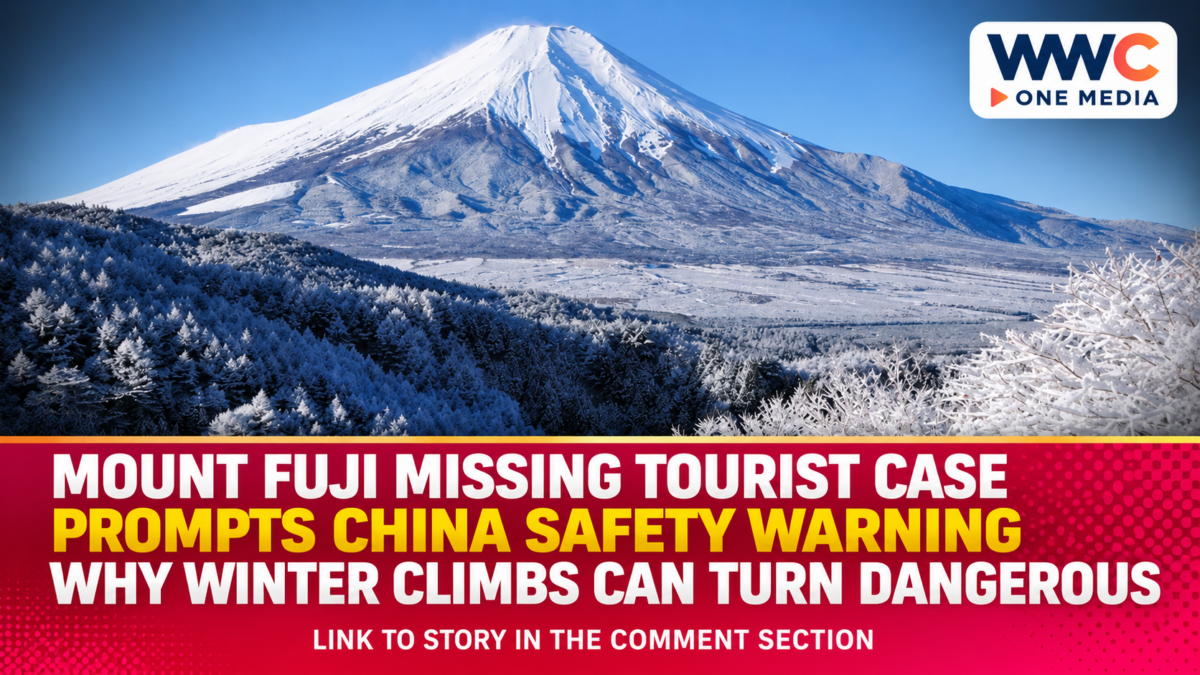
TOKYO, JAPAN — China has issued a safety warning to its citizens in Japan after a Chinese tourist went missing while attempting to climb Mount Fuji during its seasonal closure, drawing renewed attention to the dangers of off-season mountaineering.
On Nov. 17, 2026, Chinese diplomatic officials confirmed that they had contacted Japanese police, requested search and rescue assistance and extended support to the missing tourist’s family.
The Mount Fuji missing tourist case highlights the potentially life-threatening consequences of entering restricted mountain areas when essential safety infrastructure is unavailable.
Japan’s highest mountain has already entered its winter closure period, during which severe weather and limited emergency services can make climbing particularly dangerous.
Mount Fuji Missing Tourist Case Raises Safety Concerns
Chinese authorities have urged citizens living in or visiting Japan to respect mountain closures and avoid unauthorised climbing activities.
The latest warning emphasises personal responsibility when participating in outdoor recreational activities, particularly in areas exposed to hazardous weather.
The disappearance also raises important questions about how international visitors understand local safety restrictions before undertaking potentially dangerous activities.
Travel safety involves more than preparing suitable clothing and equipment. Understanding local regulations, environmental conditions and the availability of emergency assistance is equally important.
Japan’s Mount Fuji Climbing Season Has Ended
The official 2026 climbing season for Mount Fuji’s Yoshida Trail ran from July 1 to September 10.
Access to the climbing trail between the fifth station and the summit is restricted outside the official season.
Visitors who disregard applicable trail restrictions could face imprisonment of up to six months or a fine of up to ¥300,000.
The seasonal restrictions form part of Japan’s broader approach to protecting public safety, an issue also explored in WWC ONE MEDIA’s coverage of Japan’s plans to strengthen disaster preparedness through secondary capitals.
For international tourists, the distinction between visiting the Mount Fuji region and attempting to reach its summit is important.
A sightseeing trip around the mountain does not necessarily involve entering its restricted upper climbing trails.
Why Winter Climbs Become More Dangerous
Mount Fuji’s operating conditions change substantially after the summer climbing season.
Medical facilities, mountain accommodation and public toilets become unavailable in the upper climbing areas. Seasonal communications infrastructure is also withdrawn, reducing mobile connectivity.
Snowstorms, powerful winds and icy terrain create additional hazards that can affect visibility, mobility and personal safety.
These conditions make outdoor emergencies more complicated, particularly when an injured or stranded climber cannot communicate their location.
The importance of responding appropriately to hazardous environmental conditions also features in WWC ONE MEDIA’s coverage of Ontario’s freezing rain warning.
China Previously Issued Mount Fuji Safety Advice
The November 2026 advisory follows an earlier mountain safety incident involving a Chinese student in Japan.
On Aug. 10, 2025, the student became unreachable while climbing Mount Fuji, prompting diplomatic coordination with Japanese authorities.
The student was subsequently confirmed safe on Aug. 11 after descending independently. A depleted mobile phone battery had caused the communication interruption.
Following that incident, Chinese authorities encouraged travellers to plan appropriate routes, monitor weather conditions, prepare suitable equipment and maintain reliable communications.
The earlier incident demonstrates why losing contact with a climber can trigger serious concerns, even before their actual circumstances are established.
It remains separate from the November 2026 disappearance.
Mountain Rescues Present Risks Beyond the Missing Climber
Emergency response operations in hazardous mountain environments can expose rescuers to the same dangers confronting missing or injured visitors.
Unfavourable weather can complicate access to affected areas and limit the ability of emergency personnel to conduct rescue operations safely.
The Mount Fuji case reinforces the importance of avoiding unnecessary exposure to dangerous environments.
Emergency preparedness extends beyond immediate rescue operations, as highlighted in WWC ONE MEDIA’s reporting on Malaysia’s civil defence and flood recovery responsibilities.
Visitors should respect restricted areas rather than assume emergency personnel will always be able to reach them.
Japan’s emergency contact numbers include 110 for police and 119 for firefighting and emergency medical assistance.
Chinese nationals requiring consular assistance may contact the Chinese Embassy in Japan through its emergency assistance number, +81-3-6450-2195.
What Happens Next?
Further developments in the missing tourist case will depend on confirmed updates from the authorities responsible for the response.
Meanwhile, prospective visitors should check official climbing schedules and local restrictions before arranging a Mount Fuji summit expedition.
Travellers seeking to experience the region outside the climbing season can consider permitted sightseeing activities and accessible lower-elevation destinations, subject to prevailing weather and access conditions.
Japan’s natural and cultural attractions remain important elements of its tourism experience, including communities featured in WWC ONE MEDIA’s coverage of the Yatsushiro Myoken Festival and earthquake recovery.
For visitors across Asia-Pacific, the central safety message is clear: a mountain’s popularity does not eliminate its environmental risks.