Japan has approved 169 supply-security plans covering strategically important goods, including semiconductors, as the government continues to strengthen its economic-security framework. The next policy challenge is whether manufacturers that depend on these products will be expected to do more to protect their own supplies.
The issue matters because a resilient supply chain requires more than factories capable of producing essential components. It also needs customers willing and able to purchase from reliable suppliers, even when alternatives are more expensive or less established.
Japan’s existing system already provides public support for companies investing in the production, research and stockpiling of designated critical goods. Government records show that the programme had secured approximately ¥2.56 trillion in budget allocations and approved 169 supply-security plans as of November 4, 2026.
A separate question is now drawing attention: whether the government will extend its approach beyond supporting suppliers and introduce stronger expectations for businesses that purchase semiconductors and other critical materials. The publicly available official records reviewed for this report do not establish that a new mandatory procurement-plan system has been enacted or formally announced. That distinction is important for companies assessing their legal obligations.
Japan’s chip supply security programme is already substantial
Japan’s Economic Security Promotion Act provides the legal foundation for identifying goods considered essential to people’s lives or widely relied upon by economic activity.
The Cabinet Office’s published list includes semiconductors, batteries, important minerals, natural gas, fertilisers, permanent magnets, machine tools, industrial robots, aircraft parts, ship components, cloud programmes and advanced electronic components. Medical and aerospace-related products have also been added to the framework.
The government does not simply designate these products and leave businesses to manage the risks alone. Companies seeking to strengthen the supply of a designated good can submit a supply-security plan for ministerial approval.
Approved projects may qualify for financial assistance, long-term low-interest financing, equity-related support and credit guarantees. These measures are intended to help businesses invest in production capacity, research and other activities that improve the availability of strategically important goods.
The programme’s scale is significant. As of November 4, the Cabinet Office reported 169 approved plans, with a combined maximum subsidy amount of approximately ¥1.82 trillion. The broader budget allocation was approximately ¥2.56 trillion.
These figures describe government-backed programme commitments, not proof that every approved project has already completed construction or achieved its intended production capacity.
The policy question is moving beyond factories
A country can finance additional production capacity and still face supply problems if manufacturers do not have reliable access to the resulting output.
That is the commercial challenge behind stronger demand-side participation.
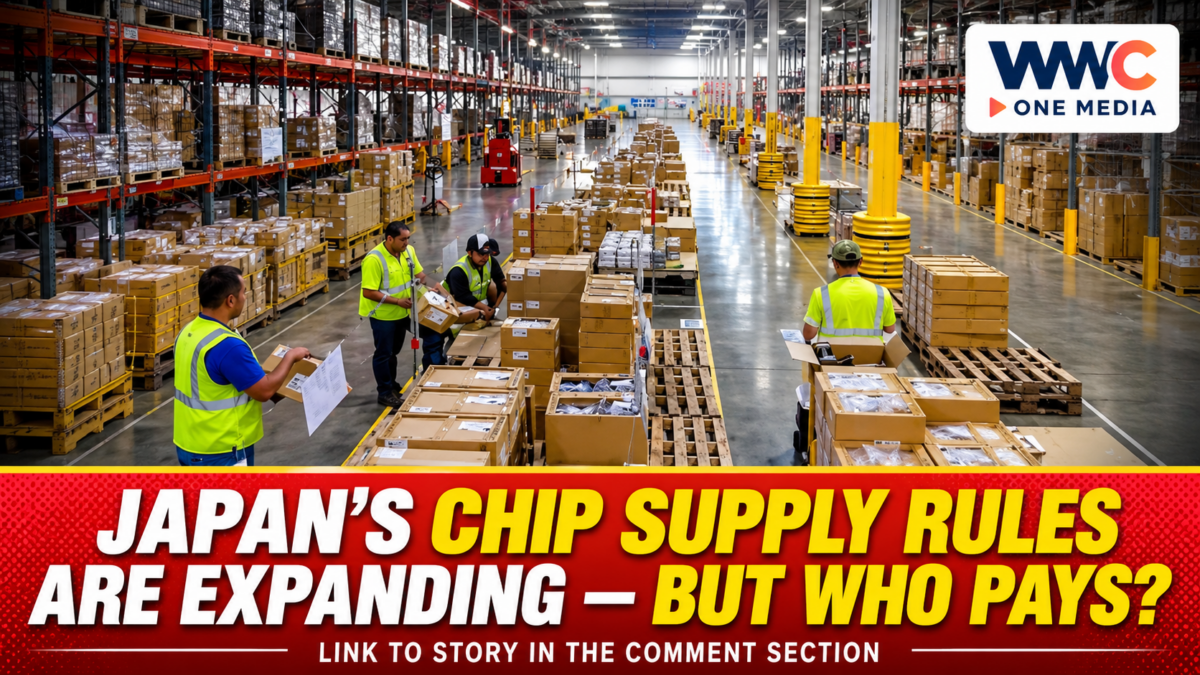
Semiconductor buyers include electronics manufacturers, automotive companies, industrial-equipment producers and businesses that incorporate chips into finished products. Their procurement decisions can influence whether suppliers receive enough predictable demand to justify investment.
If a manufacturer depends heavily on one supplier or one geographic source, a disruption can affect production schedules and delivery commitments. Finding another supplier may not be as simple as switching vendors: semiconductor components can require technical testing, qualification and adjustments to manufacturing processes.
This is why procurement planning can become a strategic issue rather than a routine purchasing exercise.
Japan’s November policy discussions and the broader government emphasis on economic security point to continued attention to supply-chain vulnerabilities. But the difference between a policy direction and a binding legal requirement must remain clear. Companies should not assume that every buyer is already required to submit a new procurement plan.
A June legal amendment widened the framework
Japan has already taken a legislative step to broaden its supply-chain resilience system.
The Cabinet Office records that amendments to the Economic Security Promotion Act and the Japan Bank for International Cooperation Act were promulgated in June 2026. The changes included support for services indispensable to the supply of critical goods and new provisions concerning efforts and requests for cooperation aimed at securing stable supplies.
The amendment matters because supply chains depend on more than the final manufacturer. Transport, maintenance, specialised services and other supporting activities can become critical when a disruption affects an entire production network.
The new provisions give the government additional tools to address those dependencies. However, they should not be confused with proof that a separate compulsory procurement-plan regime for all chip buyers is already in force.
That legal distinction is particularly important for companies that need to plan compliance spending, supplier contracts and inventory requirements.
Why the cost of resilience matters to manufacturers
Diversifying suppliers can reduce exposure to a single source, but it can also create additional expenses.
A company may need to test a new component, inspect production facilities, qualify alternative materials or maintain larger inventories. Smaller manufacturers may find these steps especially difficult because they have less purchasing power and fewer resources for technical assessments.
A government policy that encourages buyers to diversify procurement therefore raises a practical question: who pays for the transition?
If businesses are expected to purchase from more reliable but more expensive suppliers, the added cost could affect their margins and the prices they charge customers. If public support is available, its design will influence which companies can realistically participate.
Japan’s existing supply-security programme provides a model for supporting selected investment projects. Whether similar assistance will be extended to the costs faced by buyers would need to be clarified through official policy documents.
The same issue is relevant across the region. WWC has previously examined how critical-mineral supply concerns are shaping semiconductor security strategies involving Japan and the United States.
The regional implications reach beyond Japan
Japan’s approach matters to manufacturers throughout Asia because semiconductor production is spread across multiple economies.
Chipmakers, component suppliers, equipment companies and electronics assemblers operate through networks that cross national borders. A change in Japanese procurement practices could influence supplier qualification, investment decisions and sourcing arrangements among businesses that trade with Japanese manufacturers.
The Philippines has a stake in these developments as it seeks to strengthen its position in electronics and higher-value manufacturing. The country’s ability to participate in more sophisticated supply chains depends on factors such as reliable infrastructure, skilled workers, competitive production costs and dependable access to components.
Regional cooperation is also becoming more important. The Quad leaders’ discussions in Manila on critical supply chains and technology cooperation illustrate how supply-chain resilience has become part of wider economic and security planning.
Meanwhile, rising demand for advanced chips is placing pressure on production capacity. WWC’s coverage of TSMC’s expanding manufacturing effort amid the artificial-intelligence boom shows why the availability of semiconductors remains an important issue for businesses across the region.
For Philippine manufacturers, the lesson is not that Japanese policy will automatically create new local orders. Rather, companies should monitor how major economies define trusted suppliers, assess procurement risks and support the movement of critical components.
What happens next
The next important development will be the publication of more specific government rules or formal announcements clarifying whether demand-side companies will face new procurement-planning obligations.
Businesses will need clear answers on which products and companies would be covered, whether participation would be mandatory, how compliance would be assessed and whether assistance would be available for the cost of qualifying alternative suppliers.
Until those details appear in official records, the existing framework remains the reliable reference point for companies assessing their current obligations.
Japan has already committed substantial public resources to strengthening critical-goods production. The next test is whether the wider industrial network can turn that investment into dependable supply without placing an unreasonable burden on the companies expected to buy the products.
Frequently asked questions
1. Does Japan already have a law supporting critical supply chains?
Yes. The Economic Security Promotion Act provides a framework for designating critical goods and supporting approved supply-security plans.
2. Are semiconductors included in Japan’s critical-goods programme?
Yes. Semiconductors are among the goods designated for supply-chain resilience measures.
3. How many supply-security plans has Japan approved?
The Cabinet Office reported 169 approved plans as of November 4, 2026.
4. Must all Japanese semiconductor buyers submit procurement plans?
The official public records reviewed for this report do not establish a new universal mandatory procurement-plan requirement for semiconductor buyers. Companies should check formal government announcements and applicable regulations for any new obligations.
5. Why would Japan encourage companies to diversify suppliers?
Diversification can reduce dependence on a single source and help manufacturers maintain production when a supplier or trade route is disrupted.