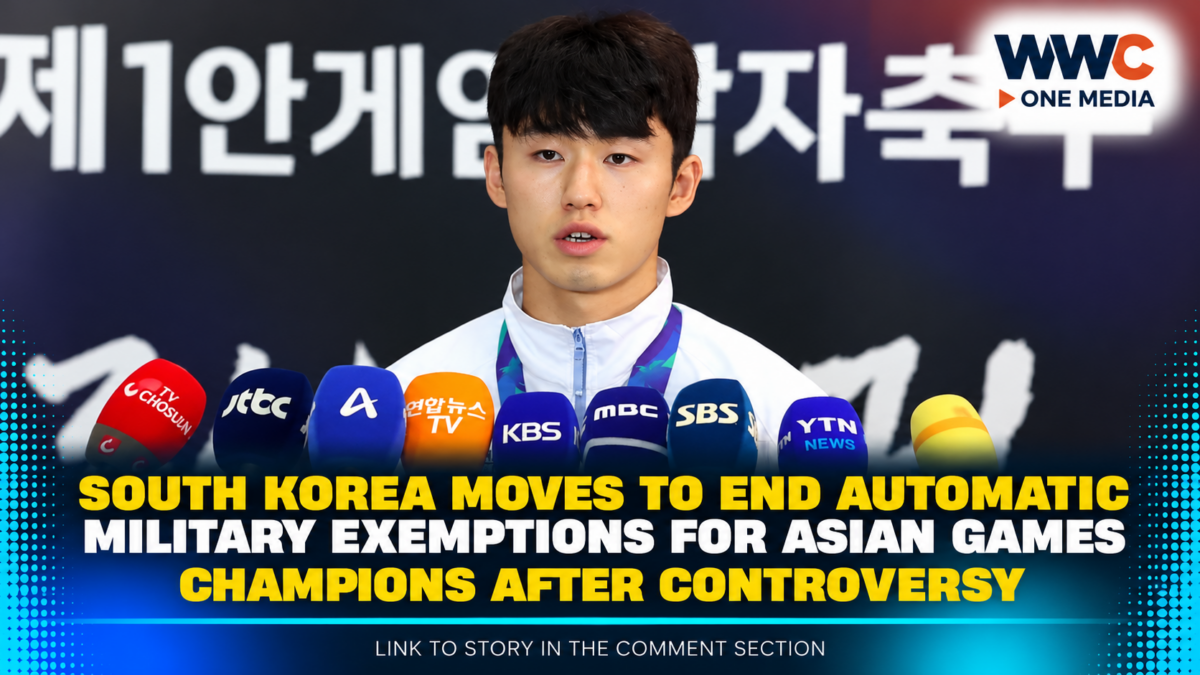
South Korea is considering a major change to its military-service exemption system for elite athletes after controversial remarks by Asian Games gold medalists reignited a national debate over fairness, mandatory service and the privileges granted to sporting champions.
A group of opposition lawmakers has introduced a bill that would end automatic eligibility for alternative military service based solely on winning an Asian Games gold medal. The proposal would retain the existing eligibility pathway for Olympic medalists while introducing stricter requirements for exceptional achievements in sports and the arts.
The bill, submitted by People Power Party lawmaker Joo Ho-young and nine fellow lawmakers, seeks to amend the country’s Military Service Act and establish clearer standards for determining who qualifies for the benefits.
The proposal comes as criticism grows over whether winning a regional sporting competition should be sufficient to receive special treatment under South Korea’s compulsory military-service system.
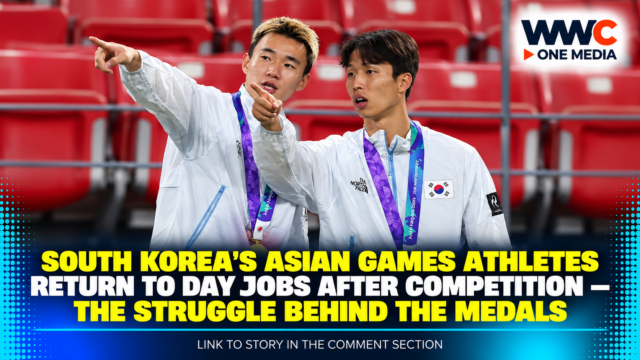
The controversy intensified after members of the country’s men’s football team made comments about avoiding military service following their victory over Japan in the 2026 Aichi-Nagoya Asian Games final.
The debate has since expanded beyond individual athletes, placing the country’s decades-old exemption policy under renewed scrutiny.
What Would Change Under the Proposed Bill?
Under South Korea’s existing system, eligible athletes can receive alternative military-service status after achieving specified results at major international competitions.
Olympic medalists and Asian Games gold medalists currently qualify under the sports-related provisions of the system.
Rather than completing the standard period of active military duty, eligible athletes are assigned to an arts and sports personnel program. They must complete basic military training and fulfill prescribed service obligations while continuing their professional activities.
The proposed amendment would remove an Asian Games gold medal as an automatic, standalone qualification.
Instead, athletes and artists seeking eligibility through exceptional achievements would need to meet stricter criteria, including recognition that their accomplishments significantly enhanced South Korea’s international standing. The proposed process would require Cabinet approval.
Olympic medalists would retain their existing eligibility pathway under the bill.
Supporters of the amendment argue that military-service benefits should be awarded under clear, consistent standards rather than being granted automatically based on a competition result.
The proposal also seeks to establish eligibility requirements more explicitly in law, reducing reliance on broadly defined standards under presidential decrees.
However, the bill has only been introduced. Its provisions would need to proceed through the legislative process before becoming law.
Football Team Comments Triggered Public Backlash
The controversy gained momentum after South Korea defeated Japan 1-0 in the men’s football final at the 2026 Aichi-Nagoya Asian Games, securing the country’s fourth consecutive title in the event.
Several players subsequently made remarks that drew criticism from the public.
Yang Min-hyuk, who assisted the winning goal, said in a post-match interview that obtaining a military-service exemption had been his primary motivation during the tournament.
Team captain Lee Gi-hyuk also made a remark about not having to serve in the military, while Park Seung-soo posted a photograph wearing a cap commonly associated with completing military service.
The comments prompted criticism from people who argued that the players appeared to place greater emphasis on the personal benefits of winning than on the sporting achievement itself.
The players later apologized amid the backlash.
The controversy nevertheless renewed questions about whether the exemption system creates incentives that conflict with the original purpose of international sporting competition.
For critics, the issue is not simply how individual players expressed themselves. It is whether the rules governing military-service benefits remain fair to the wider population.
Why Military-Service Exemptions Are So Sensitive in South Korea
Military service is a significant national obligation in South Korea, where most able-bodied men must serve under the country’s conscription system.
Depending on the branch of service, active-duty service generally lasts between 18 and 21 months.
Because most eligible men must fulfill this obligation, exemptions and alternative-service arrangements have long attracted public attention.
South Korea introduced special provisions for outstanding athletes and artists to recognize achievements that contribute to the country’s international reputation. The system has also allowed selected individuals to continue developing their professional careers while completing alternative service obligations.
But critics argue that the rules can produce unequal outcomes, particularly when athletes in different sports face different levels of competition.
Under the current framework, an Asian Games gold medal can qualify an athlete for alternative military service regardless of how competitive a particular event is perceived to be.
The proposed legislation seeks to address that concern by removing the automatic qualification tied to Asian Games gold medals.
Supporters of reform say the system should reflect clear standards of achievement while respecting the principle that military service is a shared national responsibility.
Baseball Results Also Fuel the Debate
The controversy is not limited to football.
South Korea’s baseball team also won gold at the 2026 Asian Games, despite having lost an earlier game to Japan.
The lawmakers behind the bill cited differences in team composition and competition standards as reasons for reconsidering the existing rules.
Japan’s baseball team included players from corporate amateur teams, while South Korea fielded professional players.
The contrasting circumstances prompted questions about whether every Asian Games gold medal should carry the same military-service benefit, regardless of the strength of the opposition or the nature of the competition.
The issue is particularly significant in team sports, where eligibility may extend to members of a squad even if they receive limited playing time.
Critics say such arrangements can make it difficult to demonstrate that every beneficiary individually meets the intended standard of exceptional achievement.
Supporters of the existing framework, however, have historically argued that international sporting success deserves recognition and that exemptions can help elite athletes maintain their competitive careers.
The debate therefore involves both fairness in military service and the role the government should play in supporting professional sports.
Defense Ministry Signals Broader Review
The proposed bill comes as South Korea’s Defense Ministry considers a wider review of the alternative-service system for athletes and artists.
Defense Minister Kang Shin-chul said during a parliamentary audit that the ministry aims to gradually scale back and ultimately abolish the benefit program.
The ministry has indicated that fairness among people subject to compulsory service, the declining number of people available for military duty and public opinion will be considered as the government reviews the policy.
These developments suggest that the debate could extend beyond Asian Games gold medalists to the broader framework governing alternative service for exceptional sporting and artistic achievements.
However, a government review and a lawmaker-sponsored bill are separate processes. The final scope of any reform will depend on subsequent legislative and policy decisions.
Could the Rules Affect Future Asian Games Competitors?
If the proposal becomes law, winning an Asian Games gold medal would no longer automatically qualify an athlete for alternative military service under the proposed framework.
Athletes would need to meet the revised eligibility requirements, while Olympic medalists would retain their existing qualification route under the bill.
The change could influence how future competitors evaluate the implications of winning major international events, particularly those in sports where Asian Games competition levels vary.
It could also lead sports organizations to reassess how they select athletes, communicate the benefits associated with international success and prepare competitors for possible changes to military-service rules.
For now, athletes remain subject to the existing legal framework unless and until changes are enacted.
What Happens Next?
The proposed amendment places South Korea’s military-service exemption policy at the center of a wider discussion about equality, national service and the recognition of sporting achievement.
The immediate question is whether lawmakers will support removing Asian Games gold medals as an automatic qualification and whether the government will pursue broader changes to the alternative-service program.
The debate also raises a longer-term question: how should South Korea recognize achievements that enhance its international reputation without undermining public confidence in the fairness of compulsory military service?
WWC ONE MEDIA G,A