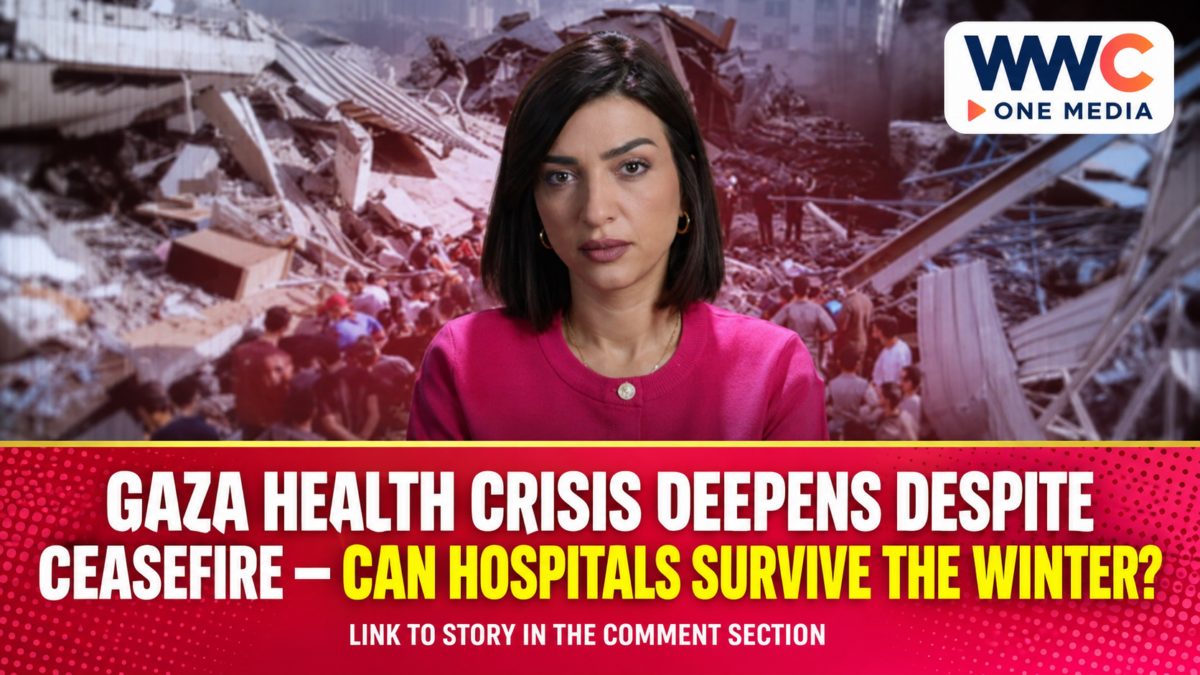
GAZA STRIP — The Gaza health crisis is placing renewed pressure on humanitarian operations as Israeli military strikes, shortages of essential medicines and winter flooding complicate efforts to restore healthcare services. United Nations humanitarian assessments released this month documented damage to medical facilities, continued population displacement and significant obstacles to delivering emergency assistance.
More than a year after the October 2025 ceasefire agreement, Gaza’s humanitarian emergency remains unresolved. For Palestinian families, the challenge extends beyond surviving military operations to securing medical treatment, clean water, adequate nutrition and protection from deteriorating weather conditions.
Gaza Health Crisis: Hospital Damage Threatens Medical Capacity
An Israeli airstrike on Nov. 12 damaged the surgical department of Nasser Medical Complex in Khan Younis, resulting in reported deaths and injuries among people at the facility.
The United Nations humanitarian situation report dated Nov. 18 recorded damage affecting operating theatres, intensive care facilities and postoperative services. Assessments of the full extent of the damage were still underway.
The hospital is an important referral centre serving an estimated 1.3 million people in southern Gaza.
The consequences of damage to a major hospital extend beyond the immediate casualties. Surgical procedures may become more difficult to arrange, while patients requiring specialised treatment face fewer alternatives.
The World Health Organization has also continued monitoring the availability of medical services across Gaza through its Health Resources and Services Availability Monitoring System.
Its October assessment, published on Nov. 12, used information collected through Oct. 31, 2026. The assessment remains subject to further verification.
Essential Medicine Shortages Complicate Recovery
An additional challenge confronting Gaza’s healthcare sector is the limited availability of pharmaceutical supplies.
The UN humanitarian assessment dated Nov. 13 recorded that 42 percent of essential medicines were at zero-stock levels in October.
That figure highlights the distinction between having an operational healthcare facility and having the resources necessary to provide effective treatment.
A hospital may remain open while experiencing shortages that restrict the services available to patients. Rebuilding healthcare infrastructure alone will therefore not necessarily restore medical capacity.
Predictable deliveries of medicines, equipment and operational supplies are equally important.
The issue also intersects with the broader political and security arrangements examined in WWC ONE MEDIA’s coverage of unresolved challenges surrounding the Gaza ceasefire.
Medical Evacuations Offer Relief but Remain Limited
Medical evacuations continued during November, allowing some patients to receive treatment outside the Gaza Strip.
Humanitarian records show that 97 patients, including 34 children, were evacuated between Nov. 10 and 16. Another 145 people accompanied them.
During the preceding reporting week, 119 patients had been evacuated.
These movements provide an important alternative for patients requiring services that are difficult to obtain locally. However, evacuation statistics should not be interpreted as evidence that Gaza’s domestic healthcare system has recovered.
The longer-term challenge is restoring access to treatment within the territory while maintaining external referral arrangements for patients with complex medical needs.
Winter Flooding Adds Another Public Health Threat
Humanitarian agencies are confronting additional difficulties following heavy rainfall earlier in November.
At a Nov. 17 UN briefing, the International Organization for Migration described extensive damage to temporary accommodation and warned that nearly $173 million in additional funding was needed for its winter shelter response.
Flood-damaged accommodation can expose displaced residents to cold weather and contaminated surroundings, increasing the importance of preventive healthcare and sanitation services.
Water access was already a serious concern before the recent storms.
An October monitoring assessment found that 85 percent of surveyed households experienced moderate or severe water insecurity.
These conditions illustrate why Gaza’s healthcare recovery cannot be separated from efforts to restore water infrastructure and improve living conditions.
WWC’s separate coverage of risks facing humanitarian workers maintaining water facilities in Gaza provides additional context for the challenges surrounding essential civilian services.
Continued Military Operations Complicate Aid Delivery
The Israeli military confirmed in a Nov. 21 statement that it had conducted an airstrike in northern Gaza targeting individuals it identified as members of Palestinian Islamic Jihad.
The military alleged that the individuals had been involved in activities threatening Israeli forces and civilians. It also disputed claims identifying them as humanitarian workers.
Those assertions represent the military’s account. They do not constitute independent verification of the identities of those targeted or a legal determination concerning the operation.
Separately, the United Nations reported continued humanitarian access difficulties during November.
The World Food Programme told the Nov. 17 briefing that restrictions affecting medical equipment, water infrastructure components and other essential goods were complicating humanitarian operations.
WWC ONE MEDIA previously examined the difficulties surrounding humanitarian shipments awaiting entry into Gaza, including the distinction between available relief supplies and their delivery to intended recipients.
Analysis: Humanitarian recovery depends on more than increasing the volume of incoming goods. Medical facilities require consistent access to supplies, functioning distribution networks and sufficiently safe conditions for personnel to carry out their work.
Intermittent improvements in shipments may provide temporary relief without resolving these underlying operational problems.
What Happens Next
Funding remains another major obstacle.
During its Nov. 19 briefing, the United Nations reported that slightly more than 35 percent of its $4.1 billion humanitarian appeal covering Gaza and the West Bank had been funded.
A further $40 million had been allocated through the Occupied Palestinian Territory Humanitarian Fund to support relief activities.
The coming weeks will test whether humanitarian organisations can translate additional funding into improved shelter, medical services and access to essential supplies.
Several indicators will be particularly important: medicine availability, hospital rehabilitation, medical evacuation capacity and the delivery of winter assistance.
For Gaza’s displaced population, meaningful recovery will ultimately depend on whether essential civilian services become consistently accessible, rather than merely whether individual relief shipments or temporary improvements are announced.