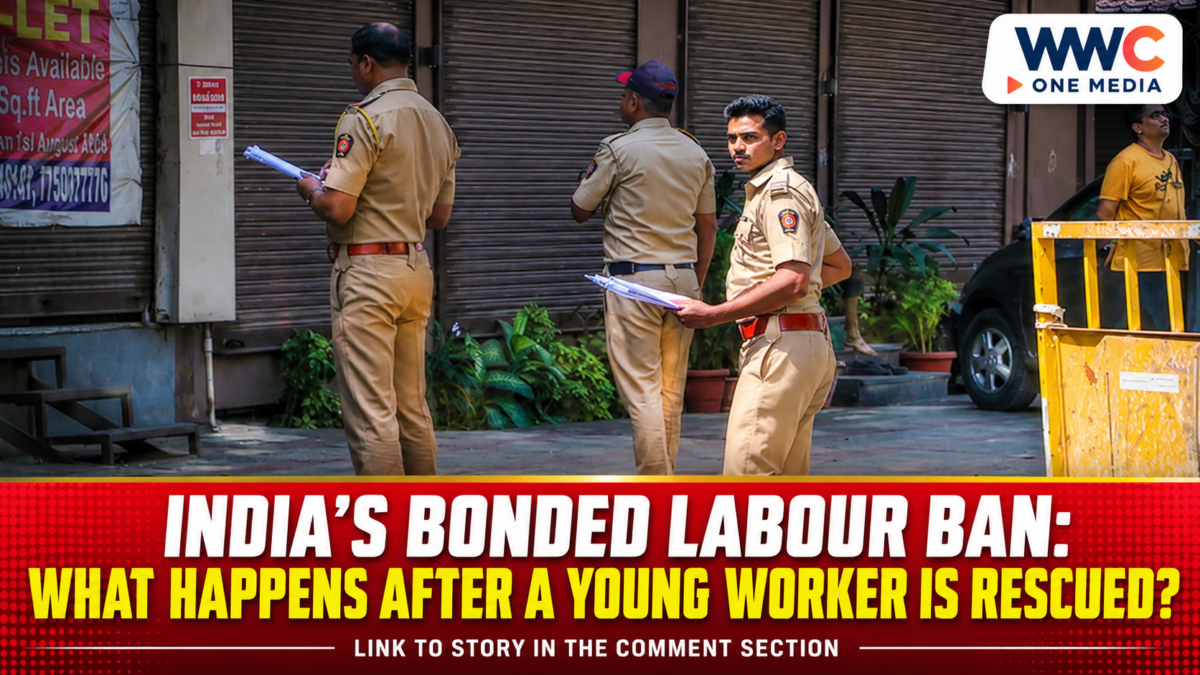
India’s bonded labour ban has been in place for approximately five decades, establishing a legal framework for identifying exploited workers, securing their freedom and supporting their rehabilitation.
The country’s Ministry of Labour and Employment outlined its rehabilitation framework in a parliamentary response on July 28, 2025, explaining the responsibilities of local authorities and the financial assistance available under the programme at that time. Press Information Bureau
For vulnerable young workers, the challenge extends beyond leaving an exploitative workplace. Long-term protection, economic security and access to education are important considerations in preventing further exploitation.
Understanding India’s bonded labour ban
Article 23 of India’s Constitution prohibits forced labour and human trafficking. The Bonded Labour System (Abolition) Act, 1976, provides a specific legislative framework addressing bonded labour. Press Information Bureau
The distinction between ordinary employment and forced labour is significant. A worker’s economic circumstances should not deprive that person of freedom or the ability to leave employment.
From a public-policy perspective, the effectiveness of these protections depends on enforcement and the accessibility of assistance to vulnerable communities.
Why rehabilitation matters after rescue
A parliamentary response released on Aug. 5, 2024, outlined three categories of rehabilitation assistance.
Under the framework described at that time, eligible adult male beneficiaries could receive ₹100,000, while designated vulnerable groups, including children and women, qualified for ₹200,000. Cases involving particularly severe exploitation could qualify for ₹300,000.
District authorities could also provide immediate financial assistance of up to ₹30,000. Press Information Bureau
These historical programme amounts should not be interpreted as confirmation that any individual has received assistance or that the same funding terms remain applicable in November 2026.
Local authorities have a central responsibility
India’s enforcement framework places responsibility on state and territorial administrations.
District-level officials and designated committees have responsibilities relating to the implementation of the legislation and the recovery of affected workers.
The government also disclosed in December 2023 that rehabilitation assistance was administered through state and territorial governments, with reimbursement from the national government. Press Information Bureau
This administrative arrangement makes coordination particularly important when a vulnerable worker comes from a different district or state.
What happens next
For any suspected bonded labour case, the essential questions concern the official findings, the protection of affected individuals and the availability of rehabilitation.
Where allegations involve minors, protecting their privacy and avoiding premature conclusions about criminal responsibility remain essential editorial and public-interest considerations.
The implementation of labour protections deserves continued scrutiny, particularly where economic vulnerability intersects with the rights of children.