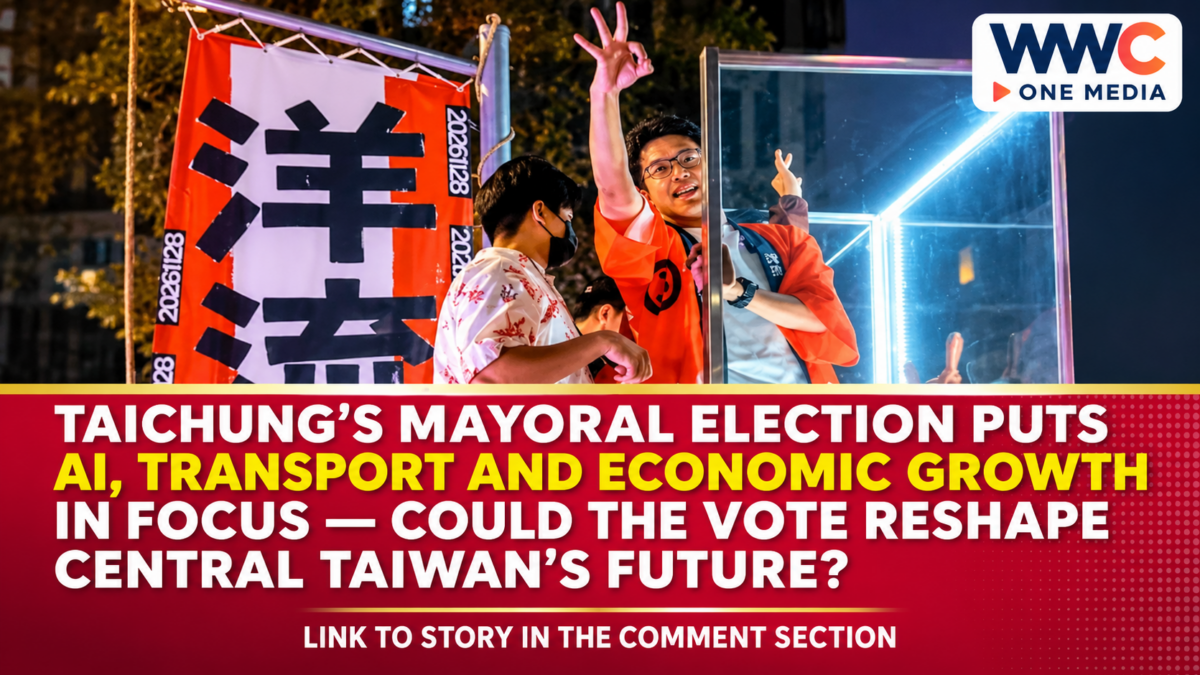
TAICHUNG, TAIWAN | November 26, 2026 — The Taichung mayoral election is entering its final stretch ahead of the November 28 vote, with three candidates presenting competing plans for industrial modernisation, transportation infrastructure, social welfare and economic development.
Democratic Progressive Party (DPP) candidate Ho Hsin-chun, Kuomintang (KMT) candidate Johnny Chiang and Law Justice Party candidate Hung Li-hua are competing to determine the next direction of municipal government.
Their proposals extend beyond traditional political competition. Artificial intelligence, robotics, international connectivity, agricultural development and family support have emerged as important components of their published platforms.
For businesses, workers and households, the significance of the election will ultimately depend on how campaign commitments translate into funded projects and measurable improvements.
Taichung Mayoral Election: Three Candidates, Different Priorities
The three candidates offer different professional backgrounds and development strategies.
Ho, a legislator with previous local council experience, is promoting industrial innovation, transportation improvements and expanded social welfare.
Chiang, deputy speaker of Taiwan’s legislature, is presenting an agenda combining international competitiveness, technological development and municipal services.
Hung, whose background includes business and community leadership, is emphasising economic opportunities, agricultural productivity, education and community development.
The contest forms part of the wider 2026 Taiwan local elections and competition over municipal governance.
While political affiliations remain relevant, the candidates’ development proposals provide another basis for understanding the potential consequences of the election.
The central economic question is how municipal leadership can support businesses while improving residents’ access to essential services.
Transportation Could Become a Defining Issue
Ho’s transportation platform calls for improvements across road, railway and public transit networks.
Her proposals include expanding the metro system, improving bus services, upgrading railway infrastructure and strengthening international air connectivity.
These priorities build on themes explored in WWC ONE MEDIA’s earlier coverage of Ho Hsin-chun’s transportation and industrial development agenda.
Chiang also proposes accelerating metro construction and railway modernisation. His plans include technology-enabled traffic management and improving connections between residential districts and essential services.
Both candidates therefore identify transportation as an important development priority, although their wider implementation strategies differ.
The economic implications extend beyond commuting convenience.
Better transport connections could improve access to employment, reduce logistical difficulties and create commercial opportunities around emerging transportation hubs.
However, major infrastructure projects require more than political commitments. Construction schedules, land acquisition, financing, procurement and long-term maintenance can affect their feasibility.
The availability of reliable project budgets and implementation timelines will be important when evaluating whichever administration takes office.
AI and Robotics Emerge as Economic Priorities
Industrial transformation represents another area of overlap between Ho and Chiang.
Ho proposes using Taichung’s capabilities in precision machinery, aerospace, semiconductors and optical technologies to develop artificial intelligence applications in manufacturing.
Her platform identifies robotics and drones as potential areas of industrial expansion. It also includes proposals to strengthen AI-related skills among students and young people.
Chiang is pursuing a robotics-focused strategy that includes a dedicated industrial park, AI training and closer cooperation among businesses, government institutions and academic organisations.
The two approaches reflect opportunities associated with industrial automation.
Developments such as Taiwan’s aerospace industry’s adoption of AI-powered smart manufacturing provide additional context for understanding the economic potential of these technologies.
Similarly, Taiwan’s emerging drone manufacturing and sustainable materials industry remains relevant to the proposed expansion of advanced manufacturing.
The challenge for the next administration will be to ensure that technological investment produces commercially viable businesses, productive employment and opportunities for smaller enterprises.
An industrial park or training facility should ultimately be assessed through its economic performance rather than its announcement alone.
Social Welfare and the Cost of Supporting Families
The candidates’ platforms also address household welfare.
Ho proposes expanded childcare assistance, free school lunches at elementary and junior high school levels, continued health insurance subsidies for older residents and additional community-based elderly care services.
Her programme connects family support with broader educational and employment opportunities.
Chiang’s agenda includes childcare-related assistance, improvements to elderly care services and the establishment of additional administrative mechanisms for family welfare and long-term care.
Hung places emphasis on employment, educational development and improving living standards through economic and community initiatives.
These commitments raise practical questions about municipal finances.
Expanding public services can provide meaningful assistance to households, but recurring programmes also require sustainable funding.
Unlike a one-time construction expenditure, childcare assistance, healthcare subsidies and social services may create ongoing financial obligations.
The long-term effectiveness of these proposals will depend on their eligibility requirements, administrative efficiency, funding arrangements and actual accessibility.
Can Taichung Strengthen Its International Competitiveness?
The election also presents competing ideas for developing Taichung’s international commercial profile.
Chiang proposes strengthening the convention and exhibition economy, improving airport connections and developing neighbourhoods with convenient access to essential services.
His proposed 20-minute living areas aim to bring employment, education, healthcare and other daily necessities closer to residents.
Ho’s platform similarly supports international investment promotion, exhibition facilities, tourism development and stronger international transportation links.
Hung advocates expanding economic cooperation with international partners while supporting technological investment, agriculture and fisheries.
For Asia-Pacific businesses, these proposals could have implications for future investment opportunities, supply-chain development and access to skilled workers.
However, campaign proposals should not be confused with approved investments or completed infrastructure.
Their commercial significance will become clearer only when detailed programmes, funding commitments and implementation arrangements are established.
What Happens Next?
Voting is scheduled for Saturday, November 28, 2026, from 8 a.m. to 4 p.m., Taiwan local time.
The successful candidate will inherit the responsibility of turning election commitments into practical municipal programmes.
The effectiveness of the next administration can be assessed through several indicators: transport accessibility, industrial investment, employment opportunities, fiscal sustainability and the quality of public services.
The election will determine Taichung’s municipal leadership, not Taiwan’s national presidency.
Its longer-term importance will depend on administrative performance after election day.
Whether the next administration prioritises new initiatives, the continuation of existing programmes or a combination of both, residents and businesses will ultimately need measurable results.
Frequently Asked Questions
When is the 2026 Taichung mayoral election?
The election is scheduled for November 28, 2026, with polling from 8 a.m. to 4 p.m., Taiwan local time.
Who are the candidates for Taichung mayor?
The three candidates are Ho Hsin-chun of the Democratic Progressive Party, Hung Li-hua of the Law Justice Party and Johnny Chiang of the Kuomintang.
What are the main issues in the Taichung mayoral election?
Major policy areas include public transportation, AI-powered manufacturing, robotics, industrial investment, childcare, elderly care and international connectivity.
Which candidates support AI and robotics development?
Both Ho Hsin-chun and Johnny Chiang have included AI-related industrial development and robotics in their published election platforms.
Why does the Taichung election matter to Asia-Pacific businesses?
Municipal decisions involving infrastructure, industrial development, investment promotion and workforce training could influence future business conditions and regional supply-chain opportunities.