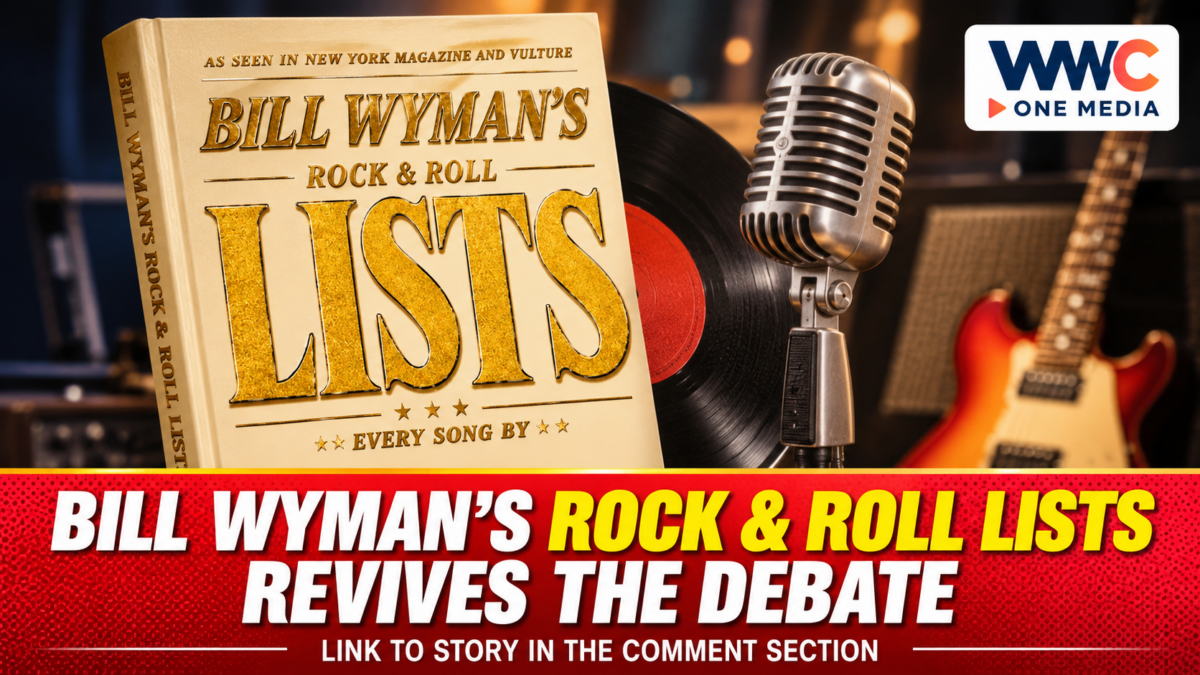
A new collection of song rankings brings familiar rock and pop catalogs back into public debate, showing why arguments over musical greatness remain part of music culture.
Music fans have spent decades arguing over which songs deserve to stand above the rest. Now, journalist and music critic Bill Wyman has gathered years of his rankings into a single book, giving readers another opportunity to revisit the recordings, artists and creative decisions that shaped popular music.
Bill Wyman’s Rock & Roll Lists brings together rankings covering the catalogs of major artists, including the Beatles, Michael Jackson, Led Zeppelin, Pink Floyd, the Eagles, the Clash and Nirvana. The collection also includes assessments of artists inducted into the Rock & Roll Hall of Fame. The book is presented as more than a simple countdown: its descriptions combine musical judgments with historical context and details about the people behind the recordings.
The project highlights an enduring feature of music culture: rankings can be subjective, but the arguments they generate keep listeners engaged with the songs themselves.
Rock music rankings turn listening into debate
A ranked list gives readers an immediate point of comparison. It places familiar songs in an order, invites disagreement and encourages listeners to reconsider recordings they may have known for years.
That format is central to Wyman’s project. In an interview published by the Washington Independent Review of Books in September 2026, Wyman described his intention to make long-form music criticism more engaging without reducing it to short, superficial commentary.
He said he wanted to combine traditional, in-depth criticism with a format that readers could enjoy while gradually uncovering broader themes. He also defended disagreement as part of the purpose of criticism: readers should consider an opinion, challenge it and develop their own judgments.
That approach helps explain why a list can become more than a collection of numbers. Each ranking creates a starting point for discussing songwriting, performance, production, influence and the circumstances in which a recording was made.
Seven major catalogs provide the book’s foundation
The collection covers seven major artists: the Beatles, Michael Jackson, Led Zeppelin, Pink Floyd, the Eagles, the Clash and Nirvana.
Each catalog represents a different musical identity and period. The Beatles’ recordings remain central to discussions of popular songwriting and studio experimentation. Michael Jackson’s catalog connects pop music with performance, production and global entertainment. Led Zeppelin and Pink Floyd invite debate over the development of album-oriented rock, while the Eagles and the Clash represent sharply different approaches to American and British popular music.
Nirvana adds another perspective through the alternative-rock movement that helped reshape mainstream music in the early 1990s.
The range gives readers several ways to approach the book. Someone interested in classic rock can compare the Beatles and Led Zeppelin, while another reader may focus on the contrast between the Clash’s punk foundations and Nirvana’s alternative-rock legacy.
The rankings are not official measurements of musical quality. They are critical interpretations, and their value depends partly on whether readers find the reasoning convincing.
The Rock & Roll Hall of Fame adds another layer
The book also examines artists inducted into the Rock & Roll Hall of Fame, expanding its scope beyond the seven individual catalogs.
That section raises a different question: how should musical legacy be evaluated across artists who work in different genres, generations and creative traditions?
Hall of Fame recognition is institutional, while a critic’s ranking is personal. The two approaches do not necessarily produce the same conclusions. An artist can have substantial historical influence without appearing near the top of one critic’s personal list.
This distinction is important because music history is not determined by a single ranking. Commercial success, innovation, cultural influence, musicianship and the ability to shape later generations can all contribute to an artist’s legacy.
WWC previously examined the Hall’s broader approach in its coverage of the 2026 Rock & Roll Hall of Fame class, which brought together performers and contributors from different musical backgrounds.
Why music criticism still needs disagreement
Wyman’s approach also challenges the expectation that music criticism should always be positive.
In the September interview, he argued that criticism should encourage people to think and spark discussion. He acknowledged that some of his judgments have generated strong reactions, including disagreements over his assessments of Beatles songs and other major artists.
That is not unusual in music culture. Listeners often attach personal memories and emotional meaning to particular recordings. A song that one critic considers overrated may be closely associated with another person’s childhood, relationships or formative experiences.
The disagreement is part of the appeal. A ranking gives readers a reason to return to the music, listen more closely and decide whether the argument holds up.
For artists with large catalogs, the process can also draw attention to recordings that receive less recognition than the best-known singles.
What happens next for the book and its readers?
The book is listed on Apple Books under the title Bill Wyman’s Rock & Roll Lists. The platform identifies it as an English-language release dated July 7, 2026, with Bill Wyman listed as publisher.
Readers should note that the digital and print listings show different formats and page counts. Apple Books lists an 807-page digital edition, while Bookshop.org lists a 466-page paperback edition with an August 29, 2026 publication date. These figures refer to different formats and should not be treated as interchangeable.
The book’s longer-term cultural value will depend less on whether readers agree with every ranking than on whether its essays encourage them to revisit the music and think more carefully about how artists are remembered.
That question extends beyond one critic or one collection. Popular music continues to be rediscovered by new audiences, while older listeners reassess recordings they have known for years.
In the end, the most interesting part of a music ranking may not be the song placed at number one. It may be the conversation that follows when listeners ask why it belongs there.
Frequently asked questions
1. What is Bill Wyman’s Rock & Roll Lists about?
It collects Bill Wyman’s rankings and commentary on songs by major rock and pop artists, alongside assessments of Rock & Roll Hall of Fame inductees.
2. Which artists are covered in the main song rankings?
The seven featured catalogs are the Beatles, Michael Jackson, Led Zeppelin, Pink Floyd, the Eagles, the Clash and Nirvana.
3. Is the book an official ranking of the greatest songs?
No. It presents the author’s critical judgments. Readers may agree or disagree with the order.
4. Who is Bill Wyman, the author?
He is a journalist, editor and music critic. The author is not the same person as the former Rolling Stones bassist who shares his name.
5. Why do music rankings remain popular?
They give listeners an accessible way to compare songs, revisit familiar catalogs and debate how musical quality and influence should be judged.