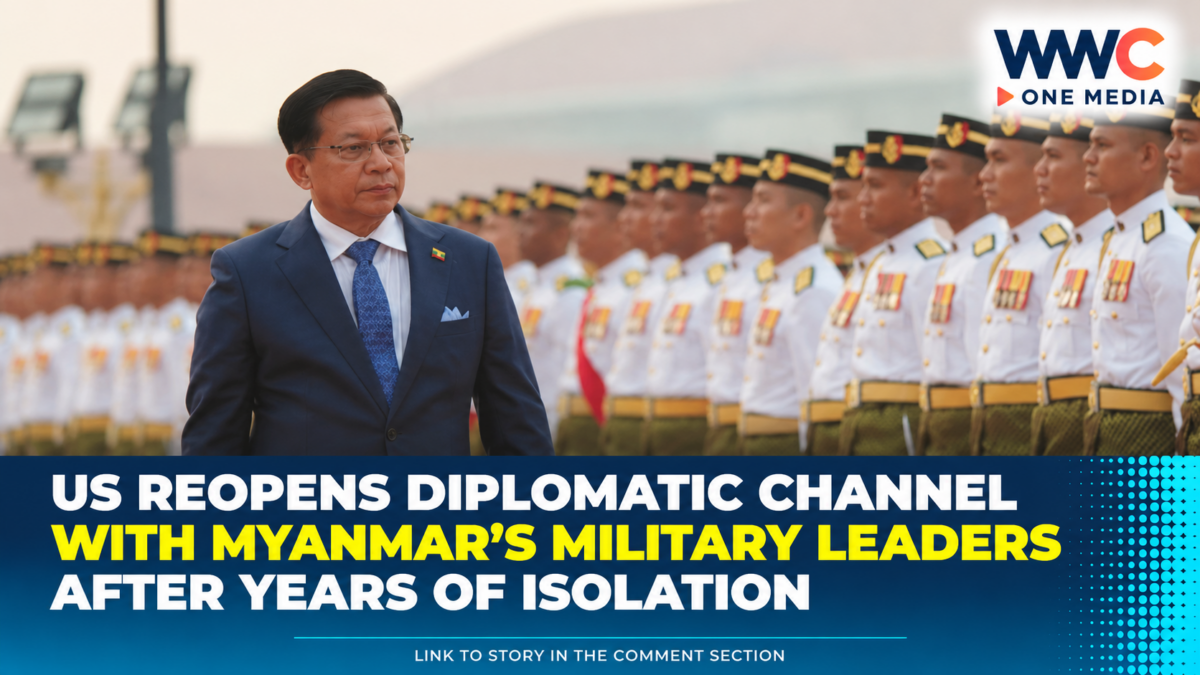
The United States has begun direct talks with Myanmar’s military-installed government, marking a significant shift in Washington’s approach since the military seized power in 2021.
The outreach by the Trump administration reflects growing interest in addressing issues that affect US security and economic interests, including online scam operations targeting Americans and Myanmar’s deposits of valuable rare-earth minerals.
According to officials cited by Reuters, US Assistant Secretary of State for Intelligence and Research Michael Vance played a leading role in the discussions. He met Myanmar leader Min Aung Hlaing in Naypyitaw on Sept 15 and 16, in what was described as the highest-level contact between the two governments since the coup.
The initial meeting was aimed at securing the release of American businessman Adam Castillo, who had been detained in Myanmar. The discussions subsequently opened the door to broader engagement between Washington and the military-backed government.
Fighting Online Scams Becomes a Key Priority
One of Washington’s main objectives is to persuade Myanmar’s authorities to help shut down scam centres operating within the country.
These operations have been linked to romance scams and other forms of online fraud that have cost Americans billions of dollars. The US Federal Bureau of Investigation has reportedly established direct contact with Myanmar authorities over cybercrime concerns.
However, enforcement remains complicated. Some scam centres operate in territories controlled by armed groups rather than the central government, while researchers have raised concerns about alleged links between parts of the scam industry and military-aligned interests.
This raises questions about how effectively Myanmar’s authorities can dismantle the networks and whether the latest diplomatic engagement will produce meaningful results.
Rare-Earth Minerals Could Shape Future Relations
Beyond cybercrime, discussions have also touched on Myanmar’s deposits of heavy rare-earth elements, which are used in products such as electric vehicles and wind turbines.
The United States has been seeking to diversify supply chains and reduce its dependence on China for critical minerals. Greater access to Myanmar’s resources could therefore become a potential area of economic cooperation.
But significant obstacles remain. Many deposits are located in areas controlled by ethnic armed organisations fighting Myanmar’s military government. Any effort to secure access would have to contend with the country’s ongoing conflict and the interests of other regional powers, particularly China.
The mineral discussions indicate that economic and strategic considerations could play a growing role in Washington’s dealings with Myanmar.
A Major Shift Since the 2021 Military Coup
Following the February 2021 coup, the US imposed sanctions on senior military figures and businesses linked to Myanmar’s armed forces. Washington also supported initiatives intended to assist pro-democracy groups opposing military rule.
The new talks represent a departure from the previous emphasis on isolating Myanmar’s military leadership, although US officials have said engagement with the government does not mean abandoning contact with democratic opposition groups and ethnic armed organisations.
Min Aung Hlaing remains under US sanctions over human rights abuses, including atrocities against the Rohingya Muslim minority. The military government has also faced international criticism over continuing violence and an election process rights groups have questioned.
The renewed contact has drawn criticism from US lawmakers who argue that dealing directly with the military leadership could lend it greater international legitimacy without securing meaningful progress on democracy or human rights.
What Happens Next?
The diplomatic opening comes as Myanmar’s military-backed leadership seeks to rebuild international relations following years of isolation. Min Aung Hlaing has also pursued closer ties with Southeast Asian countries, including through recent diplomatic visits.
For Washington, the immediate focus appears to be practical cooperation on issues such as the release of detained Americans and the disruption of online fraud networks. Longer-term discussions could extend to critical minerals and other strategic interests.
Whether the engagement leads to concrete improvements remains uncertain. Myanmar’s continuing conflict, the military leadership’s record on human rights and the complicated control of scam centres and mineral-rich territories could all limit the results.
The talks nevertheless signal a change in US policy, with Washington exploring direct engagement while the broader questions surrounding Myanmar’s political future remain unresolved.