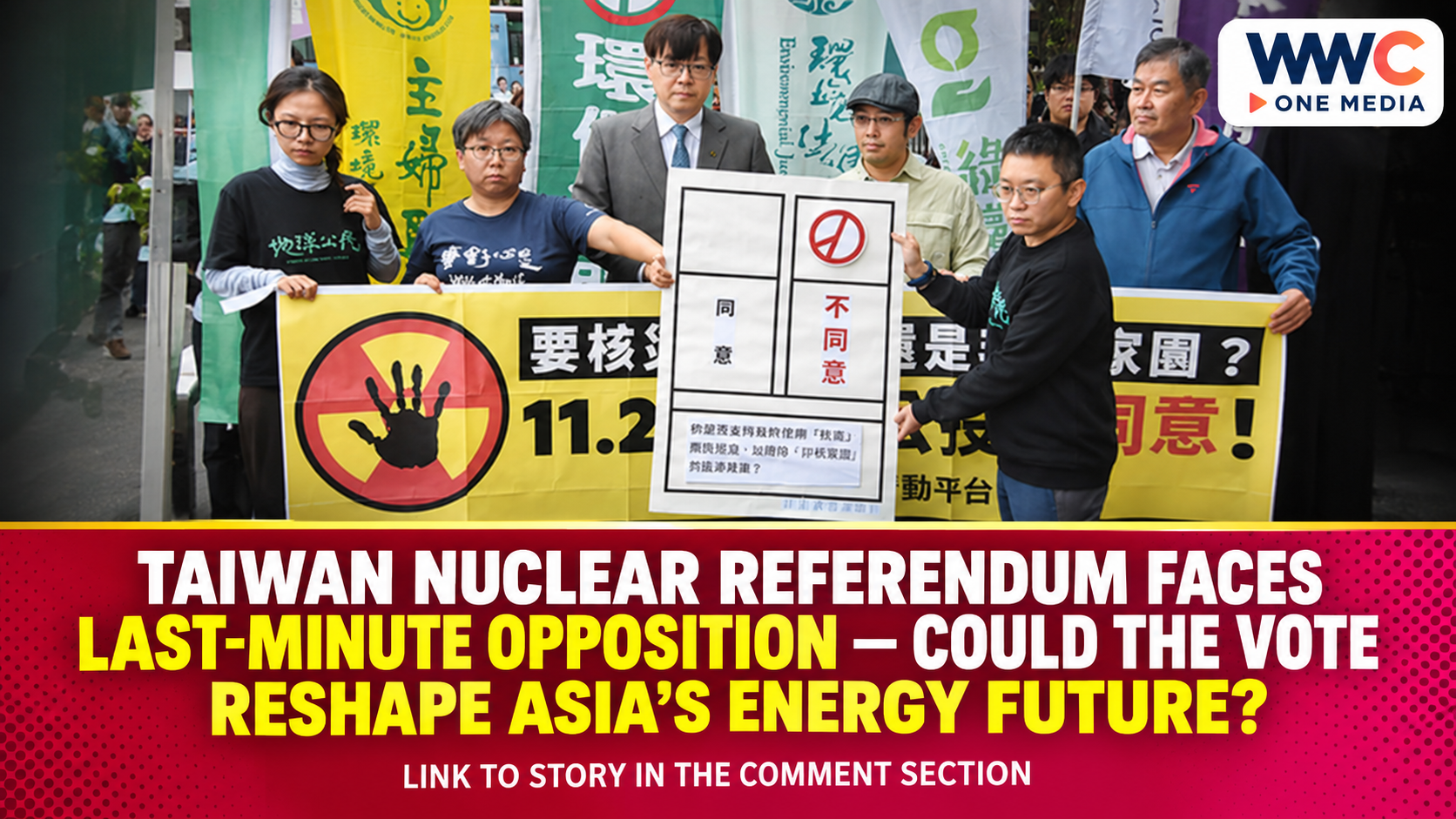
TAIPEI, TAIWAN — November 27, 2026 — Taiwan’s nuclear energy future faces a major political test on Saturday, Nov. 28, as voters prepare to decide whether the government should abandon its nuclear-free energy policy and use nuclear power to support economic development.
Environmental organisations mounted a final public campaign on Thursday, Nov. 26, urging voters to reject the proposal and highlighting unresolved concerns surrounding reactor safety, radioactive waste disposal and the long-term direction of Taiwan’s energy transition.
The nationwide referendum comes as competing visions for Taiwan’s electricity system place industrial development, environmental protection and energy security at the centre of public debate.
For Asia-Pacific economies, the outcome could offer another indication of how technology-driven economies intend to balance growing electricity requirements with environmental and public safety obligations.
Taiwan nuclear referendum puts energy policy on the ballot
Officially designated as nationwide Referendum No. 22, the proposal asks whether voters support using nuclear-generated electricity to revitalise the economy by abolishing Taiwan’s nuclear-free energy policy.
Polling is scheduled from 8 a.m. to 4 p.m. on Saturday, alongside Taiwan’s local elections.
Unlike a proposal involving the restart of one particular reactor, the latest referendum addresses the broader direction of government energy policy.
WWC ONE MEDIA previously covered Taiwan’s approval of the November 28 nuclear referendum, including the decision to exclude two unrelated referendum proposals from the ballot.
The distinction between changing national policy and authorising individual nuclear facilities is significant.
A successful referendum would establish a policy mandate, but it would not automatically restore electricity generation at inactive nuclear power plants.
Environmental organisations raise nuclear safety concerns
The National No-Nukes Action Platform gathered civil society representatives along Ketagalan Boulevard in Taipei on Nov. 26 to reiterate its opposition to restarting nuclear power generation.
The coalition identified nuclear safety, radioactive waste management, geological risks and the economic feasibility of nuclear development as issues requiring further scrutiny.
Environmental advocates argued that Taiwan should continue its energy transition rather than reverse its nuclear phase-out.
They also questioned whether the construction of new nuclear facilities or the restoration of existing reactors could address industrial electricity requirements within the necessary timeframe.
Earthquake-related concerns formed part of the opposition campaign. However, determining the actual safety of an individual facility requires detailed engineering assessments and regulatory evaluation.
The coalition’s concerns represent its policy position rather than a regulatory finding that every nuclear facility is unsafe.
Nuclear power supporters emphasise economic development
Supporters of the referendum present a different vision for Taiwan’s energy future.
The proposal’s formal rationale connects nuclear energy development with artificial intelligence, industrial competitiveness, electricity availability and carbon reduction objectives.
The argument centres on whether nuclear generation can complement renewable energy and contribute to a more dependable electricity system.
Opponents contend that investment should instead prioritise renewable generation and other measures supporting the energy transition.
These competing positions highlight a central challenge: how to secure sufficient electricity at an acceptable cost while meeting environmental and safety requirements.
The broader political context is also significant, as Taiwan’s November 28 local elections will take place on the same day as the referendum.
The two voting exercises remain legally distinct, with the referendum addressing energy policy rather than determining who governs Taiwan’s municipalities.
Why a referendum cannot immediately restart nuclear reactors
One of the most important distinctions in Taiwan’s nuclear debate concerns the difference between political authorisation and technical readiness.
An energy policy change does not, by itself, demonstrate that an inactive reactor is capable of safely returning to commercial operation.
Any proposed restart would need to address the condition of equipment, ageing infrastructure, seismic protection, operational requirements and applicable licensing procedures.
These considerations also affect project economics.
A nuclear facility requiring substantial rehabilitation could involve different costs and implementation schedules from a newly constructed renewable energy project. Likewise, renewable generation must be evaluated alongside transmission infrastructure, storage requirements and electricity availability.
The relevant comparison is therefore not simply nuclear power against renewable energy. It involves assessing how different technologies can operate together within a reliable and affordable electricity system.
AI and semiconductor development increase the stakes
Taiwan’s energy debate extends beyond household electricity consumption.
The referendum’s stated economic objectives explicitly recognise artificial intelligence development and the need to support industrial activity.
For energy-intensive technology businesses, the reliability, availability and cost of electricity are important considerations when evaluating manufacturing capacity and future investment.
Central Taiwan’s industrial development is also receiving attention during the election campaign, with Taichung’s mayoral election placing AI, transport and economic development in focus.
From a regional economic perspective, Taiwan’s policy decisions could influence discussions surrounding industrial electricity procurement, infrastructure investment and long-term decarbonisation.
However, the referendum should not be interpreted as an immediate solution to electricity demand.
Whether nuclear generation, renewable energy or a combination of technologies can meet future requirements will depend on actual investment, regulatory approvals and implementation.
What happens after Taiwan’s November 28 vote?
The immediate priority will be determining whether the referendum satisfies the applicable legal requirements.
If the proposal passes, the subsequent challenge will involve translating the result into government policy while complying with nuclear safety and licensing requirements.
If the proposal fails, it will not provide the proposed mandate to abolish the existing nuclear-free energy policy.
Regardless of the result, questions surrounding electricity affordability, industrial demand, energy diversification and environmental protection will remain relevant.
Taiwan’s referendum is ultimately a decision about the direction of energy policy — not a guarantee that additional generating capacity will become available immediately.
For policymakers and businesses across the Asia-Pacific region, the more consequential developments may emerge after the ballots are counted, when political commitments must be translated into technically feasible energy projects.