Singapore formally takes over the ASEAN chairmanship
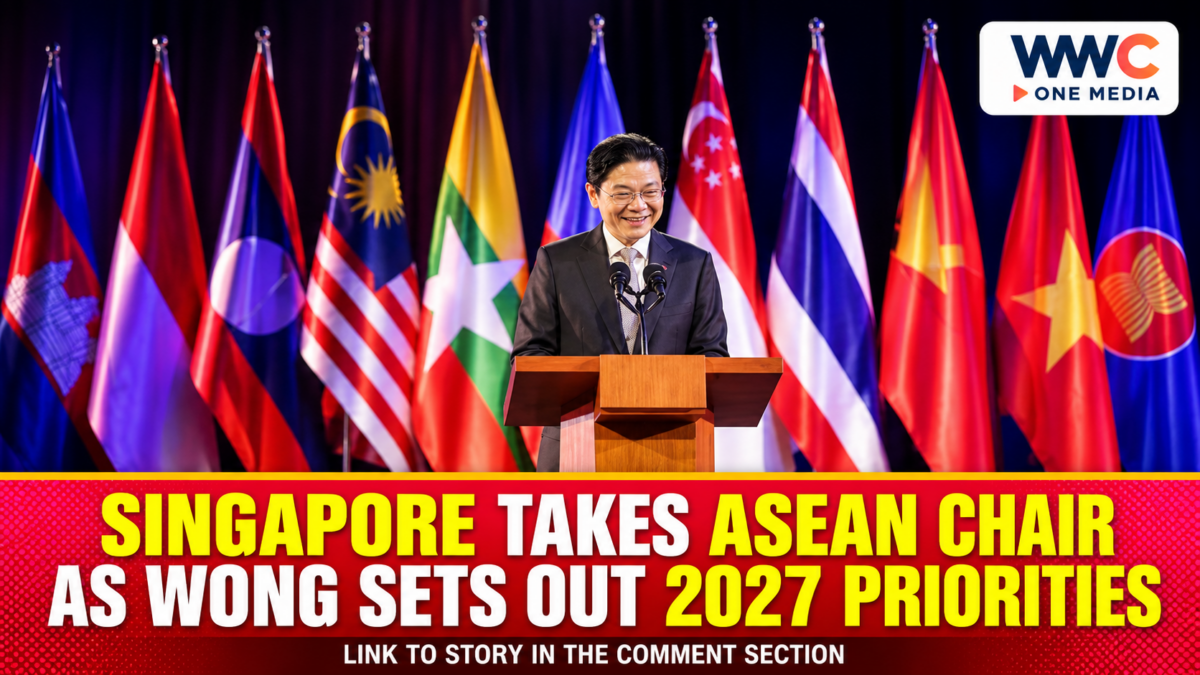
Singapore formally assumed the ASEAN chairmanship from the Philippines during the closing ceremony of the 49th ASEAN Summit and Related Summits in Manila on Nov. 17.
Prime Minister Lawrence Wong accepted the chairmanship and thanked President Ferdinand Marcos Jr. for leading the regional bloc through a challenging year. The transfer begins Singapore’s turn to guide ASEAN’s work and coordinate its regional agenda. Prime Minister’s Office Singapore
Wong identified several outcomes from the Philippine chairship, including the signing of the ASEAN Digital Economy Framework Agreement, the early entry into force of the upgraded ASEAN Trade in Goods Agreement and the ASEAN-China Free Trade Agreement 3.0. He also highlighted progress towards Timor-Leste’s full integration into ASEAN.
These developments give Singapore an existing programme of regional cooperation to carry forward. They also show why the change of chairmanship is a transfer of responsibility rather than a reset of ASEAN’s commitments. Prime Minister’s Office Singapore
Wong sets Singapore’s 2027 theme
Singapore has chosen “Deeper Integration, Wider Partnerships” as the theme for its chairmanship.
Wong said deeper integration would involve stronger regional connections in finance, digital technologies and energy. He also outlined the goal of moving closer to a single ASEAN market where businesses can operate across borders more seamlessly and people can access wider opportunities to work, invest and prosper. Prime Minister’s Office Singapore
The second part of the theme focuses on external relationships. Wong said ASEAN should remain open to cooperation with partners at a time when global divisions and geopolitical competition are increasing.
The timing is significant because 2027 will mark ASEAN’s 60th anniversary. Singapore’s chairmanship will therefore coincide with a milestone year for the regional organisation and an opportunity to review how far its members have progressed in building a more connected community. Prime Minister’s Office Singapore
What the transition means for the Philippines
The end of the Philippine chairmanship does not end the country’s role in ASEAN. The Philippines remains a member state and will continue participating in regional decisions, negotiations and implementation.
Its 2026 agenda was organised around Peace and Security Anchors, Prosperity Corridors and People Empowerment, under the theme “Navigating Our Future, Together”. Those priorities addressed regional security, economic cooperation and the welfare of ASEAN communities. Presidential Communications Office+1
For the Philippines, the next measure of success will be whether commitments made during its chairmanship continue to produce practical results. For Singapore, the challenge will be to maintain that momentum while advancing its own priorities.
What happens next
Attention now turns to Singapore’s preparations for its 2027 chairmanship and coordination with other ASEAN members.
The practical tests will include whether regional businesses can benefit from deeper digital and financial connections, whether energy cooperation becomes more effective, and whether ASEAN can sustain constructive relationships with its external partners.
The change in leadership is complete. The work of turning regional commitments into results continues.