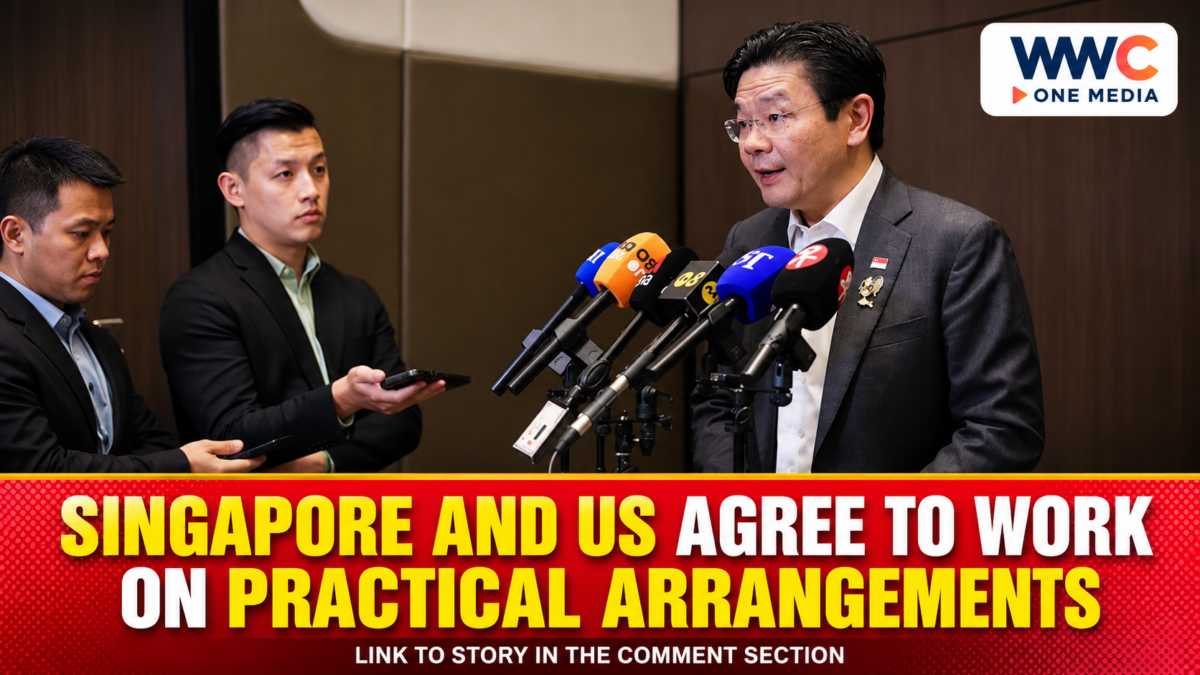
Singapore’s response moved beyond an initial review of the new restrictions when Minister for Digital Development and Information Josephine Teo met US Under Secretary of Commerce for Industry and Security Jeffrey Kessler on Nov. 17.
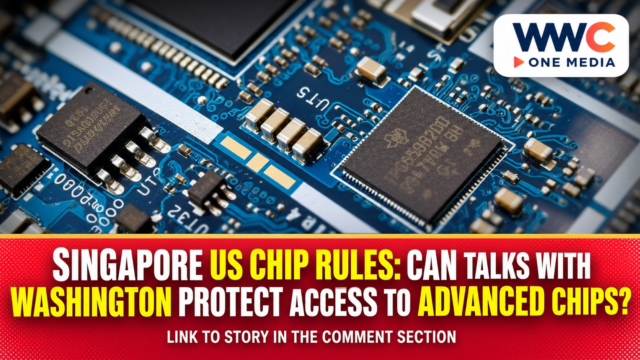
The two officials discussed the US Bureau of Industry and Security’s new interim final rule, which introduces additional controls on access to advanced semiconductors and computing capabilities.
Their meeting produced an agreement to follow up on practical arrangements intended to facilitate continued trusted access to advanced American technologies for users in Singapore. The Singapore government also welcomed the US agency’s intention to hold industry briefings to clarify requirements for international commercial transactions.
The announcement does not mean that the new licensing requirements have been waived or that Singapore has secured a blanket exemption. It establishes that both governments intend to continue discussions on how legitimate commercial activity can proceed under the new rules. Ministry of Digital Development and Information+1
The distinction between Singapore’s laws and US export controls
Singapore’s position is important for companies that use the country as a regional trading, technology and data-centre hub.
In its Nov. 16 joint statement, the Ministry of Digital Development and Information and Ministry of Trade and Industry said Singapore was studying the US measure, consulting affected companies and engaging American authorities over implementation.
The statement also made clear that Singapore would not condone businesses using their association with the country to circumvent or violate other countries’ laws, including export controls.
That position should not be confused with Singapore taking responsibility for enforcing US export regulations. The official statement describes cooperation, business-integrity safeguards and continued access for legitimate companies; it does not announce that Singapore has adopted the American rules as its own domestic export-control regime. Ministry of Digital Development and Information+1
Why the new rules matter to data-centre operators
The US measure addresses more than the physical movement of semiconductor products. The Bureau of Industry and Security says the rule is intended to prevent restrictions on sensitive American technology from being bypassed through remote computing arrangements involving data centres in third countries.
That distinction matters because a company may operate servers in one country while providing computing capacity to customers elsewhere. The location of the equipment is therefore not the only issue regulators may consider.
For businesses, the practical questions include which chips and computing systems are covered, who ultimately uses the computing capacity, and whether the transaction requires a licence.
WWC’s earlier coverage of the new US controls on overseas AI computing explains the wider regional implications. Singapore’s growing infrastructure ambitions, including its allocation of additional data-centre capacity, make access to advanced computing technology an important issue for its digital economy.
The continuing Megaspeed investigation also illustrates why authorities are paying attention to the movement and declared use of computing equipment. However, that investigation must remain separate from the new US licensing requirements; an ongoing investigation is not proof that a company has violated the new rule. Readers can review WWC’s report on the Singapore server-shipment investigation for the domestic case background. bis.gov+3
What happens next
The next important step is the follow-up work between Singapore and US officials. Industry briefings and further clarification of licensing requirements could help affected companies determine how the new controls apply to their transactions.
Businesses should not assume that discussions between the two governments automatically remove licensing obligations. They will need to assess the relevant products, customers, destinations and uses against the applicable rules.
For Singapore, the challenge is to preserve its position as a trusted technology and trade hub while maintaining access to advanced American computing systems. The outcome of the bilateral discussions will help determine how businesses navigate that balance.