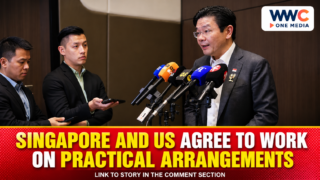
Singapore has opened direct discussions with Washington over new US semiconductor export controls, with Minister for Digital Development and Information Josephine Teo meeting US Under Secretary of Commerce for Industry and Security Jeffrey Kessler on Nov. 17, 2026. The meeting focused on maintaining legitimate access to advanced American technology while giving businesses clearer guidance on the rules governing international transactions.
The discussions are important because Singapore is one of five countries specifically named in the new US licensing requirements for certain advanced semiconductors. The outcome could affect how chip suppliers, manufacturers, data-centre operators and technology companies plan transactions involving American computing technology.
But the meeting has not produced a publicly announced exemption or a final arrangement guaranteeing uninterrupted access. Instead, both governments have agreed to continue working through the practical details.
Singapore US chip rules bring Teo and Washington into direct talks
Teo and Kessler discussed the US Bureau of Industry and Security’s new Interim Final Rule, which introduces additional controls on access to advanced semiconductors and computing capabilities.
The Singapore government said both officials shared an interest in ensuring that rules remain consistent and clear enough to support legitimate commercial activity.
They also agreed to follow up on practical arrangements intended to facilitate continued trusted access to advanced US technologies for users in Singapore.
Teo welcomed the US authorities’ intention to conduct industry briefings. These sessions are expected to help businesses understand requirements for international commercial transactions with American partners.
The meeting followed a joint statement issued on Nov. 16 by Singapore’s Ministry of Digital Development and Information and Ministry of Trade and Industry. That statement said Singapore was studying the measure, engaging affected companies and discussing implementation with relevant US authorities.
The latest meeting therefore represents a move from initial government assessment towards more detailed bilateral engagement. It does not, however, establish that the two countries have already settled the implementation questions. Ministry of Digital Development and Information+1
Which semiconductor transactions face new licensing requirements?
The US measure identifies Indonesia, Malaysia, Singapore, Thailand and Brazil for additional licensing requirements covering specified advanced semiconductor exports, re-exports and transfers within those destinations.
This is not a blanket prohibition on all chip shipments to the five countries. It is a licensing framework for covered advanced semiconductor items, with applications subject to US export-control requirements.
The rule also provides an exception for qualifying transactions involving companies headquartered in the United States, or whose ultimate parent company is headquartered there, provided the specified reporting requirements are met.
That exception matters for multinational businesses operating in Singapore. A company’s local presence alone does not determine whether a transaction qualifies. Its corporate headquarters, ultimate parent, the controlled item and the applicable reporting conditions can all affect the licensing analysis.
The US rule also introduces a separate control involving overseas data centres. It addresses arrangements in which advanced US computing technology provides significant computing capacity to companies headquartered in Macau or destinations classified under Country Group D:5.
The distinction is important: the five-country licensing requirement and the remote-access restrictions are separate parts of the same regulatory framework. Businesses need to assess both the movement of equipment and the customers who ultimately receive access to computing capacity. bis.gov+1
Why Singapore has so much at stake
Singapore’s interest extends beyond importing advanced processors for local technology companies.
The country has built a significant role in semiconductor manufacturing, equipment production, precision engineering and the wider electronics supply chain. These activities support both domestic industry and international technology businesses.
In remarks delivered at a US-ASEAN business roundtable on Nov. 13, Teo said the semiconductor industry accounted for about seven percentage points of manufacturing’s 20% contribution to Singapore’s gross domestic product. She also said 20% of the world’s supply of semiconductor equipment came from Singapore.
Those figures help explain why export-control changes matter to the city-state. Singapore is not simply a destination for imported chips; it is also part of the industrial network that supports semiconductor production and advanced technology development. Ministry of Digital Development and Information
The country’s manufacturing performance adds another dimension. WWC previously examined the expansion in Singapore’s electronics and precision-engineering output, including production linked to semiconductors, servers and data-storage products.
For businesses, the immediate concern is predictability. Companies need to know whether equipment can be shipped, transferred or re-exported under the new rules, what documentation is required and how long licensing decisions may take.
Uncertainty can complicate procurement schedules, investment planning and customer contracts even when a transaction is ultimately permitted.
Data centres make the rules more complicated
The new controls also arrive as Singapore expands its digital infrastructure to support cloud services and artificial intelligence.
Advanced processors are increasingly used in data centres that provide computing services to customers across borders. In these arrangements, the physical location of a server and the location of the customer using its computing power may be different.
The US rule addresses this distinction by introducing controls on certain advanced computing items used by overseas data centres that provide significant computing capacity to companies headquartered in specified restricted destinations.
The regulatory text sets a threshold of more than 12 million in aggregate total processing performance for the covered remote-access provision. It also considers linked data-centre infrastructure and requires attention to direct and indirect customer ownership or control.
This means compliance cannot always stop at checking the address of the facility or the identity of the immediate customer. Operators may need to understand who ultimately controls the customer and who receives the computing service.
Singapore has already been developing its own framework for critical digital infrastructure. WWC’s coverage of the proposed Digital Infrastructure Bill for data centres and cloud providers explains the local emphasis on security, resilience and sustainability.
The two regulatory approaches are not interchangeable: Singapore’s proposed framework concerns domestic oversight, while the US measure governs specified exports, transfers and remote access involving American-controlled technology. bis.gov+1
Singapore’s message: preserve access while enforcing the rules
Teo’s public remarks on Nov. 16 and the Nov. 17 meeting both emphasised the importance of maintaining a credible business environment.
In her Nov. 16 remarks, she said Singapore was engaging affected businesses and US counterparts to understand the new measure’s scope and implementation. She also said the government would not condone the use of Singapore’s business environment to violate the laws of other countries.
That position is significant for a country whose technology and manufacturing sectors depend on international trade and investment.
Singapore is seeking to preserve access for legitimate businesses while demonstrating that its companies and institutions will not be used to circumvent foreign export controls.
This is a delicate balance. A system that is too restrictive could make legitimate transactions more difficult, while weak enforcement could undermine confidence among international technology partners.
The government’s approach will therefore depend not only on diplomatic discussions but also on how the rules are translated into practical compliance guidance for businesses.
Singapore’s semiconductor ecosystem is also connected to other regional markets. Its cooperation with India, for example, has included semiconductor supply-chain and workforce development initiatives, as explored in WWC’s report on Singapore and India’s expanding chip partnership.
That wider network makes predictable export-control rules important beyond the immediate Singapore-US relationship.
What happens next
The next steps will involve continued communication between Singapore and US authorities, practical discussions on trusted access and the industry briefings welcomed by Teo.
Businesses will need to assess which products and transactions fall under the new licensing requirements, whether any available exception applies and what reporting or customer due-diligence obligations they must meet.
The US interim final rule states that it takes effect upon publication in the Federal Register. As of Nov. 18, the published rule text reviewed for this report still contained a placeholder for the publication date, so the effective date should not be treated as already confirmed here.
For Singapore, the central question is whether discussions with Washington can produce clear and workable arrangements that allow legitimate technology businesses to continue operating while meeting US export-control requirements.
The Nov. 17 meeting established a channel for further work. The practical outcome will depend on the guidance, implementation details and decisions that follow.
Frequently asked questions
1. What did Josephine Teo discuss with US official Jeffrey Kessler?
They discussed the US Bureau of Industry and Security’s new controls on advanced semiconductors and computing capabilities, including practical arrangements to facilitate trusted access for Singapore users.
2. Is Singapore exempt from the new US chip restrictions?
No blanket exemption was announced. The rule provides a specific exception for qualifying transactions involving US-headquartered companies or their US-headquartered ultimate parent companies, subject to reporting requirements.
3. Which countries are named in the new licensing requirement?
Indonesia, Malaysia, Singapore, Thailand and Brazil are named for additional licensing requirements covering specified advanced semiconductor exports, re-exports and transfers.
4. Do the rules cover data centres outside the five named countries?
Yes. A separate provision addresses certain overseas data-centre arrangements that provide significant computing capacity to companies headquartered in Macau or destinations classified under Country Group D:5.
5. What happens after the Singapore-US meeting?
Both sides agreed to remain in close communication and follow up on practical arrangements. US industry briefings are also intended to help companies understand the requirements.