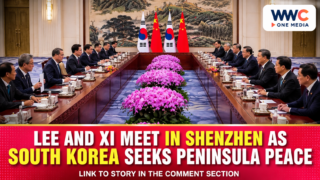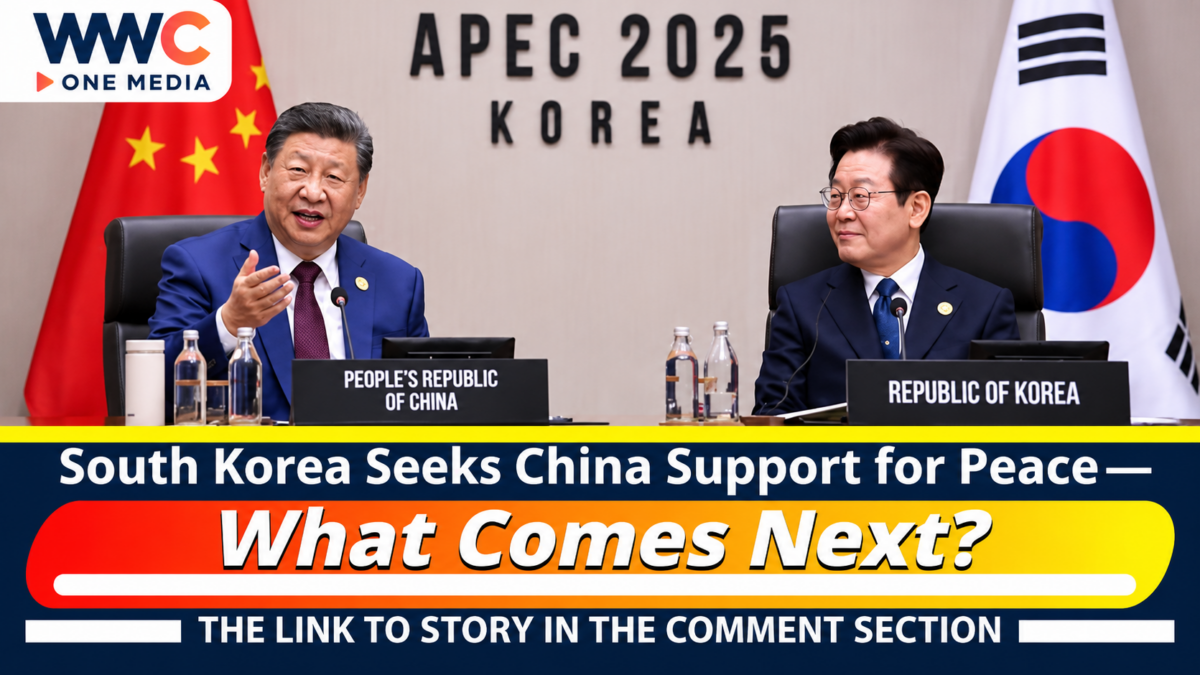
South Korean President Lee Jae Myung put peace on the Korean Peninsula on the agenda for talks with Chinese President Xi Jinping in Shenzhen on Nov. 18, 2026. The South Korean presidential office identified regional stability alongside trade, investment and cultural exchanges as subjects for their meeting during the Asia-Pacific Economic Cooperation (APEC) gathering.
The diplomatic test is whether a broad appeal for cooperation can lead to practical steps towards renewed dialogue with North Korea. Seoul’s published agenda confirms what the leaders intended to discuss; it does not, by itself, establish that Beijing made a new commitment or that negotiations with Pyongyang have restarted.
Korean Peninsula peace returns to the leaders’ agenda
The Shenzhen encounter was scheduled as Lee and Xi’s third bilateral summit, following meetings in Gyeongju in November 2025 and Beijing in January 2026. The presidential office described it as their first such meeting in about ten months.
The agenda linked two different priorities: cooperation for peace and stability on the peninsula, and the development of economic and people-to-people ties. That combination matters because Seoul’s relationship with Beijing cannot be judged by security discussions alone.
Both countries have an interest in preventing disruption to the regional environment in which their businesses and citizens operate. However, an agreement to discuss peace is different from a documented plan identifying participants, deadlines or negotiating terms.
For Philippine readers, the diplomatic setting is also familiar. Lee travelled to Manila for ASEAN-related meetings before continuing to China, an itinerary connected to the broader engagement discussed in WWC’s report on Korea–Philippines relations.
What South Korea wants from renewed dialogue
Lee has already described his intended approach to the North in a formal address to the United Nations. His programme rests on three ideas: mutual respect despite political differences, mechanisms to prevent crises, and steps towards ending the unresolved wartime situation through a lasting peace arrangement.
His stated approach does not depend on immediate political unification. Instead, it starts from the narrower question of how the two sides might communicate, reduce the possibility of confrontation and eventually develop workable forms of cooperation.
The president also expressed hope that talks between Washington and Pyongyang would resume and could eventually develop into discussions among the relevant parties about a peace regime. That aspiration is an official policy position, not evidence that the parties have agreed to resume formal negotiations.
What this could mean: Seoul may view China’s engagement as useful because peace discussions have historically extended beyond the two Koreas. But no single bilateral summit can substitute for the participation of governments whose consent would be required for an eventual settlement.
China relationship includes trade and diplomacy
Beijing’s own diplomatic record shows that the relationship has a substantial economic track. Chinese Foreign Minister Wang Yi and South Korean Foreign Minister Cho Hyun met in Beijing on Nov. 13, ahead of the presidential summit.
At that meeting, Wang described progress in bilateral commerce and outlined potential cooperation in artificial intelligence, biomedicine, green development and services for older people. The Chinese readout also recorded Cho’s support for maintaining dialogue and expanding practical cooperation.
The two governments are approaching the 35th anniversary of diplomatic relations in 2027. Anniversaries can provide occasions for announcing initiatives, but they do not measure whether a proposed initiative has been implemented.
A useful distinction for readers is between expressions of diplomatic support and verifiable action. The first may reduce friction and create political space. The second would involve published agreements, established mechanisms or identifiable follow-up meetings.
Manila talks show the regional dimension
Lee did not raise Korean Peninsula peace only in China. During the East Asia Summit in Manila on Nov. 17, the South Korean presidential office reported that he presented his government’s framework for peaceful coexistence and sought regional backing for the resumption of inter-Korean dialogue.
The same official account recorded discussions about maritime rules, online scams and humanitarian concerns. These issues show why Korean Peninsula security is one part of a larger regional diplomatic agenda, not an isolated question.
At the Korea–ASEAN summit on Nov. 16, Lee also explained his government’s peninsula policy and requested continued cooperation. The presidential office said participating ASEAN leaders reaffirmed support for that policy.
Regional backing can help maintain the issue on diplomatic agendas. It does not mean ASEAN countries have undertaken to negotiate directly with North Korea or that a new negotiating process has been launched.
For further regional context, WWC has examined China’s wider ASEAN diplomatic agenda, where commitments likewise need to be distinguished from measurable implementation.
Why the timing matters for wider security talks
The Shenzhen meeting coincides with a gathering organised primarily around Asia-Pacific economic cooperation. China’s foreign ministry set the APEC leaders’ meeting for Nov. 18–19 and confirmed that Xi would host bilateral engagements alongside the multilateral programme.
That setting provides opportunities for separate diplomatic conversations without making them formal APEC decisions. It is important not to confuse a discussion between two presidents with a consensus position adopted by every APEC participant.
There is also a wider question about the role of other governments in any future dialogue with Pyongyang. WWC has separately covered North Korea’s engagement with Russia and questions about renewed talks. The relevance here is structural: Korean Peninsula diplomacy involves several relationships that cannot be settled through a single Seoul–Beijing conversation.
Analysis: The clearest near-term measure of progress would not be the warmth of summit language. It would be whether Seoul and Beijing describe a specific follow-up channel, and whether any credible opening for talks with Pyongyang is subsequently confirmed.
What happens next
The official pre-meeting briefing established the planned agenda but did not document a negotiated peace arrangement, a new bilateral security mechanism or an agreed date for talks involving North Korea. Any such development would require a separate announcement or other verifiable record.
The next questions are therefore concrete: Will the governments issue a detailed account of their discussions? Will they identify officials responsible for follow-up? And will North Korea signal any willingness to participate in a dialogue?
Until answers emerge, the defensible conclusion is limited but important: Seoul has placed Korean Peninsula peace within its engagement with Beijing and has sought wider regional support. Turning that diplomatic objective into an active negotiating process remains the unresolved challenge.
FAQ
Why did Lee Jae Myung seek China’s cooperation?
South Korea’s official agenda identified peace and stability on the Korean Peninsula as one subject for the Lee–Xi meeting. Lee has also publicly advocated renewed dialogue and a long-term peace framework.
Did China agree to restart North Korea peace talks?
The pre-meeting primary records reviewed did not establish such an agreement. A discussion agenda must not be treated as proof of a negotiated outcome.
What is Lee’s Korean Peninsula peace policy?
Lee has outlined a framework centred on mutual respect, crisis prevention and a transition towards a lasting peace arrangement, with renewed dialogue as an essential step.
Why does this matter to the Philippines?
Lee presented his peninsula policy during ASEAN-related meetings in Manila. Regional stability and diplomatic cooperation are matters of direct concern to ASEAN governments, including the Philippines.