AUSTRALIA — Nov. 15, 2026. Australia and the Philippines are moving towards a modernised defence cooperation framework after their defence ministers publicly endorsed the planned arrangement in August. Their documented priorities include maritime surveillance, military exercises and defence infrastructure, as regional concerns over the South China Sea continue.
The stakes extend beyond signing a document. For Manila, the practical test is whether a closer partnership improves awareness of activity at sea and helps Philippine forces operate effectively with partners without surrendering control of national facilities.
Australia–Philippines Defence Ties: What the Arrangement Would Change
The two governments have worked under a 1995 memorandum on defence cooperation. At their third defence ministers’ meeting in Darwin on Aug. 7, 2026, Australian Deputy Prime Minister and Defence Minister Richard Marles and Philippine Defence Secretary Gilberto C. Teodoro Jr. welcomed progress towards a Defence Cooperation Arrangement intended to supersede and modernise that memorandum.
The ministers described the planned arrangement as the contemporary framework for their bilateral defence relationship. That is significant because military cooperation no longer revolves solely around occasional visits. Their official agenda covers training, exercises, infrastructure, access arrangements and intelligence, surveillance and reconnaissance.
The August statement did not publish an implementation budget, the complete legal text or a timetable for each project. Those details are necessary to assess real changes.
An official record confirming completion of the anticipated Nov. 15 signing was not available for independent review at the time of this edition. The established commitments should not be confused with unverified completion details.
Maritime Cooperation Is Already Happening
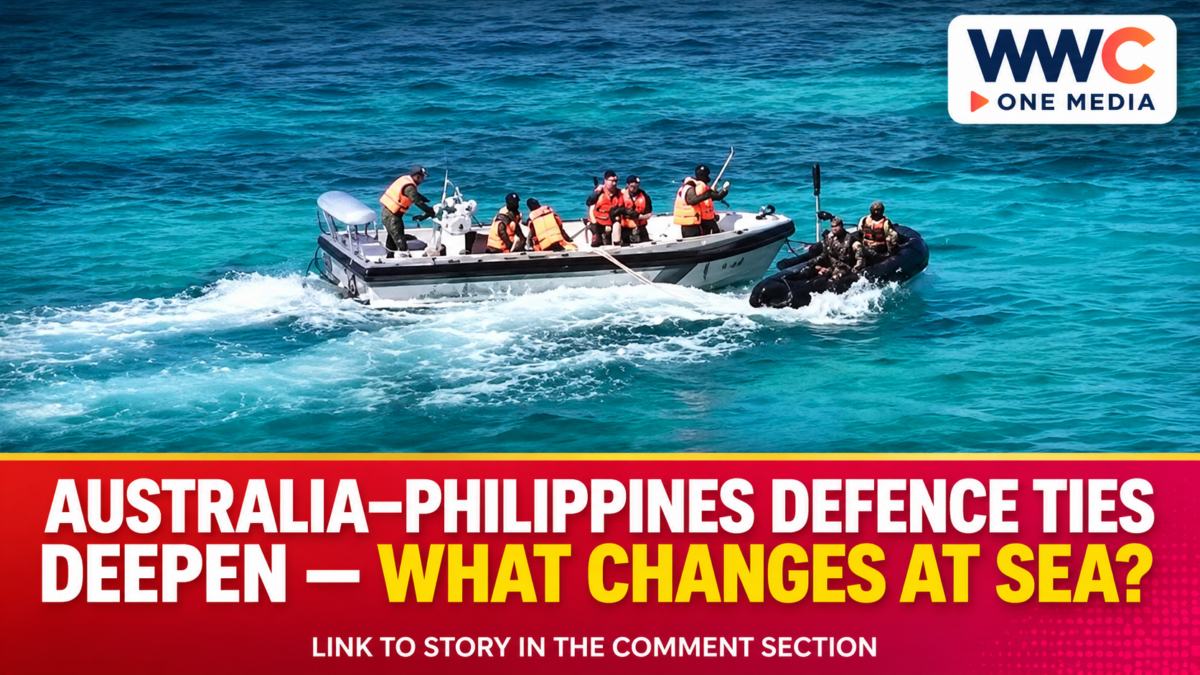
The partnership has a practical foundation. Australia’s defence department confirmed that Australian, Philippine and United States forces conducted a maritime cooperative activity in the Philippine exclusive economic zone from Aug. 19 to 25, 2026.
Participating platforms included Australia’s HMAS Supply and a P-8A Poseidon maritime patrol aircraft, the Philippine Navy’s BRP Diego Silang, the Philippine Coast Guard’s BRP Teresa Magbanua and the US Navy’s USS Santa Barbara. These are examples of established operations, not promises of new equipment transfers under the planned arrangement.
For civilian readers, maritime domain awareness means knowing what vessels and aircraft are operating in an area and having reliable information to distinguish routine movements from a developing incident. Better coordination can support safer decisions, although it cannot by itself resolve a sovereignty dispute.
The wider context includes the West Philippine Sea maritime tensions already central to Philippine security discussions. Cooperative patrols also give militaries a chance to practise communications and procedures before an emergency.
Why Infrastructure and Sovereignty Both Matter
At the Darwin meeting, Marles and Teodoro welcomed progress on an initial group of defence infrastructure projects in the Philippines and discussed possible additional works. They linked those projects to interoperability and the country’s Comprehensive Archipelagic Defense Concept.
Crucially, their joint statement said that the Philippines would retain full sovereignty over its sites. That point separates cooperation on facilities from any assumption that a foreign partner gains ownership or unrestricted authority over them.
The ministers also identified cooperation involving Australia’s MC-55A Peregrine capability and Philippine support for access arrangements. The public statement did not specify every future mission, location or operational rule, so claims about particular planned deployments would go beyond the record.
Strategic geography is part of the discussion. Coverage of security concerns involving Batanes shows how attention can shift between the West Philippine Sea and the waters north of Luzon. Neither geography nor defence planning proves that conflict is inevitable.
China, International Law and the Limits of Deterrence
The August ministerial statement explicitly raised concern over Chinese vessel conduct towards Philippine vessels in the South China Sea, including dangerous actions and risks of escalation. Those concerns are the two governments’ stated position, not a finding that every disputed encounter has been independently adjudicated.
Both sides emphasised the United Nations Convention on the Law of the Sea and the binding character of the 2016 South China Sea arbitral award for the parties. Australia separately reaffirmed that position in its August maritime activity release.
Their support for international law sits alongside continuing regional diplomacy. The ASEAN maritime code discussions illustrate why defence readiness and negotiated rules can proceed in parallel.
What this could mean: Stronger coordination may make it easier for partners to respond coherently to incidents and reduce operational confusion. It does not guarantee that Beijing will change its position, nor does any of the reviewed statements announce a new mutual-defence treaty between Canberra and Manila.
Four-Country Coordination Adds Another Layer
Australia, Japan, the Philippines and the United States also released a joint defence statement on Nov. 10 concerning their Oct. 28 meeting in Cebu. They committed to establish a Combined Coordination Center in the Philippines, align defence investments and expand the scope, complexity and frequency of exercises and cooperative activities.
The statement does not specify an opening date, operating budget or full command structure.
The gathering occurred alongside Cebu’s ASEAN defence meetings, highlighting the overlap between bilateral planning and wider regional conversations. The countries said their objective was regional security and stability, while opposing coercive changes to the status quo.
Why it matters: The bilateral arrangement and four-country coordination are related but different initiatives. One sets the intended framework for Australia–Philippines cooperation; the other seeks to improve coordination across four defence establishments. Treating them as a single agreement would mislead readers.
What Happens Next
The immediate questions are procedural and operational: when the full Defence Cooperation Arrangement and its implementation guidance become public, which infrastructure works proceed, and how planned exercises evolve. The August ministerial statement specifically identified Exercise ALON in 2027 and a fourth Australia–Philippines defence ministers’ meeting in the Philippines in 2027.
The Philippines is also hosting the 49th ASEAN Summit and related meetings from Nov. 15 to 17. That creates a diplomatic setting for security discussions, but it does not establish that every bilateral proposal has already taken legal effect.
The measure of progress will be concrete: completed projects, transparent arrangements, safely conducted exercises and better information-sharing. In a contested maritime environment, disciplined implementation is more meaningful than dramatic language.
Frequently Asked Questions
What is the Australia–Philippines Defence Cooperation Arrangement?
It is the planned modernised bilateral framework intended to replace the two countries’ 1995 defence cooperation memorandum. The August 2026 ministerial statement endorsed progress towards its conclusion.
Does the arrangement create a new mutual-defence treaty?
The official records reviewed do not describe it as a new mutual-defence treaty or announce an automatic obligation to fight on the other country’s behalf.
Will Australian forces control Philippine military bases?
The August joint statement explicitly reaffirmed that the Philippines retains full sovereignty over its sites. It did not publish unrestricted foreign control arrangements.
What changes for the South China Sea?
The governments aim to improve exercises, maritime awareness, infrastructure and coordination. Their statements do not establish that the maritime disputes are settled or that incidents will cease.