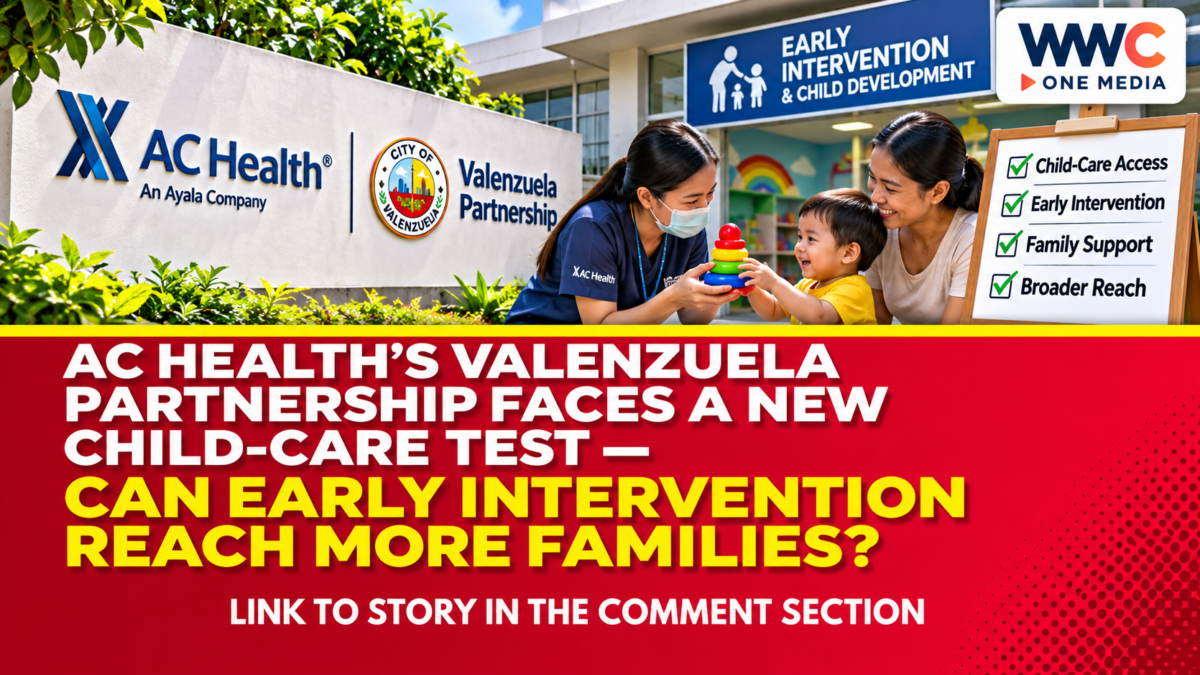
MANILA, Philippines — Nov. 14, 2026. Ayala’s AC Health already has a documented public-private healthcare partnership with Valenzuela City, while fresh attention to an early-childhood intervention programme raises questions about how local government and private providers can work together for younger patients. The original corporate record confirms the dialysis partnership, but no first-party notice verifying the reported November BRIDGE donation was located.
The distinction matters for families. A donation alone cannot ensure dependable developmental screening, appropriate referrals and sustained support. Philippine law places those responsibilities within a much broader early-childhood framework.
AC Health Valenzuela: What the Partnership Already Delivers
Healthway Medical Network’s April 21, 2026 announcement describes a 15-station hemodialysis centre at Valenzuela City Emergency Hospital. The arrangement involves the Valenzuela City Government and Healthway QualiMed Hospital San Jose del Monte, an institution within AC Health’s hospital and clinic network.
The company’s announcement describes a tenant-lease public-private partnership. The city supplied space and supported development, while Healthway equipped the centre and assumed clinical management and daily operations. These are specific responsibilities, not a statement that all hospital services have been privatised.
Healthway says the dialysis service is supported by PhilHealth and local medical assistance arrangements. That statement concerns the dialysis centre; it does not demonstrate insurance eligibility, user fees or financing for any separate early-development programme.
AC Health’s official company profile identifies it as Ayala’s healthcare platform established in 2015. Its portfolio includes Healthway Medical Network and pharmacy and pharmaceutical businesses, showing that the group operates across different parts of healthcare delivery.
Why Early Development Requires More Than Equipment
Republic Act No. 12199, approved in May 2025, strengthened the Philippines’ early childhood care and development system. Its objectives include the early identification, referral and intervention of children below five who have special developmental needs, together with support for their families and educators.
The law places the Early Childhood Care and Development Council at the centre of national standards for children under five, while the Department of Education has responsibility for the formative years from ages five to eight. These broad statutory categories should not be confused with eligibility rules for one local programme.
Screening, assessment and intervention are different stages. A screening may suggest that a child needs further attention, but an appropriately qualified professional must decide whether a particular service or additional assessment is warranted. Equipment is useful only when trained staff, suitable referral pathways and caregiver involvement are available.
WWC’s previous report on Iloilo City’s second RISEAble early-intervention centre illustrates how access to services depends on where facilities are located and whether families can reach them. That is a separate local-government initiative, not evidence that Valenzuela’s programme operates identically.
The Public-Private Partnership Question
Valenzuela’s documented dialysis arrangement assigns responsibilities to a private clinical operator and a city government. Whether a similar structure will apply to a developmental programme cannot be assumed from the dialysis agreement.
For a new child-focused initiative, the key questions are practical: who owns donated equipment, who maintains it, who employs therapists or other specialists, and what happens when the initial donation is exhausted? Families also need clear referral criteria, appointment arrangements and information about any charges.
Under RA 12199, local governments have extensive responsibilities in implementing early-childhood programmes and engaging families and service providers. A private donation can support the system, but does not replace ongoing public duties involving staffing, accessibility and monitoring.
The corporate profile gives AC Health a nationwide healthcare ambition, but a company’s scale does not establish the reach of a particular city intervention. No verified child enrolment count, programme budget or treatment outcome for the reported November donation was available from an original first-party record.
WWC has separately examined Ayala’s proposed Pasig medical-campus partnership. The Pasig proposal is distinct from both the established Valenzuela dialysis programme and any proposed early-childhood intervention arrangements.
What Quality Care Would Need to Demonstrate
Analysis: The best measure of a child-development service is not the number of devices pictured during a turnover. Useful performance measures include referral completion, waiting periods, staff availability, continuity of support and the experiences of parents and caregivers.
An audiology tool, mobility aid or communication material may be helpful in an appropriate care plan. But it cannot be said to improve an individual child’s development without evaluating how it was used, by whom and with what results. A programme must also protect sensitive family and child information.
RA 12199 expressly recognises parents and caregivers as important partners in the early-years system. It also calls for developmentally appropriate programmes, professional training and inclusive services for children with disabilities.
That broader view is reflected in WWC’s coverage of child-protection coordination in Valenzuela, which discusses the need for services to connect families, healthcare teams and relevant agencies. Child protection and developmental intervention have different aims, but both require organised pathways rather than isolated activities.
What This Means for Families and Local Health Budgets
Analysis: Early intervention has potential value when concerns are identified promptly and families can obtain appropriate services without excessive travel or waiting. Its effectiveness cannot be inferred from the announcement of equipment alone, and no child is guaranteed a particular outcome.
Local budgets need to account for personnel, consumables, maintenance and assessment capacity, not simply the purchase or donation of initial items. The more important question for an LGU is whether the service can continue safely and consistently after a launch event.
For AC Health, support for an early-childhood programme would represent a different type of engagement from operating a dialysis unit. A credible implementation plan would explain the respective roles of corporate donors, clinicians, therapists, schools and city offices.
What Happens Next
The outstanding record is an original public announcement or signed programme document confirming the November equipment donation, the full meaning of BRIDGE, the items transferred, the proposed locations and operating dates. Without that document, none of those specifics should be published as independently established facts.
Families should rely on official Valenzuela City channels for eligibility, assessment bookings and opening announcements. The verifiable foundation today is the existing Healthway partnership and the national legal requirement to strengthen early-childhood services.
Frequently Asked Questions
Does AC Health already work with Valenzuela City?
Yes. Healthway Medical Network’s official April 2026 announcement documents its partnership in operating a 15-station hemodialysis centre at Valenzuela City Emergency Hospital.
What is early-childhood intervention?
It encompasses identifying developmental concerns, arranging appropriate assessment and referral, and delivering support tailored to a child’s needs. The exact services depend on qualified assessment and the provider’s programme.
Is the reported BRIDGE equipment donation confirmed?
Its detailed November announcement was not found in an accessible original Ayala, AC Health or Valenzuela City record during this review. The reported inventory and opening plans therefore remain unverified here.
What law governs early childhood services in the Philippines?
Republic Act No. 12199, the Early Childhood Care and Development System Act, strengthened national and local responsibilities for services to young children, including early identification and appropriate intervention.