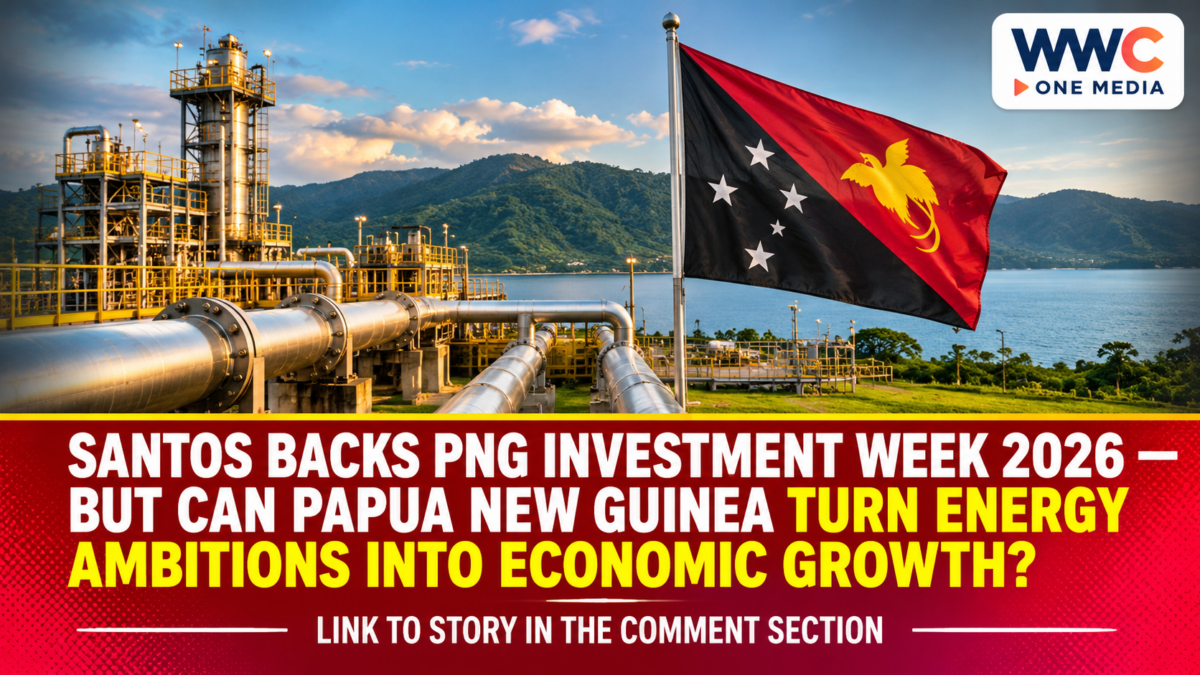
MANILA, Philippines — Australian energy company Santos has renewed its commitment as a Principal Sponsor of PNG Investment Week 2026, ahead of an international business gathering scheduled for Nov. 29 to Dec. 2 in Sydney, Australia.
The Papua New Guinea Chamber of Resources and Energy (PNG CORE) confirmed the sponsorship on Nov. 15, as the country advances preparations for its next major liquefied natural gas development.
The announcement comes at an important moment for Papua New Guinea, where the proposed multibillion-dollar Papua LNG project is approaching a final investment decision.
Beyond attracting international capital, the country’s challenge is to ensure that large-scale energy investments generate lasting opportunities for domestic businesses, workers and communities.
PNG Investment Week Places Energy Development in Focus
The upcoming conference at the International Convention Centre Sydney will bring together government representatives, financial institutions, project developers and potential investors.
Its programme covers investment regulations, financing, resource development, infrastructure and climate-related investment.
Santos Managing Director and Chief Executive Officer Kevin Gallagher is among the industry executives featured in the official conference programme.
For Papua New Guinea, the gathering provides an opportunity to present its investment priorities to businesses capable of supplying capital, technical expertise and commercial services.
However, corporate sponsorship should not be confused with a new capital investment commitment.
The sponsorship announcement does not establish that Santos has approved additional project expenditure or committed a specific amount of funding to Papua New Guinea through the conference.
The more consequential developments will involve formal investment decisions, financing arrangements and commercial contracts that emerge from the country’s wider economic agenda.
Papua LNG Approaches a Major Investment Milestone
The country’s proposed Papua LNG development remains central to its energy investment strategy.
In September, TotalEnergies disclosed that the project’s estimated capital expenditure had been reduced to approximately US$14 billion following engineering optimisation and renewed contractor bidding.
The development is designed to produce 5.6 million tonnes of liquefied natural gas annually, primarily for Asian customers.
It would develop natural gas resources from the Elk and Antelope fields in Gulf Province, supported by processing and transportation infrastructure connected to liquefaction facilities near Port Moresby.
On Nov. 16, the project partners and Papua New Guinea government signed the Papua LNG Fiscal Stability Agreement.
The signing represents another step toward the government’s targeted final investment decision by Dec. 15, 2026.
A final investment decision, commonly referred to as FID, is an important commercial milestone at which project participants formally authorise development investment.
Until that decision is announced, the projected capital expenditure and production capacity should not be treated as completed investment or operating output.
Santos Could Hold a 21% Interest in Papua LNG
TotalEnergies’ September disclosure also outlined a proposed restructuring of project ownership.
Following the completion of the relevant interest transfers and the exercise of Papua New Guinea’s state participation rights, Santos would hold a 21% interest in Papua LNG.
ExxonMobil would become the project’s operator, with a 34.1% participating interest.
TotalEnergies would retain 20%, while ENEOS Xplora would hold 2.4%. The remaining 22.5% would be attributed to Kumul Petroleum Holdings Limited and MRDC.
This proposed ownership structure illustrates the combination of multinational energy expertise and domestic state-related participation supporting the development.
It also highlights an important financial distinction.
A participating interest gives an investor exposure to a project’s potential financial returns, but it also entails obligations associated with development costs and operating risks.
For Papua New Guinea, domestic participation could create opportunities to retain part of the project’s economic value within the country.
Actual returns, however, would depend on construction costs, financing arrangements, production performance and future LNG market conditions.
Local Businesses Face an Opportunity and a Challenge
The economic benefits of major energy developments could extend beyond the companies directly involved in extracting and exporting natural gas.
Construction projects may require transportation, equipment maintenance, accommodation, catering, engineering support and other commercial services.
For domestic enterprises, these activities could provide opportunities to expand operations, employ additional workers and acquire new technical capabilities.
However, participation is not automatic.
Local suppliers would need to meet applicable procurement requirements, demonstrate financial capacity and satisfy project-specific operational and safety standards.
Access to affordable business financing could also influence whether smaller enterprises can compete for contracts.
The investment conference offers a venue for businesses to understand these requirements and establish potential commercial relationships.
Long-term economic development would be stronger if domestic enterprises could retain useful capabilities after the construction phase concludes.
Community consultation, environmental safeguards and transparent benefit-sharing arrangements should also remain important considerations as resource development advances.
Why Papua New Guinea’s Energy Strategy Matters to the Philippines
For the Philippines, Papua New Guinea’s investment ambitions present a useful regional comparison.
Both countries have an interest in attracting commercially viable investment while ensuring that natural resources contribute to broader economic development.
Additional LNG production in Papua New Guinea could eventually contribute to greater diversity in Asian gas supply.
That possibility does not establish a direct supply agreement with Philippine energy companies or guarantee lower electricity prices for Filipino consumers.
Commercial contracts, shipping arrangements, infrastructure availability and international market conditions would influence any eventual benefits.
WWC’s coverage of Malampaya’s new natural gas wells and the Philippine energy outlook examines a related challenge involving the development of domestic energy resources.
There is also a wider diplomatic and commercial dimension.
WWC previously examined Philippine investment opportunities arising from Marcos–Marape discussions, highlighting the potential for stronger commercial relationships between the two countries.
For Filipino businesses, Papua New Guinea’s expanding investment agenda could warrant closer examination, particularly in engineering, logistics and professional services.
Any such opportunities would remain subject to actual procurement arrangements and applicable local regulations.
What Happens Next?
PNG Investment Week will run from Nov. 29 to Dec. 2, placing the international business gathering shortly before the government’s December target for the Papua LNG investment decision.
The most significant developments to monitor will include formal project authorisations, confirmed financing commitments, contractor appointments and arrangements supporting local business participation.
Conference announcements should be evaluated according to their commercial substance rather than the scale of the proposed investment alone.
For Santos, participation reinforces its involvement in Papua New Guinea’s energy development discussions.
For the country itself, the greater test is whether international investment can support durable employment, responsible resource development and a more diversified domestic economy.
Frequently Asked Questions
When is PNG Investment Week 2026?
The conference is scheduled for Nov. 29 to Dec. 2, 2026, at the International Convention Centre Sydney in Australia.
What is Santos’ role in PNG Investment Week?
Santos is a returning Principal Sponsor of the conference.
How much is the proposed Papua LNG project worth?
TotalEnergies estimated project capital expenditure at approximately US$14 billion in its September 2026 disclosure.
What percentage of Papua LNG could Santos own?
Santos would hold a 21% participating interest following completion of the proposed ownership arrangements.
Has Papua LNG reached its final investment decision?
The reviewed records establish progress toward that milestone, with the government targeting Dec. 15, 2026. They do not establish that the final investment decision has already been made.