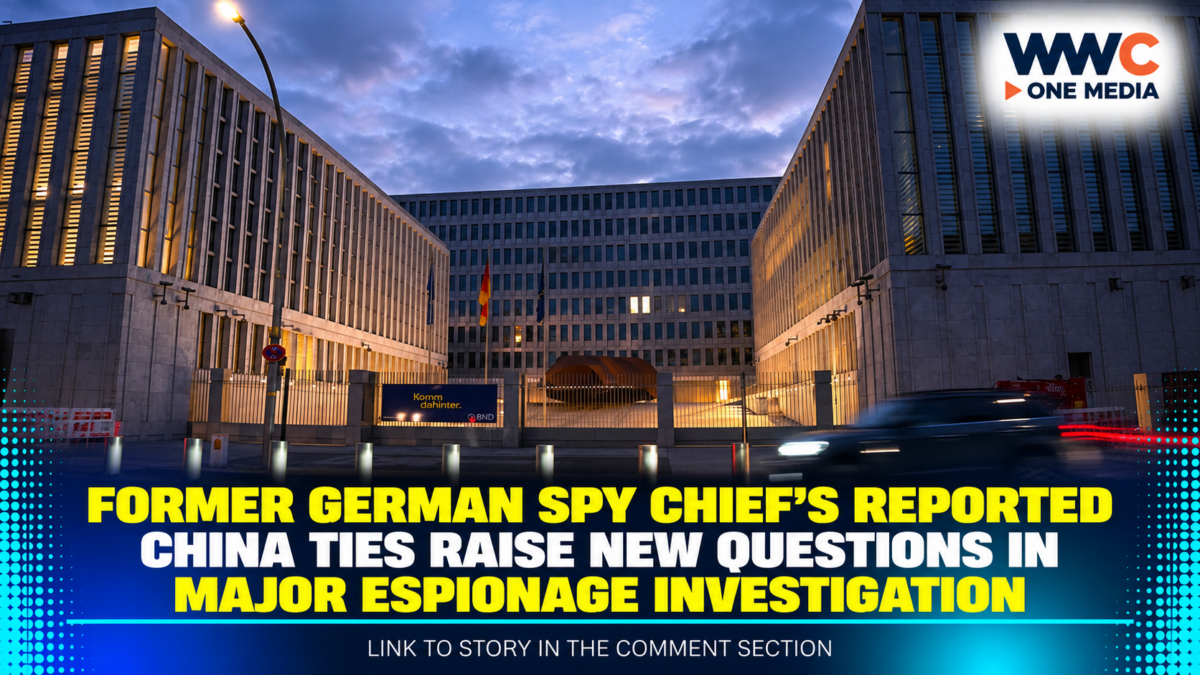
Germany’s growing espionage scandal has taken a new turn after reports revealed that former intelligence chief August Hanning maintained longstanding contacts with a former senior Chinese military official, adding another layer of uncertainty to an investigation involving allegedly confidential intelligence documents.
According to Der Spiegel, as reported by The Straits Times and Reuters on October 9, Hanning had travelled to China several times and maintained contacts with Wang Jianzheng, a former Chinese major general and diplomat with expertise in German affairs.
The reported connection is drawing attention because Hanning, who led Germany’s Federal Intelligence Service (BND) from 1998 to 2005, is now under investigation on suspicion of espionage and other serious offenses. However, the reported contacts alone do not establish that classified information was passed to China.
Nearly 2,000 Documents at the Center of the Investigation
German prosecutors allege that Hanning received nearly 2,000 documents from his former chief of staff, identified as Manfred D., over several years. Some of the material was classified, and investigators suspect that Hanning used information from the documents in private consulting work.
Authorities also allege that Hanning prepared an analysis using confidential material for a person connected to a foreign intelligence service. Prosecutors have not publicly identified the service or confirmed which country, if any, ultimately received the information.
The investigation is particularly sensitive because the alleged activities took place after Hanning had left government service and established himself as a security consultant.
Investigators are examining whether his professional relationships and access to confidential material created a channel through which sensitive German information could have reached foreign intelligence interests.
Why the Reported Chinese Connection Matters
Wang Jianzheng reportedly served at China’s diplomatic mission in the former East Germany and later held other roles connected to German affairs. Der Spiegel reported that Hanning had longstanding contacts with him and made several trips to China after leaving the BND.
These details have intensified scrutiny of Hanning’s international relationships. Nevertheless, the distinction between maintaining contact with a foreign official and unlawfully transferring protected intelligence remains crucial.
German prosecutors have not publicly confirmed that China was the intended recipient of the allegedly compromised documents.
The reported Chinese connection is therefore one aspect of a broader investigation, rather than proof of Chinese government involvement in the alleged espionage.
Former Spy Chief Denies Harming German Interests
Hanning’s lawyer has rejected the allegations that his client damaged Germany’s interests by passing on confidential information. The defense has maintained that Hanning is being wrongfully prosecuted.
The case has also raised wider questions about how former intelligence officials handle confidential knowledge and whether existing safeguards are sufficient when senior security personnel move into private consulting.
According to reporting by The Straits Times, European intelligence officials are assessing whether sensitive information may have been compromised and what consequences this could have for cooperation between Germany and its intelligence partners.
The potential damage extends beyond the immediate legal proceedings. If investigators establish that protected information reached unauthorized recipients, Germany could face difficult questions about document security, oversight and the trust placed in former senior officials.
What Happens Next?
For now, several central questions remain unanswered: Which foreign intelligence service was allegedly involved? What information, if any, was actually transmitted? And did the reported contacts with a former Chinese general have any connection to the suspected disclosure of confidential documents?
Those questions will be central to determining the scope of the case.
Until prosecutors release further findings, the reported China connection must be treated as an investigative lead rather than a proven act of espionage on behalf of Beijing.
The outcome could have implications for Germany’s intelligence oversight, the rules governing retired security officials and the country’s relationships with international intelligence partners.
The bottom line: The reported contacts with a former Chinese military official have added a significant new dimension to Germany’s investigation of its former intelligence chief. But the key issue remains whether investigators can establish that confidential information was improperly shared, with whom, and to what extent.
WWC ONE MEDIA G,A