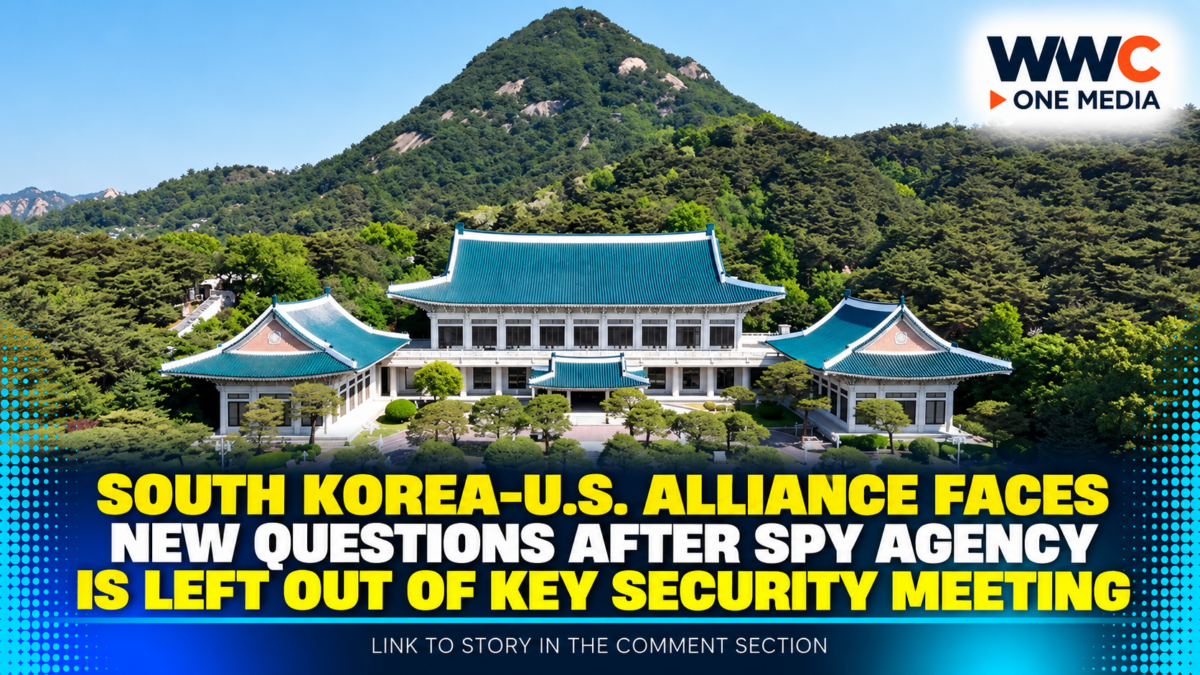
South Korea’s intelligence agency has found itself at the center of renewed questions about the country’s security partnership with Washington after being excluded from a trilateral meeting involving the United States and Japan on North Korean cyber threats.
The National Intelligence Service (NIS) acknowledged on Thursday that it had not participated in the June meeting in Washington. The development has raised concerns about whether intelligence-sharing disagreements could affect broader cooperation among the allies.
The meeting focused on North Korea’s illicit cyber activities and measures to counter related threats. More than 60 officials from relevant agencies and ministries participated in discussions, according to earlier reporting by The Korea Times.
The reported U.S. request to exclude the NIS has drawn attention because intelligence cooperation is an important component of efforts to address North Korea’s cyber operations and other security challenges.
However, the NIS has sought to downplay the incident, saying a misunderstanding occurred months earlier but had since passed. The agency also maintained that South Korean and U.S. intelligence authorities continue to cooperate closely on cybersecurity and North Korea-related matters.
The episode nevertheless comes amid wider reports of friction between Seoul and Washington, prompting questions about the state of communication and trust between the two longstanding security partners.
What Triggered the Intelligence Dispute?
The disagreement follows remarks made by South Korean Unification Minister Chung Dong-young during a parliamentary session in March.
Chung discussed a suspected North Korean uranium enrichment facility in Kusong, alongside facilities in Yongbyon and Kangson. He maintained that his comments drew on information already available publicly.
Washington subsequently restricted South Korea’s access to some intelligence concerning North Korea, in what was viewed as a response to the disclosure.
The restrictions have added sensitivity to intelligence-sharing arrangements between the two countries, particularly given the importance of protecting classified information and coordinating responses to security threats.
The June trilateral meeting was part of a broader framework established after the leaders of South Korea, the United States and Japan agreed at their August 2023 Camp David summit to strengthen security cooperation.
The meeting’s reported exclusion of the NIS therefore raised questions about how disagreements between Seoul and Washington might affect cooperation within that framework.
Government Denies Separate Claim About U.S. Dissatisfaction
Concerns about the relationship intensified after a separate report alleged that U.S. Commerce Secretary Howard Lutnick had expressed distrust of South Korea’s intelligence agency during negotiations over strategic investment projects.
South Korea’s Ministry of Trade, Industry and Resources rejected that allegation on Friday, describing the claim that Lutnick had conveyed distrust of the NIS to Industry Minister Kim Jung-kwan as untrue.
The NIS also said it had received no information about the alleged remarks.
The distinction matters: although the intelligence meeting exclusion has been acknowledged, the separate allegation involving Lutnick has been officially denied. The two developments should not be treated as proof of a single coordinated dispute.
Still, a senior official from South Korea’s ruling bloc acknowledged that various issues between the two countries had affected their overall relationship, according to Yonhap News Agency.
The official expressed concern about instability in bilateral ties, particularly when problems arise in the intelligence sector.
Calls Grow for Seoul and Washington to Address the Tensions
The latest developments have prompted calls for diplomatic engagement to prevent disagreements from affecting broader cooperation.
Some have suggested that National Security Adviser Wi Sung-lac travel to Washington for discussions aimed at easing tensions. However, a ruling-bloc official said there appeared to be no immediate plan for such a visit, while indicating that different options could be considered.
Meanwhile, South Korea’s ruling Democratic Party expressed concern over the delayed processing of a U.S. visa application submitted by former party leader and lawmaker Jung Chung-rae.
The party said the application remained under review without a final decision and called for the two countries’ diplomatic authorities to resolve the matter.
The main opposition People Power Party also urged the government to examine whether communication and trust problems were emerging across diplomatic, intelligence and security channels.
These concerns reflect growing political attention to a series of developments affecting the relationship. However, the available reporting does not establish that the visa delay resulted from the intelligence dispute.
Why Intelligence Cooperation Matters
South Korea and the United States rely on security cooperation to monitor North Korea’s activities, coordinate responses to regional threats and share relevant intelligence.
North Korea’s cyber operations have become an important concern because illicit digital activities can threaten businesses, financial institutions and government systems, while also generating revenue for the country.
Cooperation with Japan adds another layer to regional efforts to exchange assessments and coordinate countermeasures.
When intelligence-sharing arrangements become strained, the principal concern is whether agencies can maintain effective communication and coordination. That does not automatically mean cooperation has broken down, but it highlights the importance of clear procedures and mutual confidence.
For Seoul and Washington, the immediate challenge is to ensure that disagreements over information handling do not undermine their broader security objectives.
What Happens Next?
The NIS has indicated that the earlier misunderstanding is behind it and that cooperation with U.S. intelligence counterparts continues. At the same time, the exclusion from the June meeting and Washington’s reported restrictions on some intelligence sharing remain important developments in assessing the relationship.
Whether the two governments can resolve their differences will depend on continued diplomatic engagement, clarity over intelligence-handling practices and their ability to maintain cooperation across security and economic issues.
For now, the meeting exclusion is a warning sign that deserves attention, rather than definitive evidence that the South Korea-U.S. alliance is breaking down.
WWC ONE MEDIA G,A