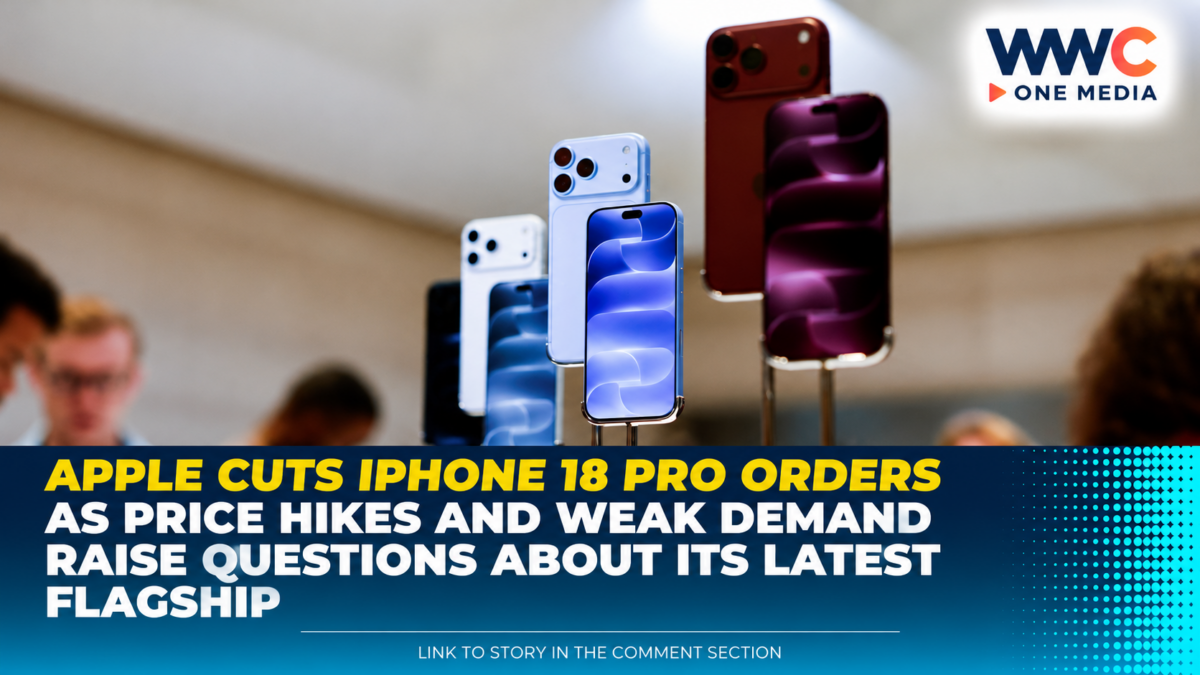
Apple has reportedly asked some suppliers to reduce component production for its newly launched iPhone 18 Pro and iPhone 18 Pro Max, as higher prices and weaker-than-expected demand put pressure on the tech giant’s latest premium smartphones.
According to a Nikkei Asia report published on Oct 9, Apple has adopted a more cautious approach to production, with component orders for October reduced by at least 15% from its initial projections.
The reported cuts highlight the challenges facing smartphone makers as rising component costs push retail prices higher and consumers become more selective about upgrading their devices.
Higher Prices May Be Weighing on Demand
The iPhone 18 Pro starts at US$1,199, while the iPhone 18 Pro Max starts at US$1,299 — both US$100 more than their predecessors.
The price increases come as manufacturers face rising memory chip costs, partly driven by strong demand from AI data centres. The competition for advanced memory components has tightened supply and increased costs across the electronics industry.
For consumers, the higher prices could make it harder to justify replacing an existing smartphone, particularly when household budgets are under pressure.
The reported production adjustments suggest Apple may be responding to a slower sales pace than it originally anticipated, although the company has not publicly confirmed the reported order reductions.
Apple’s New Launch Strategy Could Also Be a Factor
Pricing may not be the only reason behind the softer demand.
Apple changed its launch schedule this year, prioritising its premium models and its first foldable smartphone, the iPhone Duo, while postponing the standard iPhone 18 and an upgraded iPhone Air until early 2027.
In previous years, the simultaneous arrival of multiple models helped generate broader interest across different price segments. This time, consumers waiting for a more affordable option may be delaying their purchases.
The revised schedule could therefore affect overall sales volumes, even if demand for certain premium features remains strong.
What About Apple’s First Foldable iPhone?
The reported slowdown also raises questions about the reception of Apple’s new foldable device, the iPhone Duo, which starts at US$1,999.
The foldable phone is expected to appeal to customers looking for a different design and a larger display in a more compact form. However, its high price could limit its audience.
Manufacturing a foldable device also presents additional challenges, including the complexity of its display and the need to meet Apple’s quality standards.
It remains too early to determine whether the iPhone Duo will experience the same demand concerns as the Pro models.
What the Production Cuts Could Mean for Apple
A reduction in component orders does not automatically mean Apple’s overall revenue will fall. Higher selling prices could offset some of the impact of lower unit sales, depending on demand and the company’s product mix.
Still, the reported cuts offer a reminder that even premium smartphones are not immune to price sensitivity. Consumers may be willing to pay more for new technology, but only up to a point.
For Apple, the coming months will be important in determining whether the latest iPhone lineup can sustain demand despite rising costs — or whether buyers will increasingly hold on to older devices and wait for more affordable alternatives.